
“How Can I Eat Healthier?” – Finding Science-Based Nutrition Advice
Celeste Goodwin, MPH, RDN, LDN
Poe Center for Health Education
Many people want to eat healthier, increase protein or fiber intake, or cook meals at home … but where can you find science-based information, and who can help? Don’t worry, this doesn’t have to be challenging. In honor of National Nutrition Month®, we have some tips to help you find accurate nutrition information, seek expert guidance, and discover the power of nutrition.
With advice seemingly changing every day, seeking out accurate nutrition information can feel like a big challenge! It’s important to find nutrition guidance that is researched, studied, compiled, and reviewed by experts. Seeking out science-based information will help your family create a plan, stick to it, and see results.
This National Nutrition Month, the Academy of Dietetics has some suggestions for finding information that is backed by science:
-
- “Find accurate sources for nutrition information.”
- “Meet with a Registered Dietitian Nutritionist (RDN) who specializes in your unique needs.”
- “Receive personalized nutrition information from an RDN to meet your health goals.”

Find Accurate Sources for
Nutrition Information
The internet is a great place to connect, explore, and exchange ideas, but when you’re looking for science-based information, it can feel overwhelming. When you conduct research on a scientific topic, such as physical fitness or healthy eating, try to restrict your search to academic journals or websites that end in “.edu”. Make sure that the advice on those websites is given by qualified experts such as Registered Dietitian Nutritionists (RDNs) or researchers who are experts in the field.
Look for a “works cited” section near the bottom of the webpage, and click on links to verify that research backs the claims. Be wary of any website about nutrition that ends in .com, makes unrealistic claims, or attempts to sell you a product, supplement, or program.
A great place to start is the Poe Center’s website, Instagram, or YouTube channel. On our platforms, we share evidence-based nutrition information approved by a RDN and delivered by expert educators. Our videos and resources are subjected to expert review before publication, which is a process you should expect of all trusted sources of nutrition information. Another great source is www.eatright.org.
Meet with a Registered Dietitian Nutritionist (RDN)
There is a lot of misinformation and conflicting information about nutrition floating around the web. A trained nutrition professional, such as a Registered Dietitian Nutritionist, can help you interpret conflicting information and give recommendations tailored to your specific needs.
You might be asking yourself, “What’s the difference between a RDN, dietitian, nutritionist, or even a nutrition/health coach?” Here’s a graphic to help you understand the difference between these
various professionals.
| Health Coach | Nutritionist | Registered Dietitian Nutritionist (RDN)
(Also called a Dietitian or Registered Dietitian) |
|
|---|---|---|---|
| Cares about health and nutrition | ✔ | ✔ | ✔ |
| Counsels patients on general nutrition | Maybe | ✔ | ✔ |
| Counsels patients on nutrition related to medical conditions | No | Maybe, if they have specific licensure | ✔ |
| Has completed supervised practice hours and specialized curriculum | Maybe, though not required | Maybe, though not required | ✔ |
| Has a graduate-level degree or higher | Maybe, though not required | Maybe, though not required | ✔ |
Receive Personalized Nutrition Information from an RDN
As the chart illustrates, RDNs have a high level of nutrition expertise, including nutrition expertise related to medical conditions, which makes them a great choice to serve your unique needs. Someone who has an RDN credential has graduated and received a master’s degree, completed over 1,200 hours of supervised practice, and passed a national exam – they are experts in their field.

While individual health coaches and nutritionists may have qualifying knowledge and experience to support you in various aspects of health and nutrition, an RDN can counsel patients on both general and medical nutrition. When looking to change your nutrition goals, finding an RDN is a great place to start.
The Bottom Line
In today’s nutrition landscape, it can feel like recommendations are constantly changing, but you can empower and equip yourself with the tools to get the facts. Make sure the information you find is backed by evidence and from a reliable source.
Seek out an RDN in your area who can help you make decisions about your nutrition. An RDN can help you find advice backed by science, cut through the noise, and take the daunting amount of published information and turn it into suggestions for your body and your life.
Featured Program:
Cook Well, Eat Well
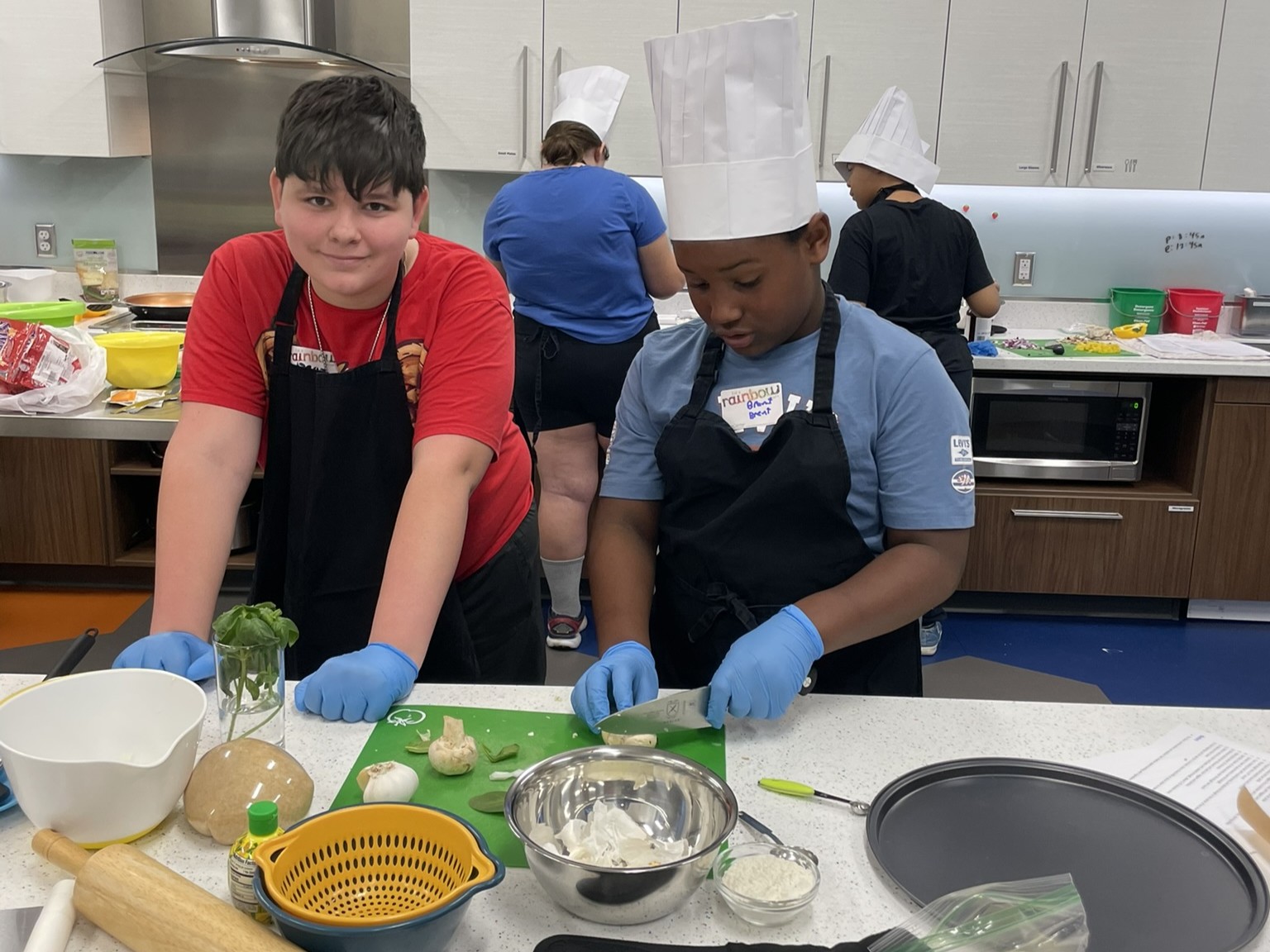
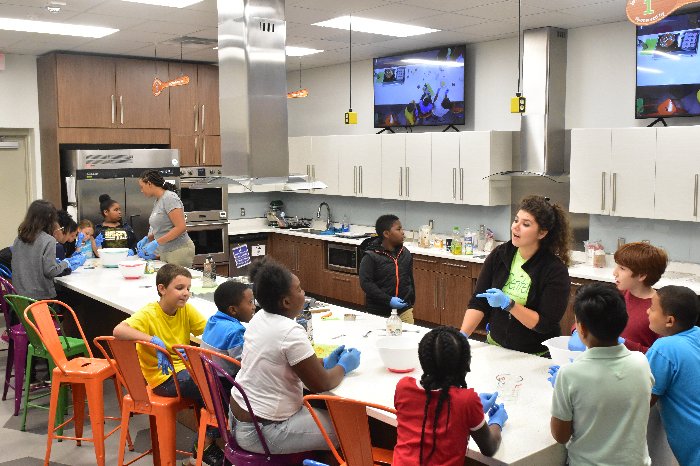
Cook Well, Eat Well is a program offered by the Poe Center for Health Education in partnership with WakeMed’s Pediatric Weight Management Clinic.
Children meet with a dietitian at WakeMed, then head over to our CookWELL Teaching Kitchen with their family members to apply their learning in a hands-on way. Cook Well, Eat Well doesn’t just teach kids how to cook- the program strengthens family relationships and helps kids feel empowered
in the kitchen!
Check out this publication highlighting the program from Families First by WakeMed Pediatrics.
Featured Video:
You may have noticed that the USDA recently changed the Dietary Guidelines for Americans (DGAs) and its accompanying graphic.
The previous graphic (used from 2011-2025) was called MyPlate, and used the image of a plate to give Americans a visual representation of how to craft balanced meals. The new graphic is an inverted pyramid, featuring pictures of specific foods.
So which version should you use? National food guidelines are made for the general public, not for each individual. Food choices are personal and should be tailored to your life.
-
- Focus on fruits and vegetables, vary your protein, choose whole grains, and incorporate calcium into your diet.
- Limit sugar-sweetened beverages and choose water when you can.
- Always pay attention to what feels good for your body. What you eat depends on your body, where you live, your budget, and other factors. Food choices are also shaped by social, economic, and health needs.
- If you have questions about your diet, talk with a registered dietitian or another healthcare provider trained to counsel patients on nutrition.