Big Changes to Food Support Programs: What North Carolina Families Need to Know
Celeste Goodwin, MPH, RD, LDN
Kitchen Specialist
Poe Center for Health Education
Dana Orr, MBA
Community Coalition Coordinator
Poe Center for Health Education
On July 4th of this year, a new law called the “Big Beautiful Bill” was signed.1 This law makes big budget cuts to programs that help families meet their basic needs. It ends funding for the Supplemental Nutrition Assistance Program Education (SNAP Ed), a federally-funded program that teaches about healthy eating.
SNAP-Ed is evidence-based and helps people make their SNAP dollars stretch, teaches them how to cook healthy meals, and lead physically active lifestyles. SNAP-Ed partners with state and local organizations to meet people where they are.
The Bill also reduces benefits received through Supplemental Nutrition Assistance Program (SNAP), which is commonly referred to as “EBT” or “Food Stamps.” These changes under the Bill will make it more difficult for some people to qualify for nutrition assistance.
This abrupt end to SNAP-Ed eliminates over 50% of the Poe Center’s annual budget.
If you want to help the Poe Center directly, share a SNAP-Ed story using #SNAPEdWorks or donate to the Poe Center if you can, so we can continue to deliver education and resources to our community.
To learn more about when these changes will happen, check out this timeline from the Center for American Progress. Keep reading to learn how these changes will affect families in North Carolina, and how you can still get the food you need.
SNAP in North Carolina
Who benefits from SNAP?
In North Carolina, 80% of families that qualify for SNAP benefits have a child, an older adult, or someone with a disability in the home. One in 6 North Carolinians living in rural areas or small towns benefited from SNAP. More than a million North Carolinians are food insecure, meaning they have limited or uncertain access to adequate food.2

What do SNAP benefits do?
SNAP benefits help individuals and families purchase food and educational resources for stretching budgets and staying healthy. Every $1 of benefits given through SNAP creates $1.50 to $1.80 in local spending.2 That means families use these benefits to buy food from nearby stores and farmers.
What is an example of SNAP-Ed programming?
The Poe Center’s Nutrition and Physical Activity, Gardening, and Cooking Education programs are funded through SNAP-Ed. The elimination of SNAP-Ed cuts over 50% of the Poe Center’s annual budget, defunding our effective nutrition education programming for North Carolina youth and families.
What will happen now?
Not only will North Carolinians lose food benefits and resources, but experts say these cuts could lead to the loss of 4,700 jobs in North Carolina over the next year.3 According to the National Grocers Association, SNAP was responsible for 7,772 jobs across grocery and supporting industries, including agriculture, manufacturing, transportation and municipal services.2

Can Food Banks Help Instead?
Many people think food banks and pantries can help fill the gap. However, over 1,800 groups across the country say that’s not realistic. For every meal a food pantry gives out, SNAP provides nine.4 Though food banks are vital community resources, they can’t fully replace the scale of benefits given through SNAP.
Local Groups are Stepping Up
Even though the federal government is cutting benefits, local groups are doing their best to support families.
Dana Orr, who works at the Poe Center for Health Education, helps lead a group called the Southern Wake County Food Security Coalition. Their program, Farm to Pantry, buys fresh food from local farmers and gives it to places that serve families in need. This helps both the people who need food and the farmers who grow it.

Last year, the Fuquay-Varina Grower’s Market gave 3,750 pounds of fresh fruits and vegetables to local food pantries and community centers through this program. This summer, the produce is going to:
-
- Operation Nahyelle, Fuquay-Varina
- Pine Acres Community Center, Fuquay-Varina
- Fuquay-Varina Emergency Food Pantry
- Fuquay-Varina Homes for the Elderly
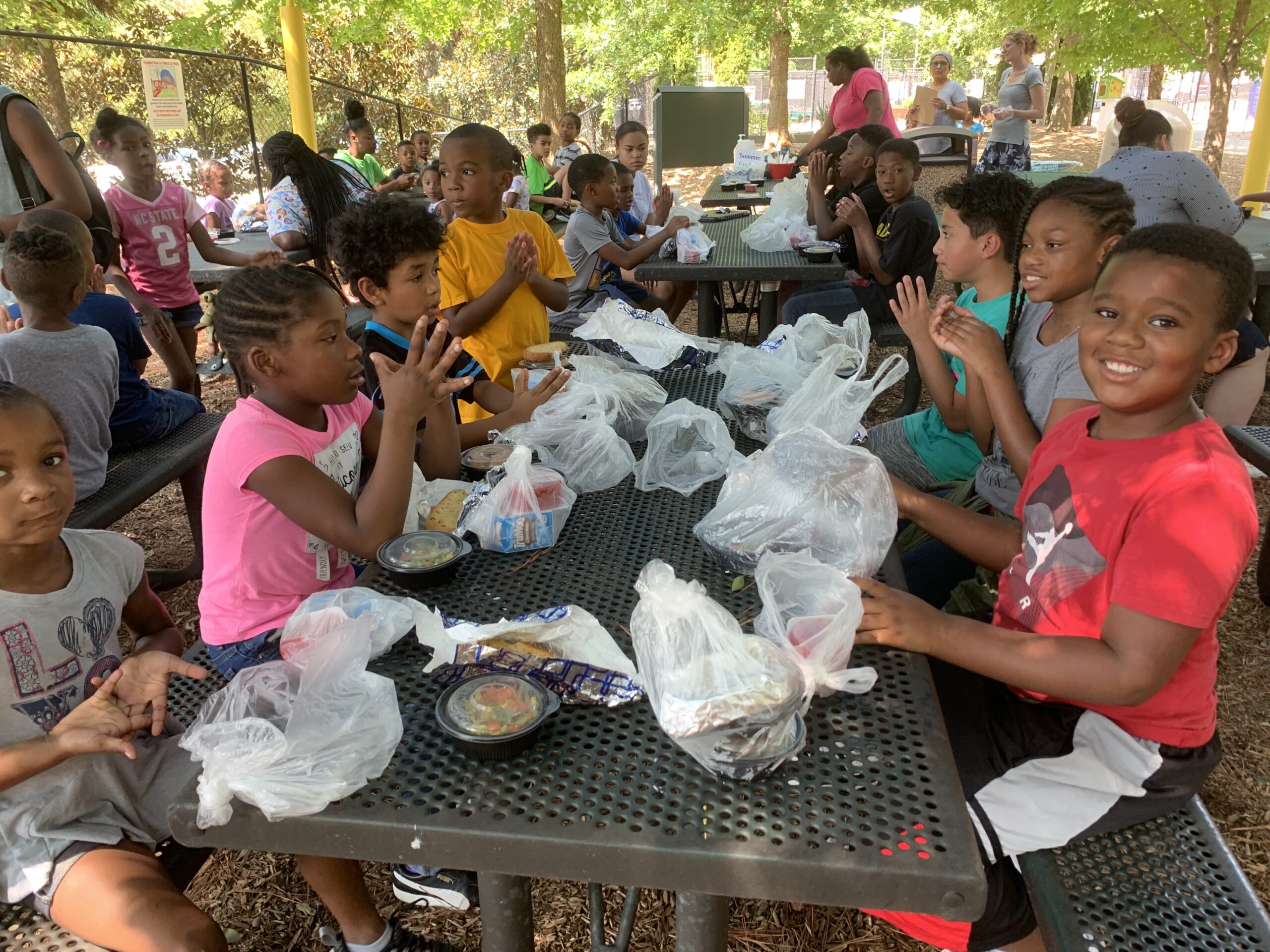
The Poe Center is working to continue the Summer Food Service Program. This program serves free meals to kids ages 0-18 during summer break.5 In the summer of 2025, the Poe Center gave out 283 free, healthy meals.
The Poe Center has hosted this program for 10 years, along with many other meal sites available across Wake County. You can find them on the Wake County Meal Site Map.
What’s Next?
Local groups are working hard to make sure families still have access to food. The Southern Wake County Food Security Coalition includes leaders from Wake County and local food pantries. Together, they’re trying to find new ways to help people during this time of change.
You can learn more about programs for kids on the North Carolina Department of Public Instruction website. If you need to contact someone for help with food programs, there are NC-specific contacts available here.
This abrupt end to SNAP-Ed eliminates over 50% of the Poe Center’s annual budget – about 2 million dollars – eliminating nutrition education for over 9,000 children each year and ending support for local schools, organizations, and communities.
If you want to help the Poe Center directly, share a SNAP-Ed story using #SNAPEdWorks or donate to the Poe Center if you can, so we can continue to deliver education and resources to our community.
Featured Video
Looking Ahead
Even though there are big changes happening due to funding cuts and program eliminations, North Carolina communities are coming together to help one another. Local groups, farmers, and neighbors are working side-by-side to make sure families stay fed.
Sources
- Rep. Arrington JC [R T 19. Text – H.R.1 – 119th Congress (2025-2026): One Big Beautiful Bill Act. July 4, 2025. Accessed August 4, 2025. One Big Beautiful Bill Act.
- Statement from Governor Josh Stein on Proposed Cuts to SNAP | NC Governor. Accessed August 4, 2025. Statement from Governor Josh Stein on Proposed Cuts to SNAP | NC Governor.
- Leighton Ku et al., How Potential Federal Cuts to Medicaid and SNAP Could Trigger the Loss of a Million-Plus Jobs, Reduced Economic Activity, and Less State Revenue (Commonwealth Fund, Mar. 2025). How Potential Federal Cuts to Medicaid and SNAP Could Trigger the Loss of a Million-Plus Jobs, Reduced Economic Activity, and Less State Revenue.
- SNAP-Sign-On-March-2025. Accessed August 4, 2025. SNAP-Sign-On-March-2025.
- Summer Food. Wake County Government. Accessed August 5, 2025. Summer Food.
Featured Program:
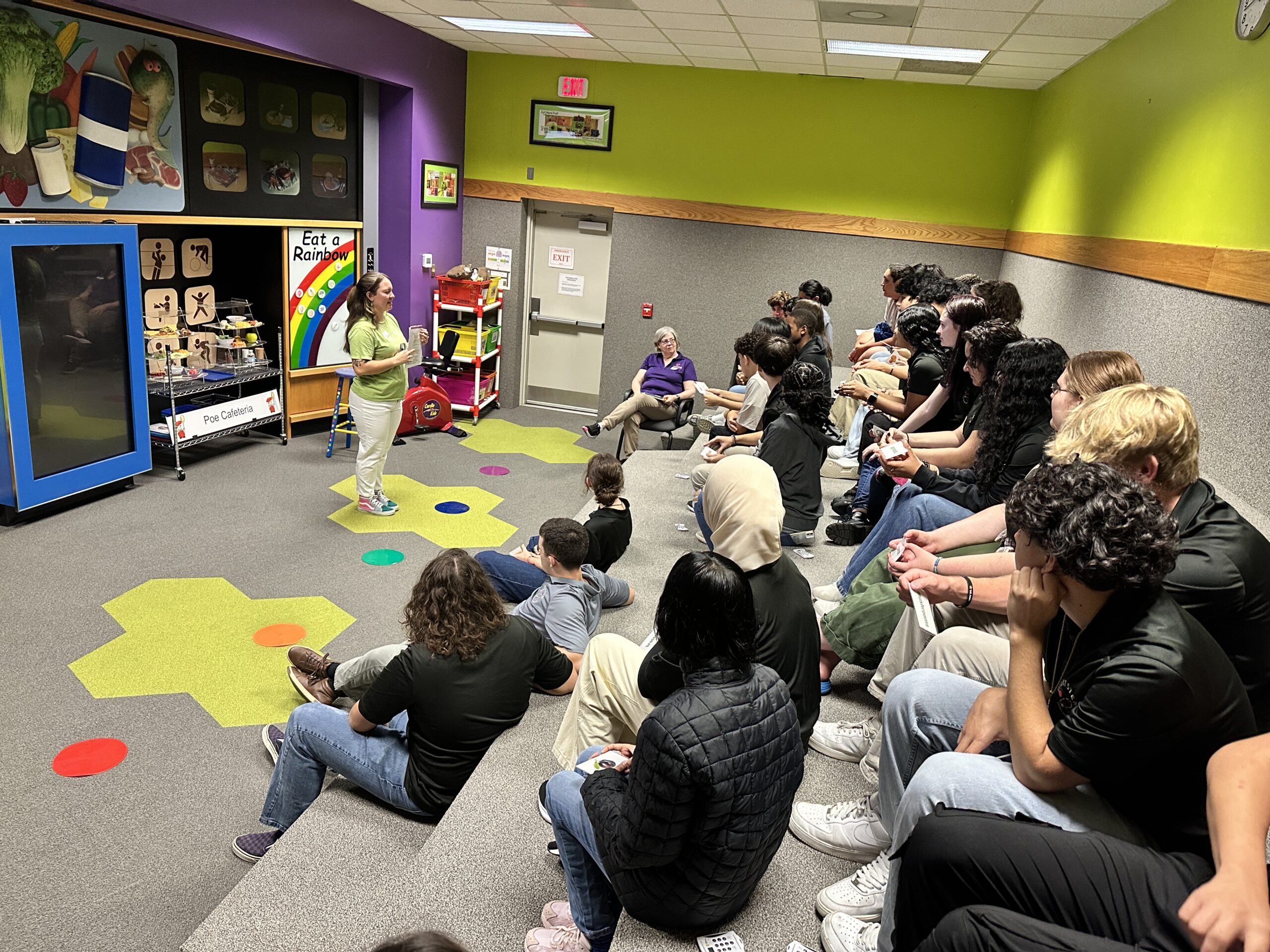
Have you ever wondered about the connection between your physical health and mental wellness? Nourish & Thrive uncovers the mystery of nutrition, physical activity, the gut biome, and mental wellness. This program promotes brain development with activities focused on healthy habits, self-care tips, neurotransmitter function, and nutrition.
This 60-90 minute program Meets NC DPI Healthful Living Essential Standards, covering:
-
- Understanding and managing mental health challenges, stress, and emotional regulation.
- Evaluating influences on personal health behaviors.
- The role of nutrition, hydration, physical activity, and disease prevention in maintaining and improving overall health and quality of life.
Program Participants: 9th – 12th grade and Adults
Program Length: 60-90 minutes