
Tomato Maintenance, Problems, & Companions
Here in the South, tomatoes feel right at home in the warmth of the summer. With this extended heat and humidity, tomato-loving insects, diseases, and other growing challenges are likely to emerge. Do not fret, the benefits of tomatoes far outweigh the challenges. Below you can learn simple ways to set your plants up for success and mitigate common tomato problems.
If you are just getting started with tomato-planting, be sure to first read our April 2022 post about preparing your planting site and choosing tomato varieties.
Support:
Physically supporting your tomato plants in an upright position maximizes sun exposure, fruit yield, and airflow. Increasing airflow is one of the most effective ways to reduce disease and pests. Plus, tomatoes are vines that need to climb.
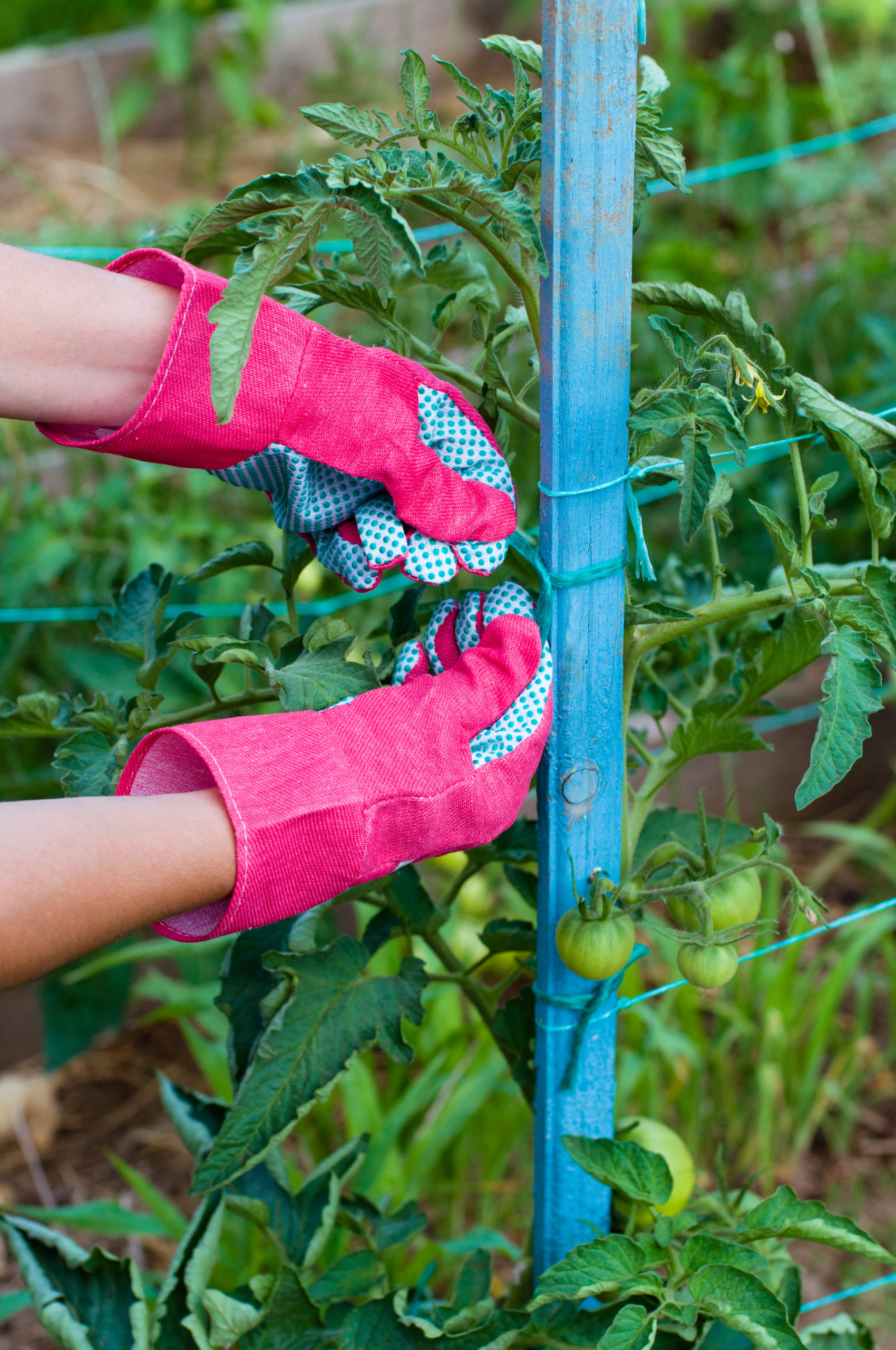
Set up supports as soon as possible after planting. You can use wood stakes, tall wire cages, steel mesh sheets arranged in a cylinder, a nearby fence for draping, or even a deck railing. Use soft string or strips of old cloth to attach tomato stems to the rigid supports. These flex with growth and prevent damage to stems.
Pruning:
There are many reasons to prune, or strategically remove branches, as your tomato plant grows. This practice will improve airflow, reduce humidity, decrease disease problems, help encourage flower/fruit growth, and can help produce larger fruit.
Pruning Tips:
- Find out if your tomato variety is determinant or indeterminant.
- Indeterminate vining varieties (that keep growing) should be pruned all season.
- Determinant bush or dwarf varieties (that stop growing after fruiting) should be pruned sparingly if at all.
- When cutting out branches, aim to maintain 1-3 main stems. Enjoy the following energy experiment:
- One main stem will make less, but larger tomatoes.
- Three main stems will make more, but smaller tomatoes.
- Cut out “suckers” (small shoots growing between the main stem and a branch) when they are 4 inches or less.
- Once 4 feet tall, remove the lowest 12 inches of leafy branches to decrease soil-borne diseases from splashing up during a rain.
- Prune in a way that keeps tomato fruit in the shade of its leaves. Sudden sun exposure can cause sun scald.
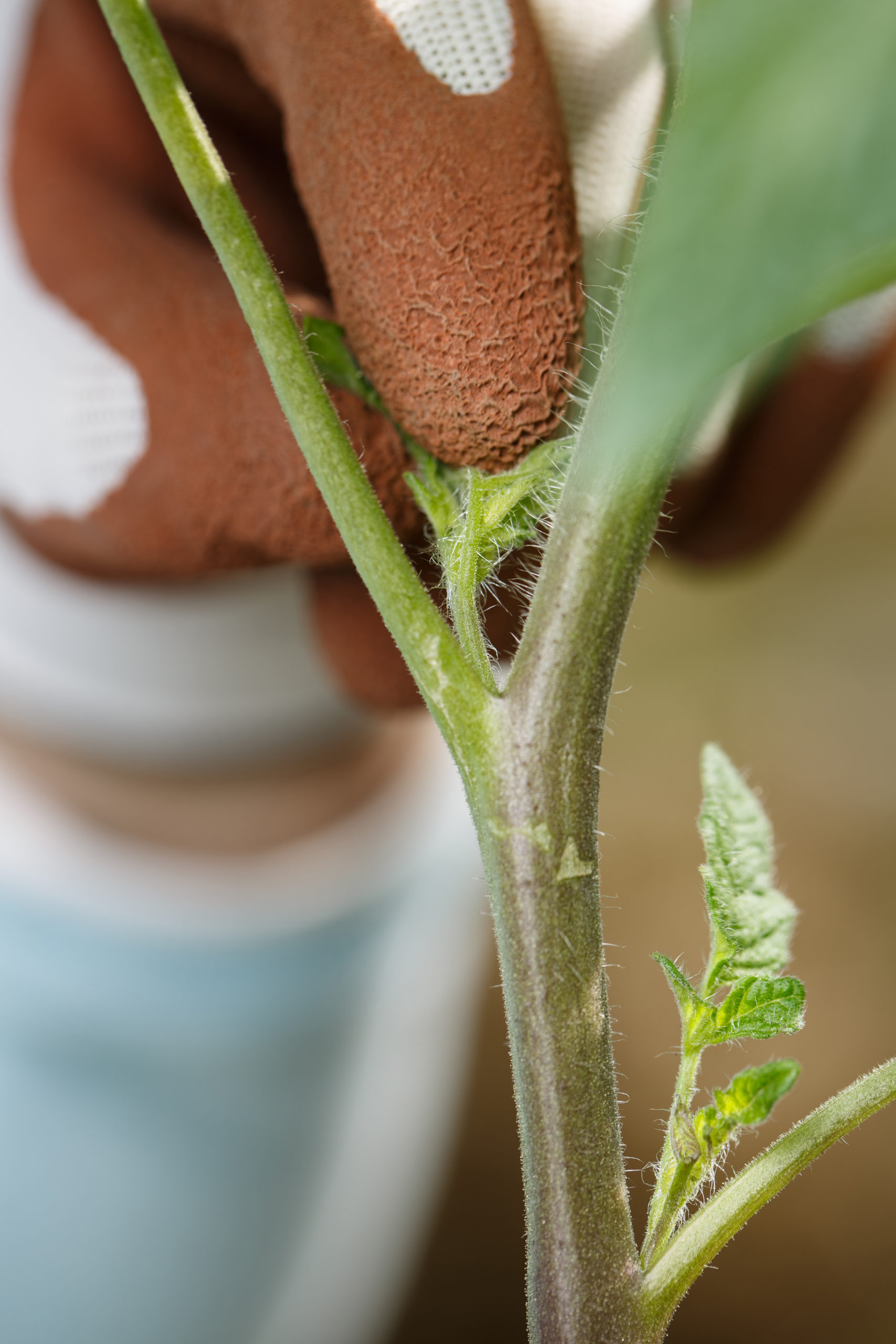
Video depicting tomato pruning in action:
Watering:
Water regularly and evenly throughout the season but especially during drought periods. This helps reduce your tomato fruit from splitting open, called growth cracks. The best time to water is in the morning as the plant is gearing up for a day of photosynthesis. Be sure to aim watering towards the roots and not the leaves to reduce disease issues. A great way to retain moisture and decrease soil splash is to add 2-4 inches of organic mulch around the base of the plant.
Pests and Problems:
Tomato diseases and pests are quite numerous, but do not let this deter you. Many varieties have been made resistant to common infections. Additionally, a lot of tomato types grow aggressively enough to outpace tomato troubles. Despite diseases and pests, growing tomatoes are a worthwhile experience.
Below are some common tomato pests and problems in North Carolina and what to do about them:
- Aphids: Tiny, pear-shaped, green/pink insects. They pierce and suck sap, and can spread viral diseases.
- Water punch them off with the jet stream setting on your hose nozzle.
- Spray an environmentally safe insecticidal soap (such as diluted Dr. Bronner Pure Castile Soap) directly onto the leaves with aphids.
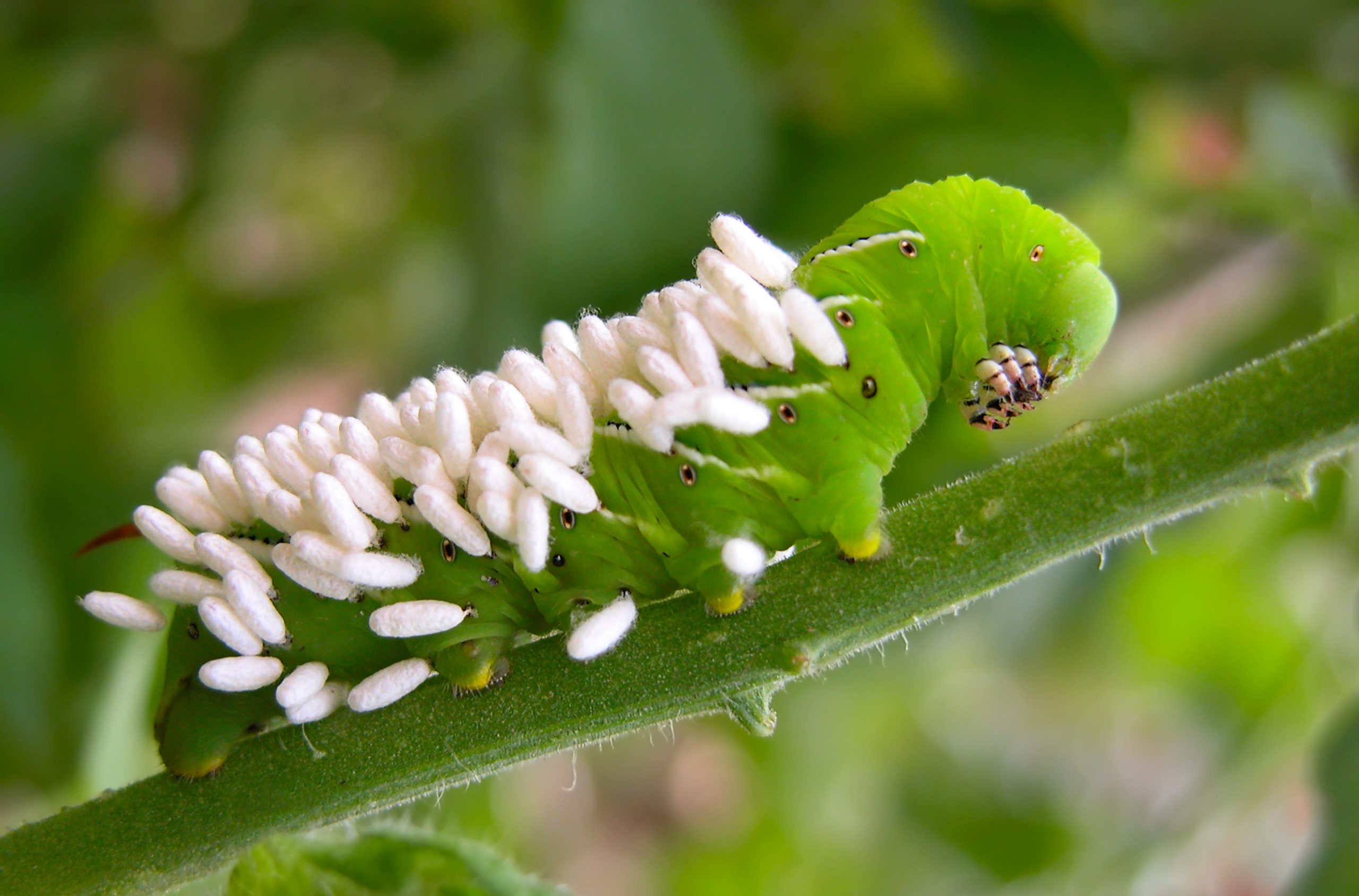
- Tomato hornworm: Two inch green caterpillars with diagonal white stripes and a horn-like structure. They eat tomato leaves.
- Hand pick them off unless it has white cocoons on its back.
- If it has white cocoons, leave it on your tomato plant! These are the pupae of the beneficial Braconid wasps that will not sting unless abused. The wasps will emerge and help control the next generation of hornworms.
- Bacterial wilt (aka. Southern bacterial blight): Caused by soil-borne bacteria Ralstonia solanacearum that thrives in hot, moist conditions. It enters through microscopic wounds and causes rapid wilt and decline.
- Remove infected plants immediately. Discard in a garbage bag to reduce spread.
- Practice crop rotation by planting non susceptible crops like corn, beans, or cabbage.
- Blossom-end rot: The fruit has a brown decayed area opposite the stem. It’s caused by a lack of calcium in the soil often due to uneven watering.
- Leaf sprays with calcium nitrate can restore calcium. Always follow the label.
- Easy to prevent next year by following lime/fertilizer recommendations from a soil sample well before planting.
Here are a few resources to help troubleshoot other tomato diseases and pests.
Companion Plants:
Companion planting is a fun way to garden. These are plants that are beneficial to grow together. Consider planting some of these tomato companions for the benefits they bring to your garden and kitchen.
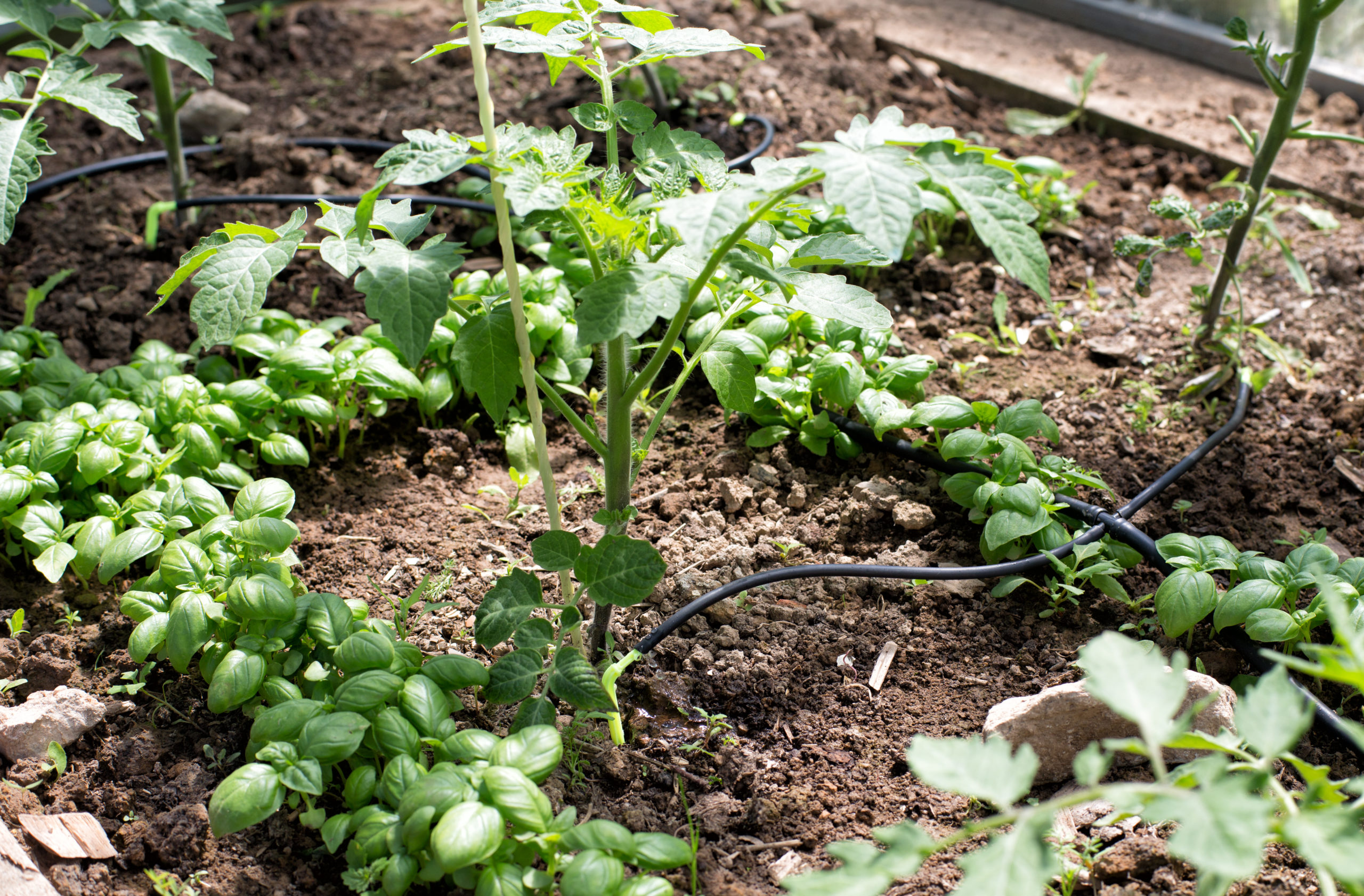
- Garlic, onion, chives: Repel some pests like aphids.
- Basil: May improve tomato yield. Compliments tomatoes in recipes.
- Peas: Legumes which add nitrogen back to soil.
- Lettuce: Acts as living mulch keeping soil cool and moist for tomatoes.
- Carrots: Loosen soil for tomato roots.
- Cucumber: Has similar soil, water, and sunlight needs. Fill in well along the ground under tomato plants.
Recipes
To the Kitchen:
Want to try eating your tomatoes before they are fully ripe? Try tasting green tomatoes. Green tomatoes are not fully ripe yet, and are pale green in color. They taste more tart than ripe tomatoes, and can be ripened in a brown paper bag on your kitchen counter. Try out green tomatoes with the following recipe.
Crunchy Baked Green Tomatoes:
Ingredients:
-
- 4 large firm green tomatoes
- 1 ½ cups all purpose flour
- 1 teaspoon salt
- ½ tsp pepper
- 1 cup plain greek yogurt
- ½ cup buttermilk
- 1 ½ cup bread crumbs
- Cooking spray or olive oil
Instructions:
- Slice tomatoes ⅛ inch thick. On a large plate mix flour, salt, and pepper. Place yogurt and buttermilk on a second plate, and Panko Bread Crumbs on a third plate. Coat tomatoes with the flour mixture, then the yogurt – buttermilk mixture (you may want to put the yogurt in a small bowl so that dipping them is easier), then the Panko bread crumbs.
- Place coated tomatoes on a cookie sheet and spray with Pam cooking spray liberally on both sides or drizzle them on both sides with olive oil. Bake in a 350°F oven for about 7 minutes on one side then flip them over and bake for another 5 to 7 minutes. Transfer to a platter, sprinkle with extra salt and serve warm.
Want more recipes or to learn more about green tomatoes? Check out this link from NC Cooperative Extension.
Follow our Garden to Kitchen blog each month for great tips
and insights on growing and cooking edible plants:
Get this great content delivered directly to your inbox.
Subscribe to our monthly nutrition email newsletter.