Road Safety: A Shared Responsibility
Bringing Road Safety to Communities with Watch for Me NC
Dana Orr, MBA
Watch for Me NC Statewide Coordinator
Poe Center for Health Education
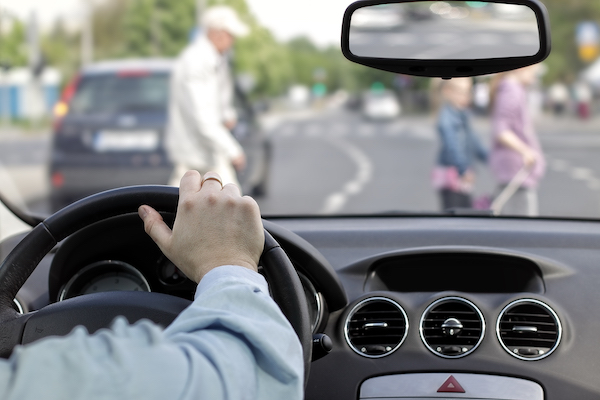
Have you ever considered that it is a privilege to operate a motor vehicle? It is our responsibility as drivers to share the road safely with pedestrians and bicyclists who have the right to the road just as much as motor vehicles. Safe streets start with safe drivers.
Have you ever considered we are all pedestrians at some point in time? Whether we walk to our destination, from our vehicle or transit stop, or simply go for a stroll. We can all relate to feeling vulnerable when walking amidst motor vehicles, which sometimes weigh up to 6000 pounds.
Did you know that a bicycle is considered a vehicle? A person on a bike is not in your way. They are on their way, just like you.
Walking and biking are both on the rise in North Carolina. Both are beneficial for exercise, local economies, transportation, and the environment. Many people cannot or simply don’t want to drive for various reasons including: age, disabilities, financial reasons, access, and more.
Based on data from the North Carolina Department of Transportation’s 2023 Vulnerable Road User Safety Assessment of all North Carolina’s 100 counties, there was a total of 704 bicycle crashes and 2,300 pedestrian crashes. These numbers continue to increase annually. Overall, pedestrians and bicyclists are over-represented in serious injuries and fatalities. This is a complex problem in our state which requires a multi-sector approach to a solution.

There are many programs in the state of NC that are working to be part of the solution to this serious problem! The NC Governor Highway Safety program funds several of these programs including:
- NC Vision Zero: A collaborative initiative to eliminate roadway deaths and serious injuries in North Carolina.
- BikeWalkNC: An organization that envisions a safe NC for all cyclists and offers the NC Friendly Driver program.
- Watch For Me NC: A statewide pedestrian and bicycle safety program that is supported by the Poe Center.
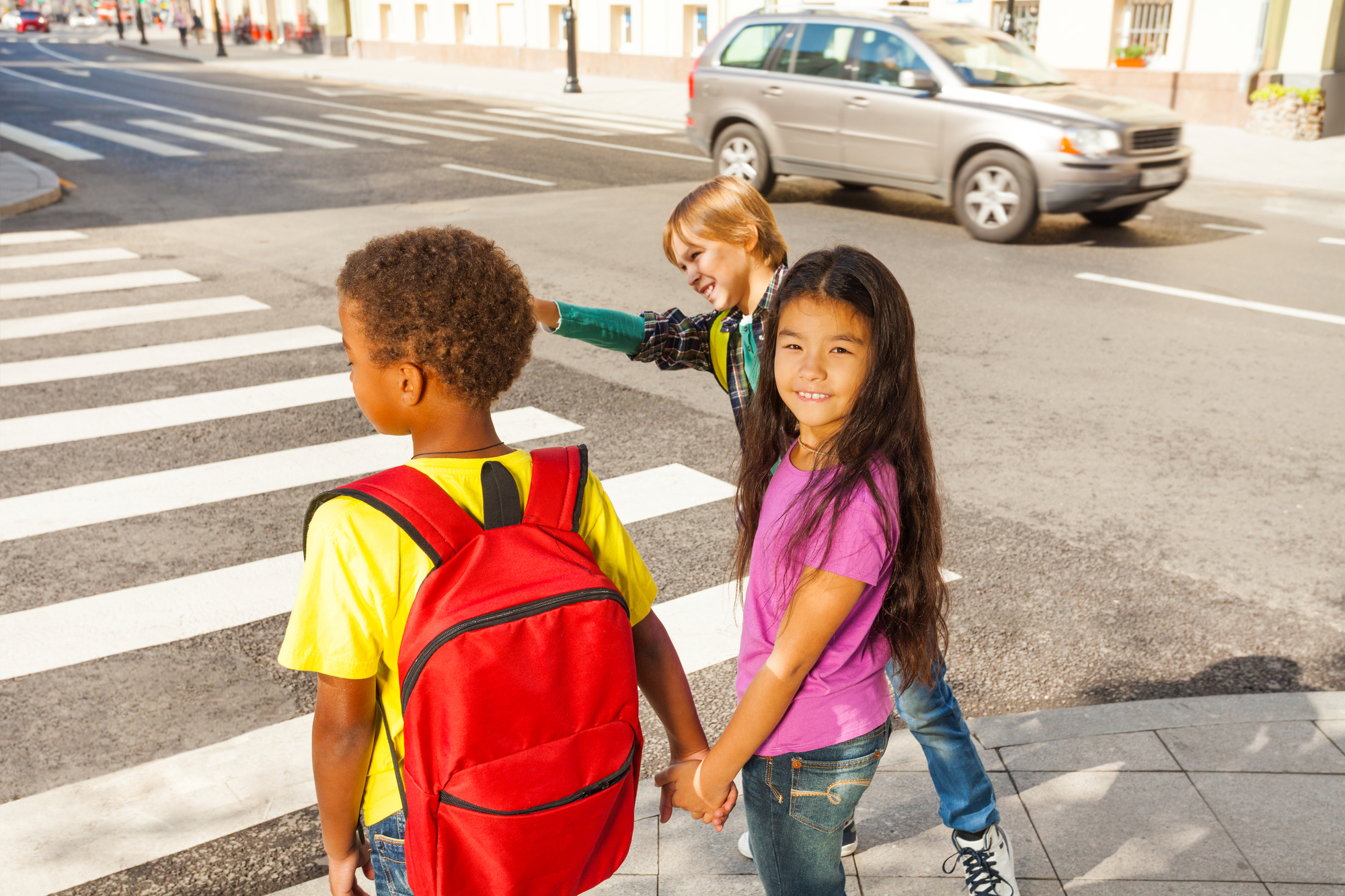


As part of the solution to this statewide problem, the Watch for Me NC program aims to reduce pedestrian and bicycle injuries and deaths through a comprehensive, targeted approach of public education, community engagement, and collaboration with law enforcement. Strategies include increasing public awareness and expanding local capacity to improve bicycle and pedestrian safety. WFMNC is a nationally recognized, award-winning bicycle and pedestrian safety program that is now being emulated by other states.
Some of the key safety messages promoted across these programs include tips for drivers, pedestrians, and cyclists:
Tips for being a safe driver:
- Practice, practice, practice for inexperienced drivers! Whether it’s a short errand or a longer road trip, encourage new drivers to drive as much as they can.
- Avoid distractions inside and outside of the vehicle. Put the devices down and remember that texting while driving is prohibited in NC and drivers under 18 with a limited learners permit are entirely prohibited from using a mobile device while driving.
- Always wear a seatbelt.
- Select a vehicle with safety features.
- Use a properly-fitted car seat for children.
- Change lanes to pass a person on a bike as the safest and best practice – 2 feet is the legal minimum, 4 feet is the preferred minimum and legally required when safely passing a person on a bike on a double line.
- Stop for school buses with flashing red lights.
- Yield to pedestrians and cyclists.
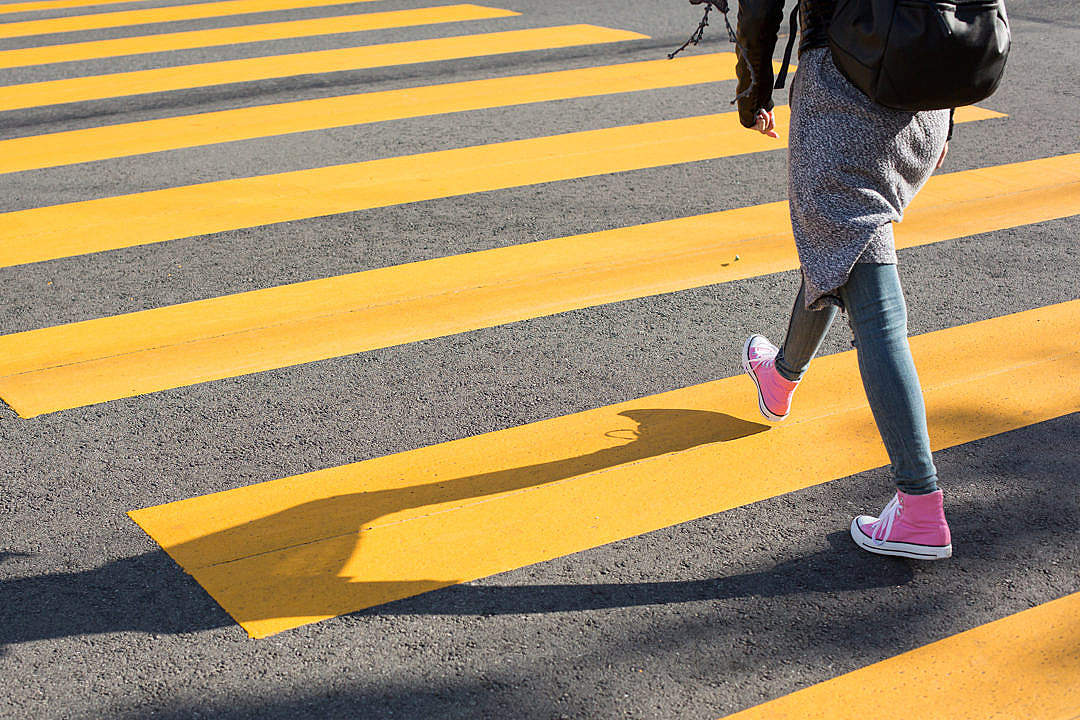
- Stop for people in crosswalks.
- Give time and space to people using mobility devices.
- Slow down near homes, schools, and bus stops.
- Do not block sidewalks, curb ramps, or crosswalks when stopped or parked.
Tips for being a safe pedestrian:
- Be bright at night: use flashlights and reflective clothing.
- Cross safely when exiting the bus.
- Walk facing traffic.
- Watch for turning cars.
- Pay attention and avoid the being distracted by devices.
- Be careful in parking lots.

Tips for being a safe cyclist:
- Obey traffic signals and signs.
- Wear a helmet.
- Be bright at night: use bike head and tail lights and wear reflective clothing.
- Use hand signals.
- Look before entering traffic and changing lanes.
- Ride with traffic.

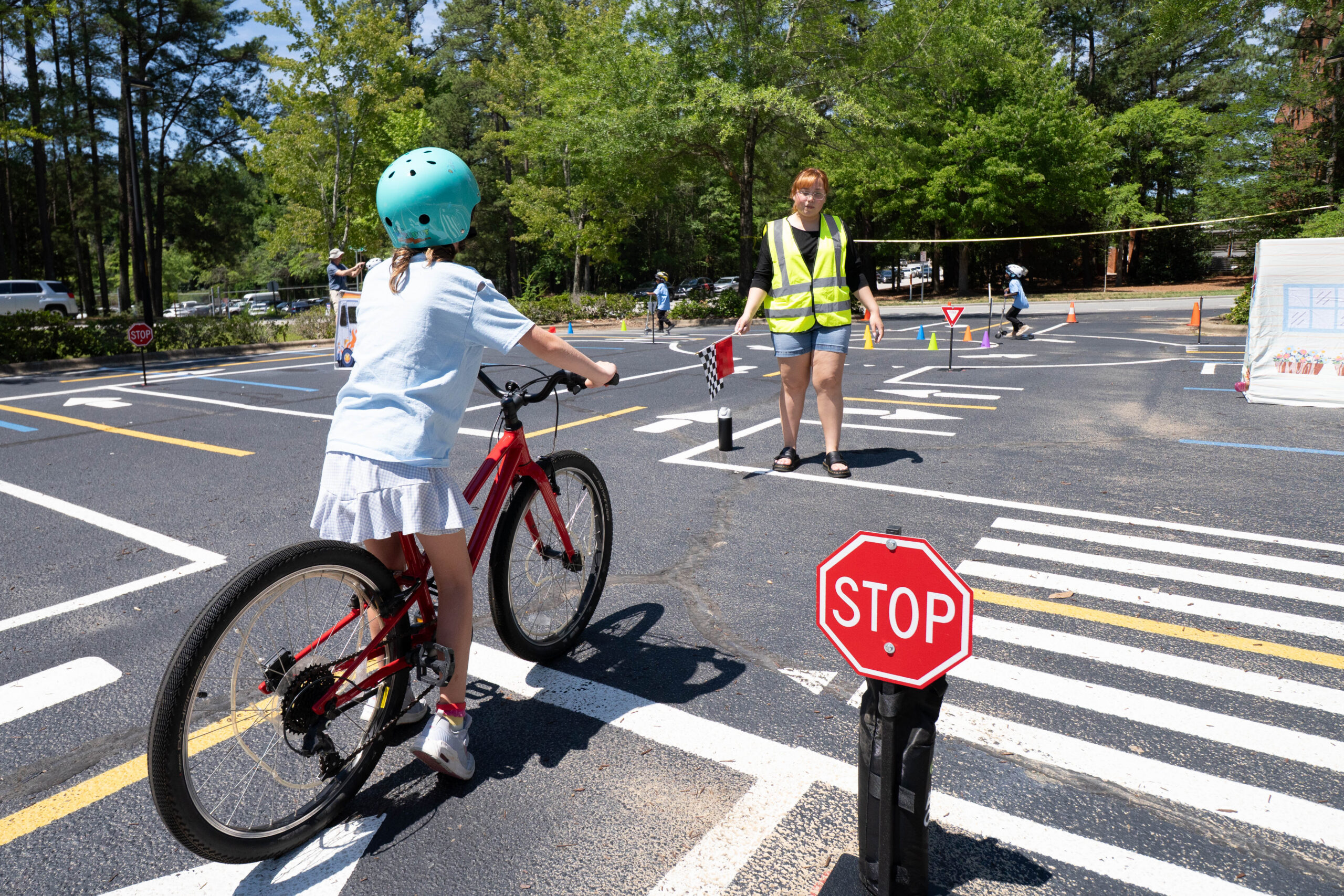
Summer is a great time to practice walking, biking, scooter riding, hand signal skills together as a family. Parents and guardians modeling active and safe behaviors is still the best way to influence our kids’ behaviors. Start practicing on greenways and in your neighborhoods first, or visit the Poe Center’s onsite Traffic Safety Course.
Consider these tips to help make the roads safer and decrease traffic-related injuries and deaths. Enjoy the summer with family and friends, be well, and be safe.

Featured Program:
This program includes both an indoor program and outdoor activities. Groups will be divided to rotate between activities. The first group participates in a team-based trivia game to test their knowledge of traffic safety while walking, riding, or scooting. Safe traffic system behaviors, traffic signs, personal hand signals, road markings, helmet safety, and bike adjustments are discussed. The second group will be outside on Wake County’s first permanent Traffic Safety Course using bikes, scooters, and helmets provided by the Poe Center. This miniature village, complete with road signs, bus stop, pedestrian participation, and road markings, encourages safe walking, riding, and scooting along roads. Groups will switch to receive both components of the program. Program times will be adapted for kindergarten classes.
Program Location: Only available onsite at the Poe Center.
Schedule this program for: Kindergarten – 8th Grade
Program Length: 120 minutes

Featured Event:
PoeFest
PoeFest 2026: The Poe Center’s FREE community festival to celebrate healthy choices!
Join us for fun, food, prizes, special guests, interactive activities, and local entertainment. Plus, kids can take a ride or walk on our Traffic Safety Course, be fitted for a bike helmet, and learn the rules of the road.
PoeFest will be held on Saturday, October 10, 2026. Stay tuned for more details.
References:
BikeWalk NC. (n.d.). BikeWalk NC. https://www.bikewalknc.org/
North Carolina Department of Natural and Cultural Resources. (2023). 2023 vulnerable road user safety assessment. https://digital.ncdcr.gov/Documents/Detail/2023-vulnerable-road-user-safety-assessment/5846542
North Carolina Department of Transportation. (n.d.). Governor’s Highway Safety Program. https://www.ncdot.gov/initiatives-policies/safety/ghsp/pages/default.aspx
North Carolina Department of Transportation. (n.d.). Watch for Me NC. https://www.ncdot.gov/watchforme/default.aspx
University of North Carolina Highway Safety Research Center. (n.d.). Highway Safety Research Center. https://www.hsrc.unc.edu/
Wake County. (n.d.). Safe Routes to School in Wake County. https://www.wake.gov/departments-government/public-health/health-promotion-and-chronic-disease-prevention/safe-routes-school-wake-county