
Prioritize Your Mental Health for the Holidays
Prioritize Your Mental Health for the Holidays
Jessica Fowler
Substance Use Prevention Specialist
The holidays are a fun and exciting time for many, especially for children. The joy, the cheer, the lights, celebrations, and the holiday bustle can be exhilarating but it can also be overwhelming and stressful for children and adults.

Taking care of ourselves on a daily basis reduces stress and improves mental wellness, and we should be extra mindful to do so during the holidays where stress levels may be increased.
Here are a few tips to help prioritize your mental wellness and reduce stress in your home this holiday season.
Manage Stress. Our children sense when we are stressed and can be affected by it. Managing your stress and taking care of yourself is a wonderful way to model and reinforce the importance of self-care for children. It is very important to take care of yourself first and if you need a break, take one. When you feel stress building, say to your family “I feel overwhelmed at the moment and am going to take a break to enjoy a short walk outside in the fresh air.” This is not only a great way to take a moment for yourself to recharge but also to teach your children that it is okay to feel overwhelmed and to demonstrate a self-care technique that they can try too. It may help to come up with a code word for your family that you can use when you need that break.
Be Transparent about Routines. Children do really well when they have routines that are healthy and predictable. It is important to maintain these routines as much as possible during the holiday season, especially sleep routines. However, we understand the holiday excitement can make it difficult to maintain all of our routines. When children’s routines are going to change, talk about the changes with your child and prepare them ahead of time. Understanding the change in plans helps to reduce their stress and potential anxiety.
Avoid Over-Scheduling. There is so much we want to do during the holidays, including visiting with friends and family and the desire to say “yes” to every invitation. However, that can become overwhelming for our children and for us. It may help to limit your holiday get-togethers and activities to help reduce stress.
Don’t Forget to H.A.L.T. It is important to remember to halt and do a check in when you or your child are feeling hungry, angry, lonely, or tired. These feelings can increase our stress levels and feelings of being overwhelmed by that normally would not faze us. Learn more about H.A.L.T. here HALT for Stress- A Mini-Lesson
- Hungry- Make sure to eat healthy meals and avoid skipping meals during the holidays when you are busy.
- Angry- Take a break and go for a walk or do some breathing exercises to help manage feelings of anger.
- Lonely- Sometimes the holidays can be lonely. Make sure to use your social support to help during this time.
- Tired. Do your best to keep your and your family’s sleep routines the same during the holiday and try not to neglect your sleep. If you are feeling tired it is okay to take a break and rest.
Get Moving. Make sure you and your family take time to get outside and enjoy the fresh air. Exercise boosts your mood and relieves stress and anxiety. Make sure that you and your family get outside to run and play and enjoy the day. Prioritize time for you and your family to get outside to run and play and enjoy your day. For inspiration on how to get active anywhere, anytime, on a budget, check out our #PoeFit series on Twitter.
Make a Gratitude List. A fun and helpful family activity that can also help reduce stress is writing a gratitude list. The end of the year is a great time to reflect back on what you are grateful for and a perfect time to share those thoughts together as a family.
Enjoy the holidays with your loved ones and make sure to schedule time for you and your children to practice self-care. Keep an eye on your stress levels and take breaks when needed. Help your child take breaks and relax when you notice they are getting stressed. Although the holidays may be a favorite time of the year for some, it can also be a very difficult time for others and additional support may be needed. If you or a loved one is experiencing a crisis, there are resources available. Please call the National Suicide Prevention Lifeline at 1-800-273-8255 or text “MHA” to 741-741 to live chat with the Crisis Text Line.
Follow the Poe Center on social media or visit our website to keep up on wellness information for the whole family.
Resources:
Harvard Health Publishing- 7 Ways to prevent holiday stress-for your children
Mayo Clinic: Stress Management
NAMI: Maintaining Mental Health during the Holiday Season (and a pandemic)
Resources to support Mental Wellness during holidays
Mental Health and the Holiday Blues
Beat Back the Holiday Blues
Supporting Children and Teens this Holiday Season
Featured Poe Program: Dimensions of Wellness
Participants: Adults
Program Lengths: 90 minutes
As adults, we spend a lot of time caring for our children or others, and sometimes we forget our own self-care. This program will empower participants to explore the positives and negatives of stress and the effects ongoing stress can have on their mental, physical, and emotional health. Participants will have an opportunity to explore self-care strategies and develop a plan to develop a wellness routine. During the discussion, we will also cover how stress affects youth, including tips on increasing mental wellness, promoting coping strategies, and building resilience.
Programs may be presented online and are great for participating from home. Call (919) 231-4006 or visit poehealth.org/plan-a-program for details.
H.A.L.T. for Stress
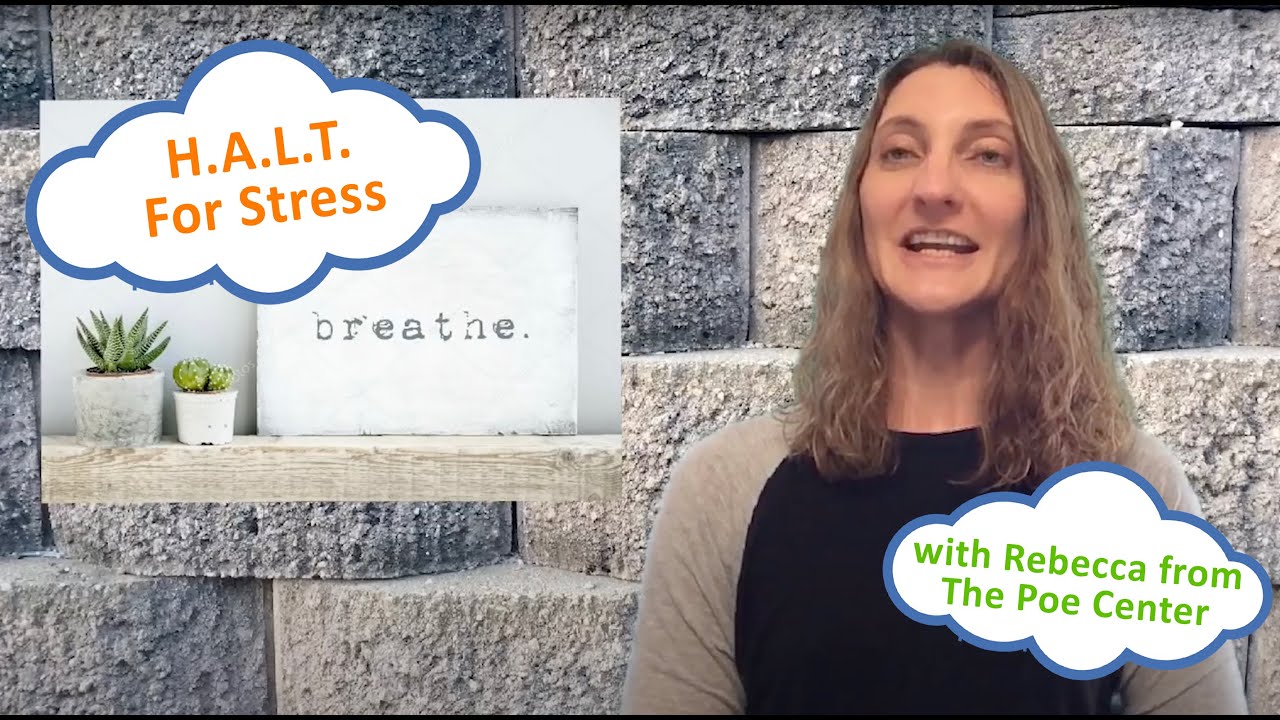
Join Rebecca from the Poe Center as she leads a lesson on maximizing your mental health and managing stress! If you’re feeling stressed or like you’ve lost control of a situation, Rebecca has some tips for you. Follow along with this mini-lesson as she talks about stress and walks you through a process for identifying your stressors, called “H.A.L.T: Hungry, Angry, Lonely, or Tired.” Hang out as Rebecca leads a breathing exercise, which is a great way to manage stress in your everyday life.

Back-To-School Prep: Coping with Stress, Anxiety, and Uncertainty in Children
Back-To-School Prep: Coping with Stress, Anxiety, and Uncertainty in Children
Jessica Fowler, CADC, LCAS-A
Substance Use Prevention Specialist
From virtual to hybrid to in-person learning and back to virtual for some, last year was a rollercoaster of change. This school year may prove to be even more difficult with new challenges and uncertainties. Kids are likely dealing with a mixed bag of emotions. They may be feeling excited and nervous about returning to in-person learning. They may also still be recovering from the stress of the previous year. Helping children learn positive coping mechanisms to manage emotional stress is just as important as learning English and math skills for academic success.
Over the past year, children may have experienced an increase in adverse childhood experiences. Adverse experiences may include dealing with the pandemic, financial hardships, food insecurity, changes in routine, violence in the home or community, different forms of loss, and mental or emotional challenges. These adverse experiences can contribute to behavior changes that may be atypical for that child, such as an increase of stress and anxiety, lower tolerance levels, withdrawal, or anger and aggression. These behavior changes may show up at home and in the classroom. Adults can help mitigate these behaviors by teaching children methods to reduce stress and anxiety.
When a child is feeling overwhelmed, stressed, or anxious, their brain may trigger a fight, flight, freeze, or submit response. These reactions can take the brain “offline” and focus all its energy to the negative response. This type of reaction can make the child feel "amped up" or "shut down." Adults can help a child experiencing “offline” brain by teaching "rapid reset" coping strategies.
Rapid Reset Strategies
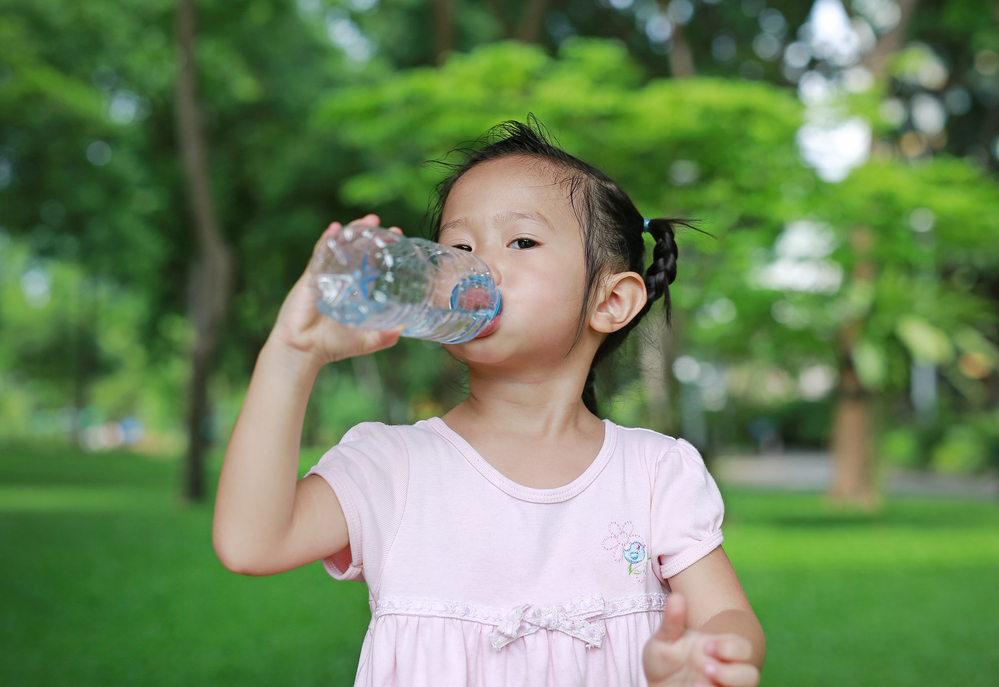 Try the "Take-a-Sip" Strategy: Adults can model this strategy by doing it themselves and encouraging the child to join them. Take a sip of water and notice how the water feels in your mouth, in your throat, and how it feels going down. Model the sensations you notice with statements, such as “My water was so cool and refreshing. It helped me feel very relaxed.” Encourage the child to take a sip and share how the water makes them feel and what they notice. This rapid reset tool is based on sensory details called “sensing in.” Because the brain is “offline” and entering survival mode, it responds to physical sensations, such as drinking cool water. This can help calm the nervous system and bring the brain back “online” helping the child deal with the stressor more constructively. This video teaches about this rapid reset and others.
- Use the H.A.L.T. method: This is a great tool for kids who are experiencing atypical stress and anxiety. Each letter of H.A.L.T. represents an emotion to check, H = Hungry, A = Angry, L = Lonely, and T = Tired. This method helps a child decipher which emotion is triggering their stress: Are they hungry? Are they feeling angry? Are they feeling lonely? or Are they tired? If a child is experiencing one or more of these feelings, they may have less tolerance for seemingly mundane activities, such as completing chores, homework, or other typical tasks, sparking an atypical frustrated response. To learn more on how to use the H.A.L.T. Method, watch this video.
Here are additional ways adults can provide support for a child's social and emotional growth:
- Check in and ask how they are feeling. Even if you haven’t noticed changes in behavior, checking in helps create connections and trust.
- Maintain a routine in the home and in the classroom.
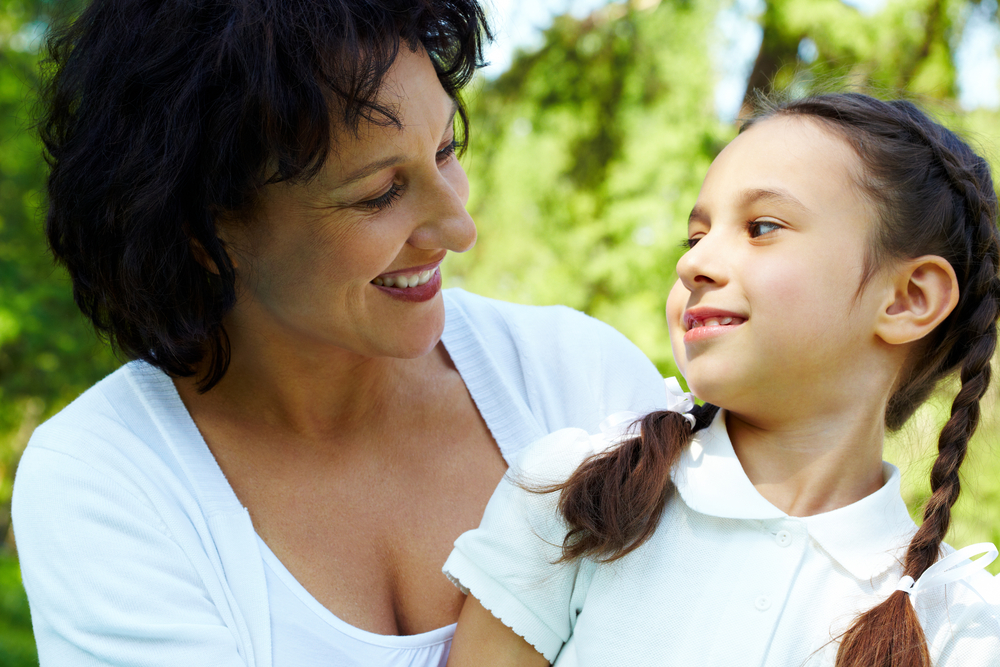 Acknowledge changes to norms. This includes changes in daily routines, which can increase a child’s stress or anxiety. Acknowledging these changes can be helpful and supportive during transitions.
 - Create opportunities for open discussion with children about their experiences, including virtual and in-person learning. Ask them questions about what worked for them, what didn’t, what was fun. This allows them the opportunity to express themselves and feel heard.
- Help children explore how they have grown over the past year: not just physically, but in other ways, as well. Helping children recognize how they have matured can increase their self-esteem and confidence.
- Model good friendship skills.
- Help encourage the friendships that are important to your child.
- Set up playdates while remaining socially safe.
- Check in with your child about who their friends are at school.
- Help your child develop problem-solving and conflict-resolution skills with activities, such as playing a game or watching a show. Talk about a conflict or problem on the show and ask your child how they would handle the situation.
- Teach and model empathy skills.
- Encourage your child to make new friendships.
- Have conversations about kindness.
- Teach your child about bullying behaviors and what actions they can take when experiencing or witnessing bullying.
- Help promote physical and emotional safety.
- Take care of yourself. Using positive methods to manage your personal stress and anxiety helps you and models positive behaviors for your child.
As you help your child pack their bag of school supplies, help them pack their toolkit of emotional supplies, too. Doing so will help set kids up to successfully deal with the challenges that come with this school year and other challenges they may face.
Resources:
Activities and Free Courses for Parents
Video: Why Do We Lose Control of Our Emotions?
Featured Poe Program: Dimensions of Wellness
 Participants: Adults
Program Length: 1 hr 15 minutes
Building effective wellness strategies can impact every area of our lives. The Dimensions of Wellness is an interactive program that provides ADULTS with the educational tools to manage stress and build a self-care plan. Additionally, this program empowers adults to assist young people with their self-care and coping strategies so they can build emotional resilience as they grow. Topic areas include defining stress, dimensions of wellness, self-care and wellness, building resilience, and tools and resources.
Programs may be presented online and are great for participating from home. Call (919) 231-4006 for details.
Featured Activity: Make a Calming Jar
Making calming jars is a fun activity and creates a tool for kids to use when they're feeling overwhelmed. Just shake the jar and watch it. There is something very calming about shaking the bottle and watching the glitter or other materials slowly settle.