
Healthy Relationships: A Vital Protective Factor
Healthy Relationships: A Vital Protective Factor
Robin Pittman, MS, CHES
Family Life Program Director
As a parent, watching your child grow into a young adult and make his/her own decisions is a bittersweet mix of challenge and reward. There may be long days and sleepless nights wondering what your child’s teenage brain is guiding him/her to do. When they make a mistake, we help them learn from it. When they make a good choice, we affirm it in hopes the trend continues. It's a roller coaster.
While teens are ultimately responsible for making their own choices, helping them build protective factors can reduce the chances of engaging in risky behaviors, such as substance use, bullying, and sexual behaviors with potential consequences. According to childwelfare.gov, “protective factors are conditions or attributes of individuals, families, communities, and the larger society that mitigate risk and promote the healthy development and well-being of children, youth, and families.” Protective factors can increase teens’ abilities to make healthy choices, increase their self-esteem, and promote social and emotional competencies. One of the most important protective factors is fostering healthy relationships.
Why are healthy relationships so important? It is critical for youth to have healthy relationships with peers, friends, family, school staff, healthcare providers, and present/future dating partners. During the COVID-19 pandemic, adolescents are often finding themselves more isolated and alone. Not seeing classmates and friends on a daily basis can lead to boredom and increase the likelihood of engaging in risky behaviors. Promoting healthy relationships during the pandemic and beyond is definitely still possible. Here are a few ways that healthy relationships can continue to be a protective factor in our adolescents' lives - even in these difficult circumstances:
• Staying connected with peers and classmates via online venues or safely in-person

The CDC has found that youth who have a sense of connectedness to classmates, friends, and family were found to be 66% less likely to experience negative health outcomes related to sexual risk, substance use, violence, and other risky behaviors. Additionally, students who felt a sense of connectedness also reported more positive academic experiences with their school classes. Unfortunately, due to the pandemic, adolescents have felt a sense of disconnection due to the reduction of in-person peer-to-peer relationships. However, there are still ways for students to feel a sense of connection. When used responsibly, social media is one way that has been helpful for many students to stay connected. For more on how to help teens stay connected, check out this article.
• Parent involvement
 Parental involvement is still a critical protective factor. Even as families are spending more time together in quarantine, and the normal routines have been turned upside down, it is still important to establish rules, structure, and limits for teenagers. As much as teens might push back, having clear rules and expectations for their behaviors and values increases their self-esteem and awareness. This ultimately helps teens with decision-making which reduces their chances of engaging in risky behaviors (Youth.gov).
• Open communication between parents and their children
Another huge protective factor is having nurturing, open, and effective communication between parents and their children. When teenagers feel validated, heard, and understood by their parents, they have stronger relationships with their parents and improved self-esteem. Self-esteem is an important protective factor. For tips on effective communication with your child, click here.
• Relationships with teachers and other school staff.

While the parent/child relationship is a fundamental protective factor for adolescents, there are many other relationships that are beneficial for youth. “All school staff, including teachers, principals, counselors, social workers, nurses, aides, librarians, coaches, nutrition personnel, and others, can have an important and positive influence on students’ lives. The time, interest, attention, and emotional support they give students can help students learn and stay healthy” (CDC, 2019). These relationships can still be fostered during the COVID-19 pandemic through individual meetings via Zoom, in-person, or good ole fashion hand-written notes. “Through daily contact, schools help shape children's beliefs in their own abilities to achieve and can help children develop and strengthen protective factors, which promote their resilience when exposed to adverse events, and even may prevent problems from occurring in the future,” (Safe Supportive Learning). Daily contact may look different during COVID-19, but it is worth the effort. Students who feel connected to their school increase their chances of having better grades and have better school attendance.
In all of our programs across all subject areas, the Poe Center has embedded primary prevention strategies to reduce risk factors, increase protective factors, and build resilience for youth and families. Below is just a sampling of our programs and how they promote protective factors. All programs are currently available online. Presented live, the Poe Center's online programs use a variety of techniques to ensure a fun, engaging, and effective experience.
- Bully-Free Friends introduces the topic of healthy relationships for the pre-school population. It is important that from the early formative years, children are able to easily identify what a good friend looks like. This program shows how kindness and inclusion define a good friend.
- Decisions Decisions, Friend Power, and Puberty Detectives for elementary school students continue to teach children the importance of having healthy friendships and relationships, how to recognize peer pressure, and learn refusal skills.
- Family Life Programs focus on reducing sexual violence, human trafficking, and behaviors in unhealthy relationships by helping adolescents understand consent and how to talk about it with a partner. In addition to focusing on the importance of good communication skills with a friend or partner, we discuss the importance of the parent/child relationship and how a healthy parent/child relationship with open communication is another important protective factor for youth to not give into unhealthy behaviors. Healthy Relationships 101, a Family Life Program for adolescents, continues to focus on the protective factor of healthy relationships by introducing awareness to teen dating violence. We discuss boundaries, consent, and what to do when someone crosses your boundaries.
All adults who work with youth are in an important position to help young people cultivate healthy relationships and build protective factors that reduce risky behaviors. The Poe Center is here to help.
Resources:
8 Ways to Help Teens Cope with Social Distancing Blues
Youth.gov
Tips for Communicating With Your Teen
Fostering School Connectedness: Improving Student Health and Academic Achievement
Safe, Supportive Learning
Featured Poe Program: Healthy Relationships 101 for Youth - Online
Grade Level: 8th-12th grades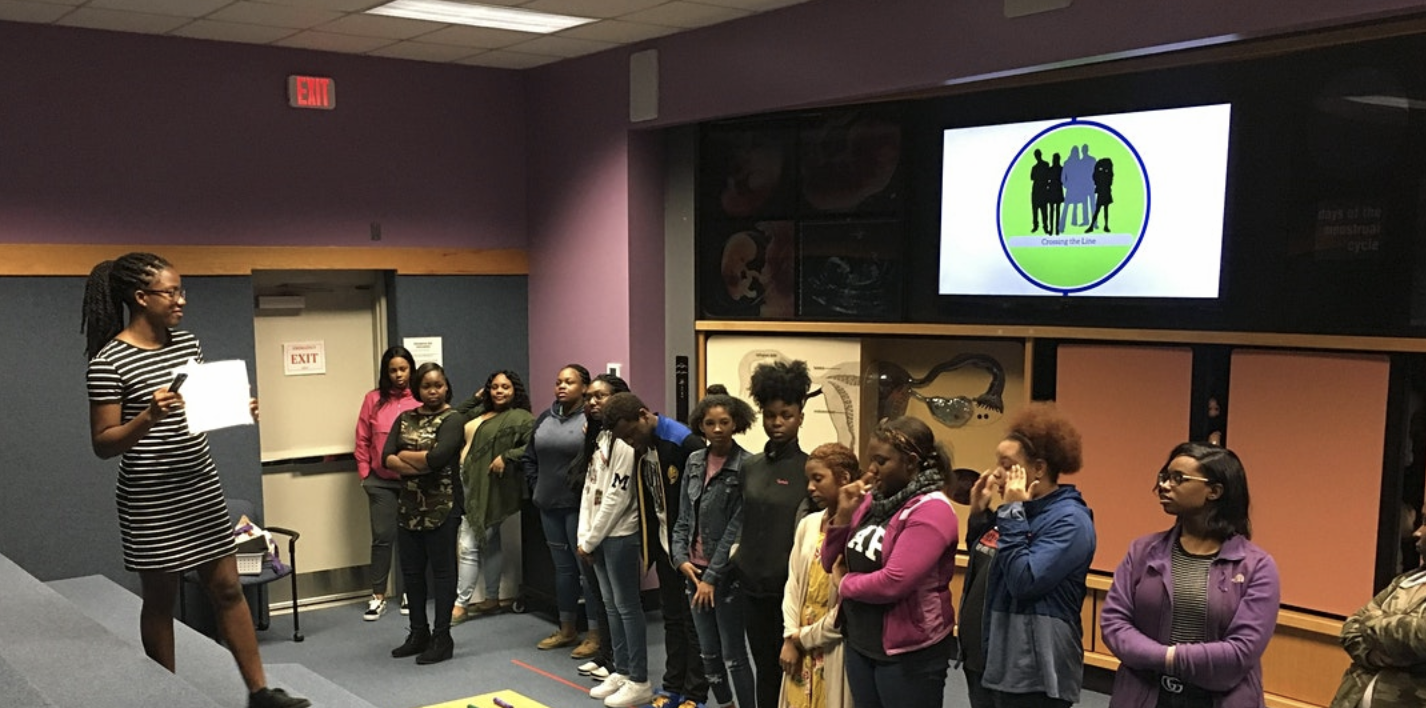
Program Length: 60 minutes
This program is available via Zoom on Wednesday, November 4, 2020, from 3:30 p.m. – 4:30 pm. Register Here.
Questions about this program? Contact Robin Pittman at r.pittman@poehealth.org.

Know the Signs of Human Trafficking
What is Human Trafficking?
Morgan Klinkowski Wilson MPH, CHES
Human trafficking is defined by the Trafficking Victims Protection Act as the exploitation of a person or persons for sex or labor using, “force, fraud, or coercion.” It is a public health issue that affects children, youth, and families across communities nationwide. In the United States, homeless and runaway youth are the most in danger of being trafficked. Through education, identification, and supportive role models, youth can be prevented from becoming victims of human trafficking. Looking upstream for the warning signs of human trafficking can save communities from falling prey to traffickers.
North Carolina ranked 6th in the nation for the highest number of cases in 2019, reporting 132 human sex trafficking cases to the National Human Trafficking Hotline.
Human trafficking is much like a business. In fact, it’s the second-largest organized crime in the world, bringing in around 150 billion dollars each year. There is supply and demand for human trafficking. The supply is the victims, and the demand is the buyers. Buyers are individuals who buy victims of trafficking for different services.
A trafficker is an individual who trades illegal goods or buys and sells humans for labor or sex. Traffickers come in all shapes and sizes. They include individuals, business owners, members of a gang or network, parents or family members of victims, intimate partners, owners of farms or restaurants, powerful corporate executives, and government representatives. Traffickers will often target young victims on the Internet, in homeless shelters for youth and domestic violence, at the mall, over the phone, through social media, and at school. Sex traffickers often target young victims because children and youth more vulnerable, and there is a higher demand for juvenile victims from buyers.
Traffickers often start with a process called “grooming.” Grooming is the process in which a trafficker will gain the victim’s trust over time by posing as a loving boyfriend or girlfriend, providing for needs such as buying clothes, meals, or even expensive gifts. Through grooming, the trafficker uses manipulation and coercion to slowly isolate the victim making them feel alone and vulnerable. Once the trafficker has gained trust and isolated the victim, manipulation, coercion, fraud, or abuse may begin.
Know the Signs
Human trafficking can be prevented or stopped by recognizing the warning signs, knowing when to report to law enforcement, and asking the right questions. Warning signs may include:
- A victim may have signs of physical abuse that seem unexplainable, or he/she is unwilling to describe them.
- A victim may not be wearing appropriate clothing for his/her age, the weather, venue, or situation.
- A victim’s actions or movements seem to be tightly controlled by another individual.
- A victim may be in a seemingly age-inappropriate relationship.
- A victim may have unexplainable absences.
- A victim may have frequent new gifts, money, travel opportunities, etc.
- A victim may have been a part of Child Protective Services, Foster Care Services, or frequent involvement with law enforcement.
Call to Action
Programs at the Poe Center can help prevent human trafficking through primary prevention. Programs are designed to help young people learn decision-making skills, goal setting, and open communication between parents and youth which promote a sense of higher self-esteem and are considered protective factors for human trafficking. 
In North Carolina, all able adults over the age of 18 are mandated to report certain conduct against a juvenile to law enforcement, including serious injuries, sex crimes, violent crimes, and child abuse. If you see the warning signs or you have a bad feeling, don’t be afraid to place a report. More often than not, you could be saving the life of a child.
Human trafficking is a well-oiled machine that snakes across our communities. We can prevent and stop traffickers from dragging youth into violent crime and traumatic experiences. Be a positive role model for the youth and children around you, participate in the Poe Center’s health education programs, actively listen to youth and children around you, and be somebody they can go to if something is wrong. Don’t be afraid to speak up when something feels uncomfortable or incorrect. Don’t be a bystander. We are stronger together than individually. Get involved in your community, share what you learn, and support North Carolina children and youth.
Resources:
National Human Trafficking Hotline Statistics
Human Trafficking
Expanding and Coordinating Human Trafficking-Related Public Health Research, Evaluation, Education, and Prevention
Featured Poe Program: Healthy Relationships 101 for Youth - Online
Grade Level: 8th-12th grades
Program Length: 60 minutes
This program will be held on Zoom on Wednesday, November 4, 2020, from 3:30 p.m. – 4:30 pm. Register Here.
Questions about this program? Contact Robin Pittman at r.pittman@poehealth.org.
Featured Activity: Attend our ONLINE Annual Meeting!
Join us for the Poe Center's 2020 Annual Meeting – Human Trafficking: Beyond Awareness with Primary Prevention – Online Event
North Carolina consistently ranks in the top ten for calls to the National Human Trafficking Hotline. Governor Roy Cooper proclaimed January as Human Trafficking Awareness Month to bring attention to this issue. Get tickets here.
Despite the prevalence of human trafficking and increased awareness of the problem in our community, confusion and misperceptions around root causes and prevention strategies remain. The Poe Center’s 2020 Annual Meeting and Conferences will address this knowledge gap. The purpose of the 2020 conference is to elevate the conversation past basic awareness, provide a deeper understanding of human trafficking, educate conference attendees about primary prevention strategies, and empower them to make an impact.
Monday, September 21, 2020
VIP Event, Poe Center Annual Meeting, and Beehive Exhibit Unveiling
6:00 p.m. – 7:30 p.m.
Tuesday, September 22, 2020
Keynote Address and Panel Discussion
11:30 a.m. – 1:30 p.m.
Wednesday, September 23, 2020
Keynote Address and Panel Discussion
7:30 a.m. – 9:30 a.m.
Keynote Speaker: Deborah A. Gibbs, MSPH, Senior Analyst, RTI International.