Testing Stress: Managing the end-of-school year demands
Testing Stress: Managing the End-of-School Year Demands
Tips for students, parents, and teachers
Heather Schnegelberger, CFLE
Health Educator
Poe Center for Health Education
There’s an old adage that says, “April showers bring May flowers,” suggesting that a little rain will bring the flowery hope of spring and summer. However, for many students, this time of year is flooded with math drills, review packets, spelling tests, and other practices designed to prepare them for the end-of-year testing. This pressure can feel like a storm, leading to the most stressful month on the school calendar.
In order to understand what students (and teachers) may be feeling this time of year, let’s take a look at the body’s nervous system and learn about different levels of stress.
The Nervous System
The nervous system is incredible! Two parts work together to navigate growth and survival: the parasympathetic and sympathetic. They link the brain to body systems and facilitate everything from digestion and respiration to memory and muscle movement.
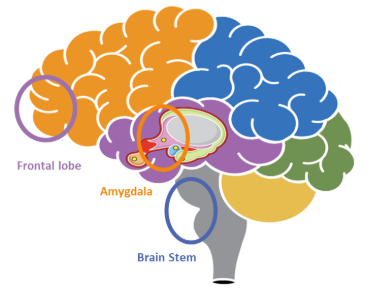
During stress, three specific parts of the brain are engaged:
-
- The brain stem, which carries out unconscious acts responsible for our survival.
- The amygdala, which warns us and acts as a “watch dog” for all types of danger.
- The frontal lobe, which is associated with our thoughts, speech, and decision-making
Those three parts of the brain engage whenever we face stress.
So how does this response affect some our kids when they take tests? Physically and mentally, the brain and body go on auto pilot to face any challenge. It looks like this:
-
- Our brain recognizes a stress or threat and engages the sympathetic nervous system.
- Our body reacts with the release of hormones that instruct our organs to act!
- Once the stress or threat is gone, the parasympathetic nervous system takes over for rest and healing.

Levels of Stress
Humans can experience three different levels of stress.

The second level of stress is “Tolerable Stress.” This is also a time-limited stress response, but help is usually needed to resolve the stress. For instance, if a child is ill or injured and a trusted adult helps them find a resolution, this could be considered tolerable.
The third level of stress is called “Toxic Stress.” This stress is long-lasting and may happen because someone experiences “too much for too long,” “too much too fast,” or “too little for too long.” Examples of this can include neglect, natural disaster, extended illness, bullying, and other stressful situations.
Only the individual going through the stress can identify if that feels positive, tolerable, or toxic. What may be tolerable for one person may be toxic for another.
Helpful Tips for Responding to End-of-School-Year Stress
So how can we guide students through this stressful time when students could be feeling any of these levels of stress? There are some practices that may help.
1. Keep a calendar
Give students a heads-up about upcoming assignments and other stressors. A three- or four-week calendar helps kids know what to expect. This technique can be used at home and at school. (www.mindfulteachers.org)

2. Encourage students to take breaks
This can look different for everyone, according to the Learning Center at UNC. For instance, some students may need movement, others creativity or socialization, and some may need nourishment. Adults can consider what is available at home or school that may meet those needs. (learningcenter.unc.edu)
3. Take care of the body’s physical needs
Take care of the body’s physical needs. Eat nutrient-rich foods, engage in physical activities, and be sure to get enough sleep. And don’t forget to hydrate. (theedadvocate.org)

4. Scale back on other activities
By helping kids prioritize what is important at the time, adults can teach children that it is okay to say “no” to less important things when feeling overwhelmed. (childrensdayton.org)
5. Talk openly about stress
Discuss how stress can be helpful or harmful, and reflect on strategies for responding to it. (mindfulteachers.org) By normalizing the stress response and learning methods that reduce stress and anxiety, students gain lifelong skills they can use over and over.

Don’t Forget the Teachers
Remember: students aren’t the only ones who face the stress of testing at the end of the year. For many school districts, the month of May is “Teacher Appreciation Month.” Reach out to your child’s teacher and say, “Thank you!” Let teachers know you are aware of their hard work and dedication.
The same stress-management strategies that work for kids can work for adults, too! Try these strategies with your children, your students or for yourself. Practicing these skills can help ease stressors and create more resilient minds and bodies.

Featured Program:
Building skills to manage your nervous and threat-response systems can help navigate stress and increase resilience. Through hands-on activities, discussions, and practice, participants learn practical tools to help balance their nervous system. The Community Resiliency Model® is evidence-based and trains community adults and youth to support themselves and others within their community.
The primary focus of this skills-based, stabilization program is to reset the natural balance of the nervous system. The goal is to help create trauma-informed and resilience-focused communities that share a common understanding of the impact trauma and chronic stress have on the nervous system and how resilience can be restored or enhanced through this approach.
Schedule this program for: 3rd – 12th Grade, Educators/Professionals, Adults
Program Length: 60 minutes to 2 day training
References:
5 ways to relieve end-of-school year stress –. (2026, March 23). Childrensdayton.org. 5 ways to relieve end-of-school year stress.
Hannay, C. (2025, June 1). Feeling stressed and out of time: ending a school year or anything — mindful teachers. Mindful Teachers. Feeling stressed and out of time: ending a school year or anything — mindful teachers.
Lynch, M. (2025, November 6). 9 Ways to Keep Calm and Survive the End of School – The Edvocate. The Edvocate. 9 Ways to Keep Calm and Survive the End of School.
Trauma Resource Institute. (2025, May 9). Trauma Resource Institute. https://www.traumaresourceinstitute.com/
UNC-Chapel Hill Learning Center. (2026, April 14). Taking Breaks – The Learning Center. The Learning Center. Taking Breaks – The Learning Center.
Professional, C. C. M. (2026, May 6). Epinephrine (Adrenaline). Cleveland Clinic. Epinephrine (Adrenaline): What It Is, Function, Deficiency & Side Effects.

Youth Voices Leading the Way: Why You Don’t Want to Miss the Tobacco-Free Community Forum
Youth Voices Leading the Way: Why You Don’t Want to Miss the Tobacco-Free Community Forum
Virginia Johnson, CPS
Substance Use Prevention Senior Director
Poe Center for Health Education
What happens when young people are given the space, support, and platform to lead? You get passion, insight, and a powerful vision for a healthier future. That’s exactly what’s coming to life at the Wake County Youth-Led Tobacco-Free Community Forum, and the Poe Youth Empowerment Team leading the charge are ready to inspire.
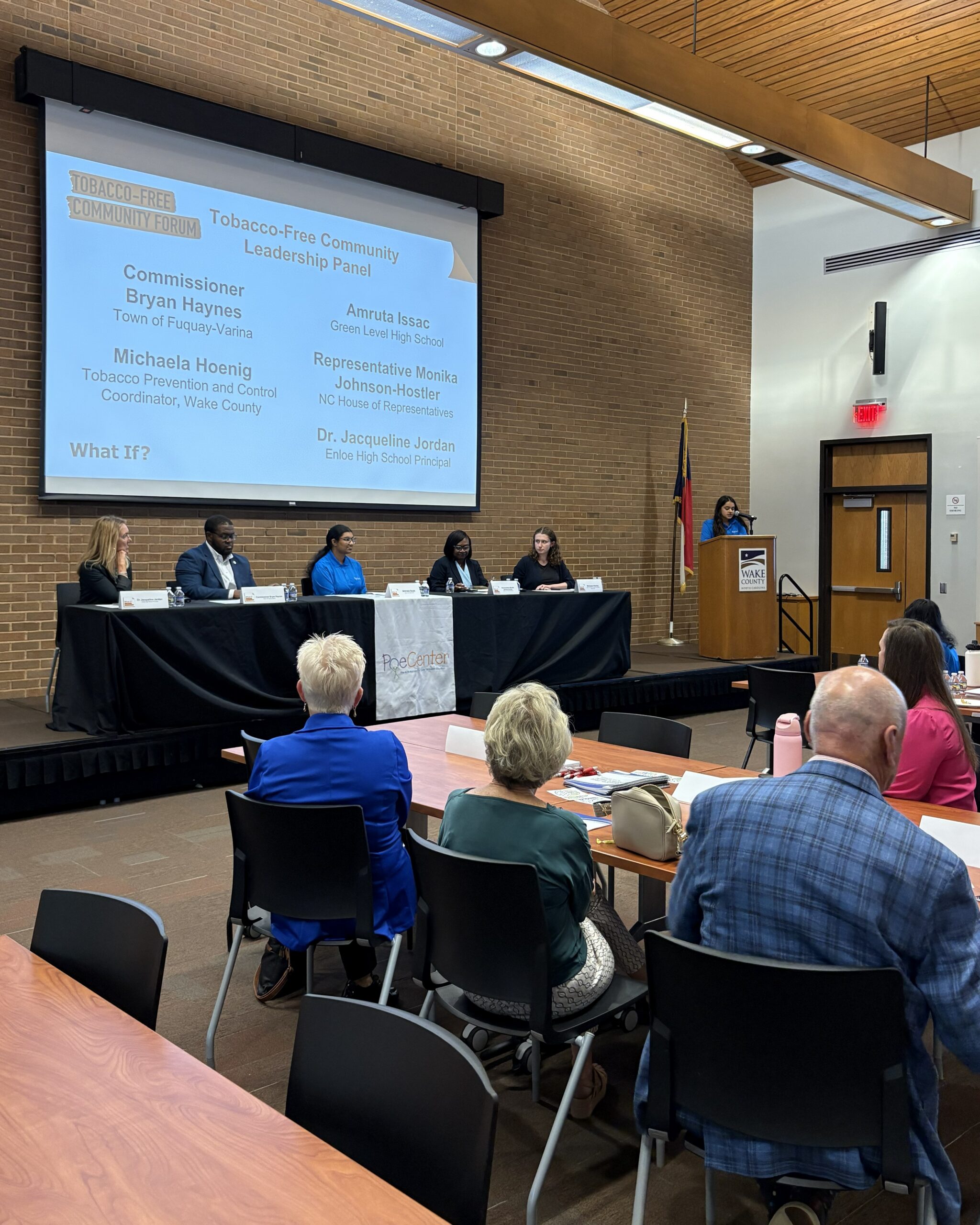
For students like Cameron, Ajani, and Shridula, the Forum is more than just an event. It’s a space where voices come together across generations and roles to have real conversations about tobacco use, vaping, and community health.
As Cameron shared, it’s about “inspiring change on all levels of the community,” while Ajani sees it as young people stepping up to “create a safe, positive environment.” Shridula highlighted something equally powerful: inclusivity and bringing “all types of people” into the conversation so everyone can play a role.
Tobacco-Free Community Forum: Beyond the Buzz
Date: Thursday, April 23, 2026
Time: 4:00 p.m. to 6:00 p.m.
Location:
Wake County Emergency Services Education Center
221 S Rogers Lane,
Raleigh, NC 27610
A Space Where Youth Voices Are Heard
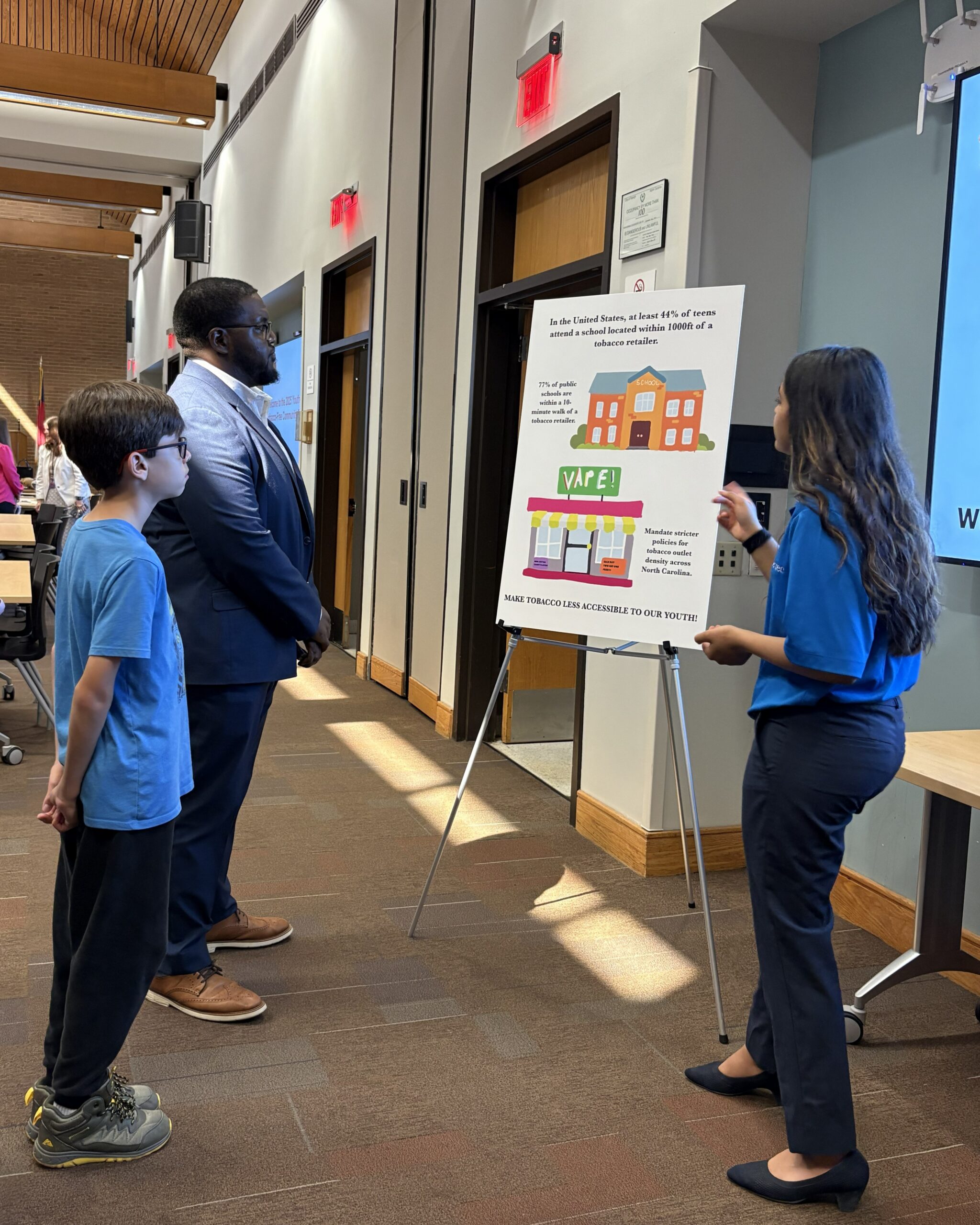
What makes this Forum especially meaningful is that it’s created, planned, and led by youth. These students are creating the change they want to see in their communities. Whether it’s presenting innovative photovoice projects, engaging in meaningful dialogue, or building connections with community leaders, they are stepping into advocacy roles.
For Cameron, this is a moment years in the making: “I’ve always dreamt of getting to be an advocate… this is the time and place where my voice gets heard.” Ajani is excited to collaborate with others who share the same passion for change, while Shridula is eager to bring fresh perspectives to the table by highlighting issues that often go unseen but are deeply connected to tobacco and vaping.
A Call to Action
The Forum goes beyond just learning. These young leaders invite attendees to think “beyond the buzz” and leave the forum with the knowledge, inspiration, and readiness to take action.
That action can look different for everyone:
-
- Having honest conversations with youth about tobacco and cannabis
- Sharing resources and supporting those who may be struggling
- Getting involved in local prevention efforts
- Advocating for stronger policies and funding
As Ajani put it, “If we continue to work together, there is hope for a better tobacco-free community.” And Shridula reminds us that even small steps, such as learning more or starting a conversation, can spark meaningful change.
Building Skills for a Stronger Future
Behind the scenes, these students are building lifelong skills while gaining knowledge about tobacco prevention. From leadership and communication to event planning and collaboration, they are growing into confident changemakers.
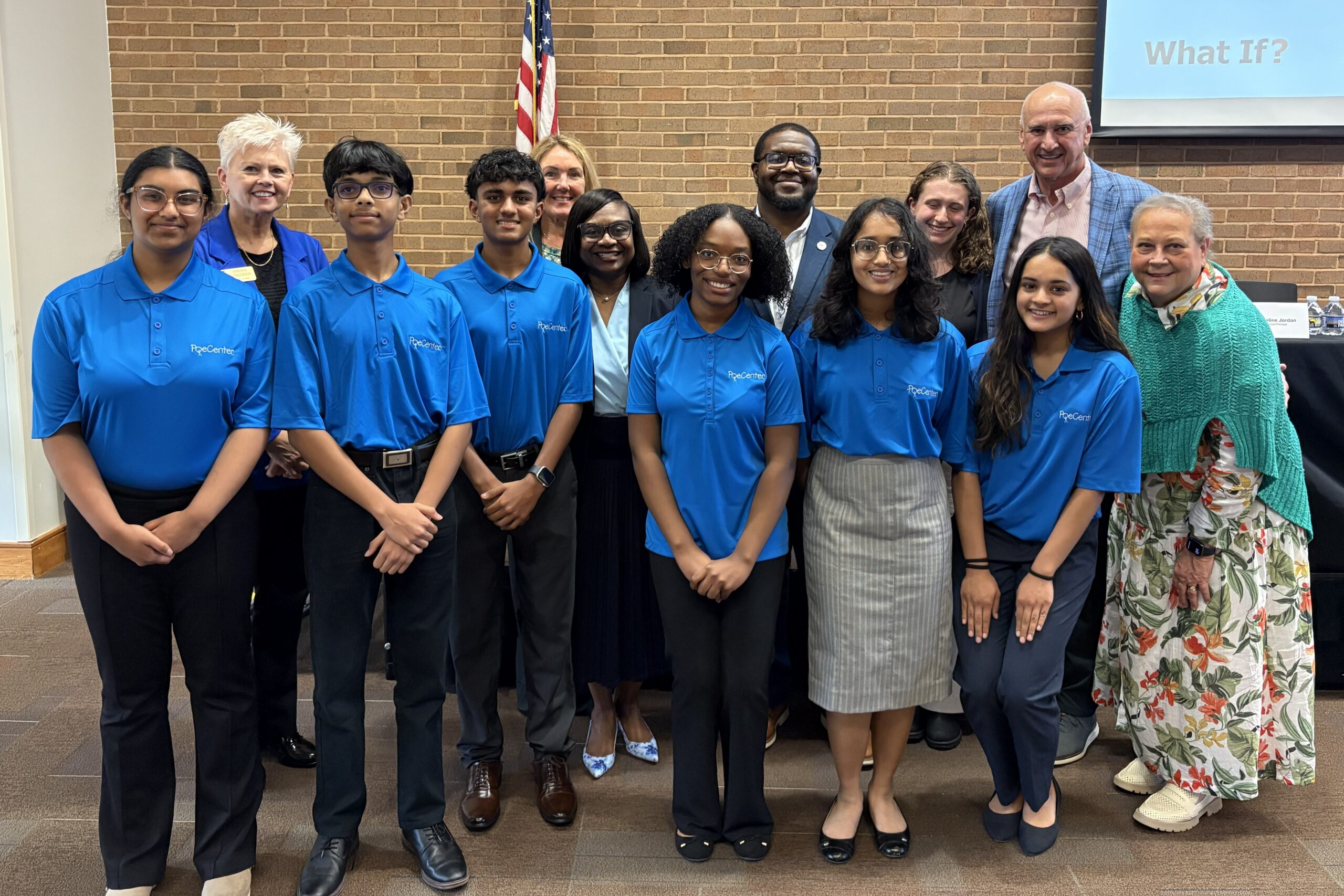
They’ve learned how to navigate group dynamics, lead with purpose, and think strategically – such as their work applying the Strategic Prevention Framework to address community issues in thoughtful, sustainable ways. Perhaps most importantly, they’ve learned that they are not alone. As Ajani shared, this experience reinforced “the importance of a strong, determined community when it comes to change.”
Be a Part of the Movement
The energy, passion, and commitment of these youth leaders is contagious, and it’s exactly why you should be in the room. The Wake County Tobacco-Free Community Forum is a movement powered by young people who are ready to lead, educate, and inspire change across our community.
Upcoming Event:
This is a FREE event. Register below:
Featured Program:
Vaping 101 educates participants on the latest research about the addictive nature of nicotine and how it impacts their growing brain and body. This program will cover important resources and skills to empower healthy decision making to navigate through substance use issues. Participants will be engaged in a group game format, videos and discussion.
Schedule this program for: 6th – 12th Grade
Program Length: 60 minutes