


Tooth Fairy Tips: How to Promote Good Oral Health In Children
Tooth Fairy Tips: How to Promote Good Oral Health In Children
Natalia Solera Ortiz, BA
Spanish Community Senior Specialist
Poe Center for Health Education
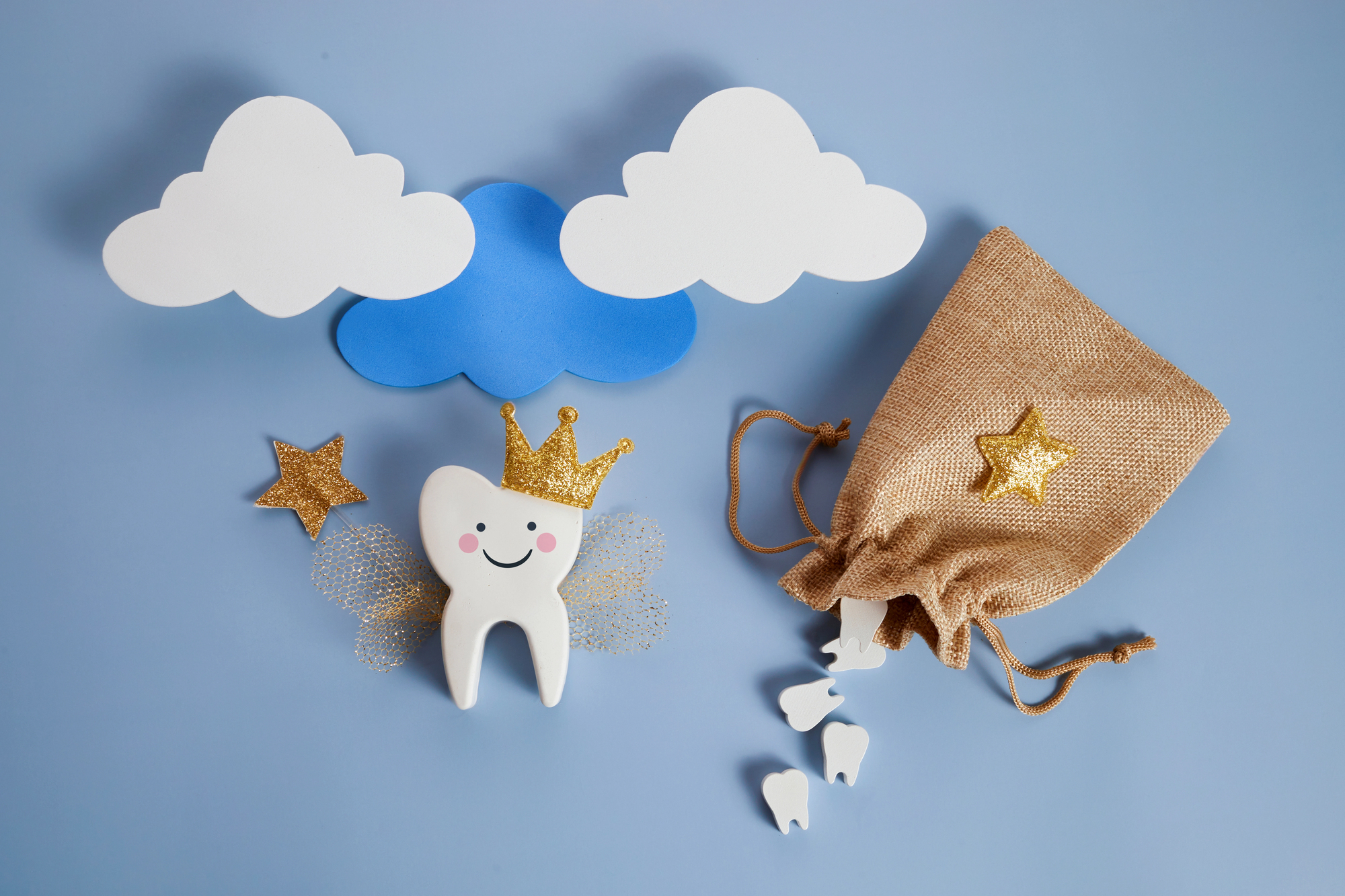
For many of us, one of our fondest childhood memories is the excitement of losing a tooth and impatiently awaiting the visit from El Ratoncito Pérez or, in American culture, the Tooth Fairy. El Ratoncito Pérez came quietly at night, traded our lost teeth for a small surprise, and left us with a bit of magic that many of us remember to this day. But what if El Ratoncito Pérez or the Tooth Fairy did more than collect teeth? What if they helped parents teach their children healthy dental habits?
El Ratoncito Pérez and the Tooth Fairy can be powerful allies in helping children understand the importance of brushing and flossing teeth, limiting sugary drinks and snacks, and visiting the dentist. By incorporating healthy dental habits into the fairytale story, oral care routines can become a positive and engaging experience.
Here are some strategies that parents and caregivers can use to promote good oral hygiene in children. These strategies can be made more fun by incorporating El Ratoncito Pérez, the Tooth Fairy, or your own
tooth-themed adventures.

Nutrition
A balanced diet is one of the ways to support children’s overall health as well as their oral health. Calcium plays an important role in maintaining strong enamel and healthy gums. Sugary snacks and drinks should only be enjoyed occasionally, as they can create an acidic environment. Over time, the acid can wear away the teeth’s enamel, increasing the risk
of cavities.
Try reminding your child that the Tooth Fairy loves strong, healthy teeth, and that certain foods help teeth grow strong. Encourage children to eat tooth-friendly foods, such as crunchy fruits and vegetables, calcium-rich foods such as dark green leafy vegetables, nuts, and seeds, and to choose water or milk more often than
sugary drinks.
Dental Hygiene
How early should an oral care routine begin? Oral hygiene should start in infancy, even before the first tooth appears. You can gently wipe an infant’s gums with a soft, clean cloth after feedings, then transition to brushing with a small, soft-bristled toothbrush once teeth begin to erupt.
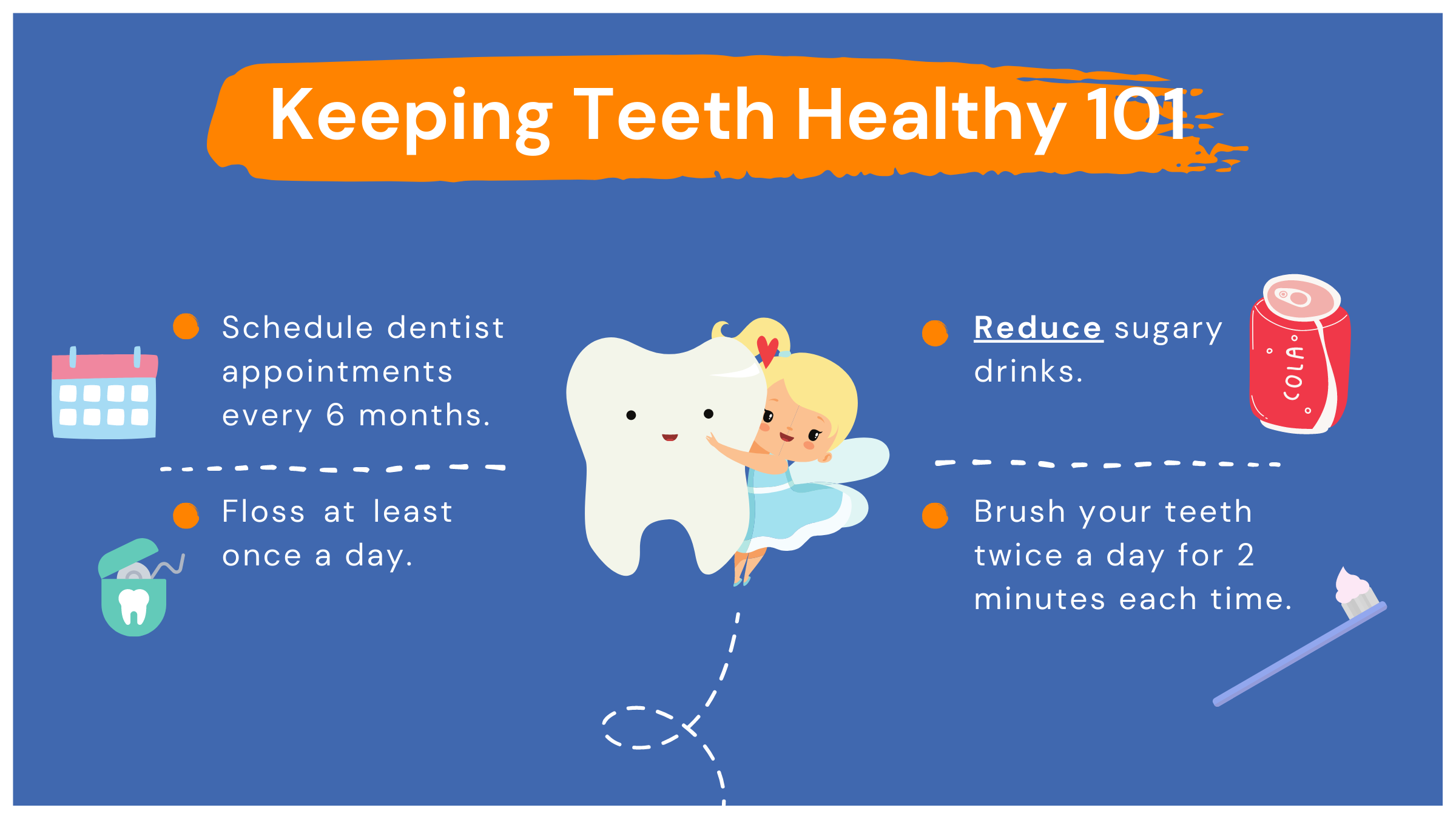
When it comes to teeth, two is the Tooth Fairy’s magic number. Children should brush their teeth at least twice a day with fluoridated toothpaste for two full minutes and floss at least once a day to maintain healthy teeth and gums.
Technology can make brushing more fun and interactive. Kid-friendly toothbrushing apps like Chomper Chums and 2-minute songs can help keep children motivated while supporting parents in establishing
consistent routines.

Professional Dental Care
Establishing dental care early is an important step in maintaining children’s oral health. Whenever possible, caregivers should schedule their child’s first dental visit when the first tooth erupts or by their first birthday, and continue at regular 6-month intervals or as recommended by a dental professional. These early visits allow dentists to ensure that teeth and gums are developing properly, identify potential issues before they become more serious, and help children become more comfortable with the sights and sounds of the dentist’s office.

Try incorporating the magic of the Tooth Fairy into dental visits – maybe the Tooth Fairy offers a small gift after a dentist visit, such as a new toothbrush, small prize, or sticker. During these routine visits, dental care professionals can also provide preventative treatments such as fluoride varnishes and sealants. These protective measures help prevent tooth decay and cavities, supporting long-term oral health.
Family Modeling
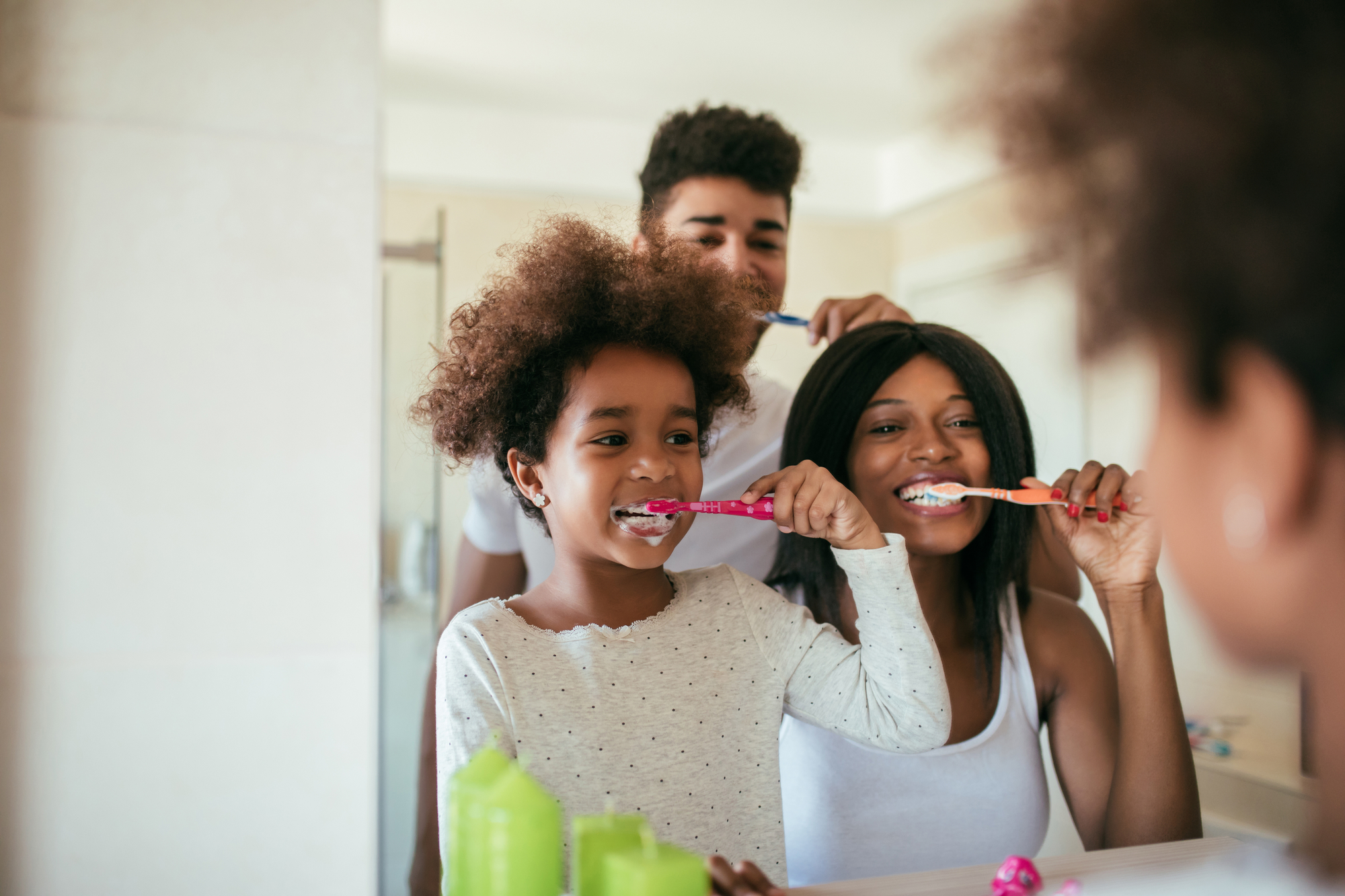
Children learn best by example, and we as adults can have a powerful influence on their oral health habits. Modeling proper nutrition and oral care habits reinforces positive behaviors and helps children understand the importance of these habits. By brushing and flossing alongside your child, you can teach proper techniques and reinforce consistent routines. This also allows you to correct improper techniques and reinforce the importance of brushing and flossing every day. Assure your child that you also know El Ratoncito Pérez or the Tooth Fairy, and that she helped teach you how to grow strong and healthy teeth.
Parents, you can further support your children by helping them feel comfortable with dental visits. Reading books about going to the dentist, talking through what will happen during appointments, and demonstrating a relaxed attitude towards dental care can reduce fear and promote positive dental experiences.
Remember, the magic of El Ratoncito Pérez or the Tooth Fairy doesn’t have to end with a lost tooth. By weaving some of these strategies into your children’s favorite bedtime stories, you can help your kids understand the importance of taking care of their teeth. A little imagination and fairy tale magic can help children build habits that can lead to a lifetime of healthy and confident smiles.
Sources
- Han, S., Chang, C., Wang, Y., Wang, C., Lee, W., Vo, T. T. T., Chen, Y., Cheng, C., & Lee, I. (2025). A Narrative Review on Advancing Pediatric Oral Health: Comprehensive Strategies for the prevention and Management of dental Challenges in Children. A Narrative Review on Advancing Pediatric Oral Health: Comprehensive Strategies for the prevention and Management of dental Challenges in Children.
- National Library of Medicine. (n.d.). Child Dental health. Child Dental health.
- National Institutes of Health. (2025). Fact Sheet for Parents. In U.S. DEPARTMENT OF HEALTH AND HUMAN SERVICES National Institutes of Health. Fact Sheet for Parents.
- Good oral health starts early: AAP policy explained. (n.d.). HealthyChildren.org. Good Oral Health Starts Early: AAP Policy Explained.
- Healthy mouth for kids. (2024, June 18). NIH News in Health. Healthy mouth for kids.
- How to Teach Your Children to Brush Their Teeth | Colgate®. How to Teach Your Children to Brush Their Teeth.
- Keeping your child’s teeth healthy. (n.d.). Nemours KidsHealth. Keeping Your Child’s Teeth Healthy.
- Oral health tips for children. (2024, May 15). Oral Health. Oral Health Tips for Children.
Featured Program:
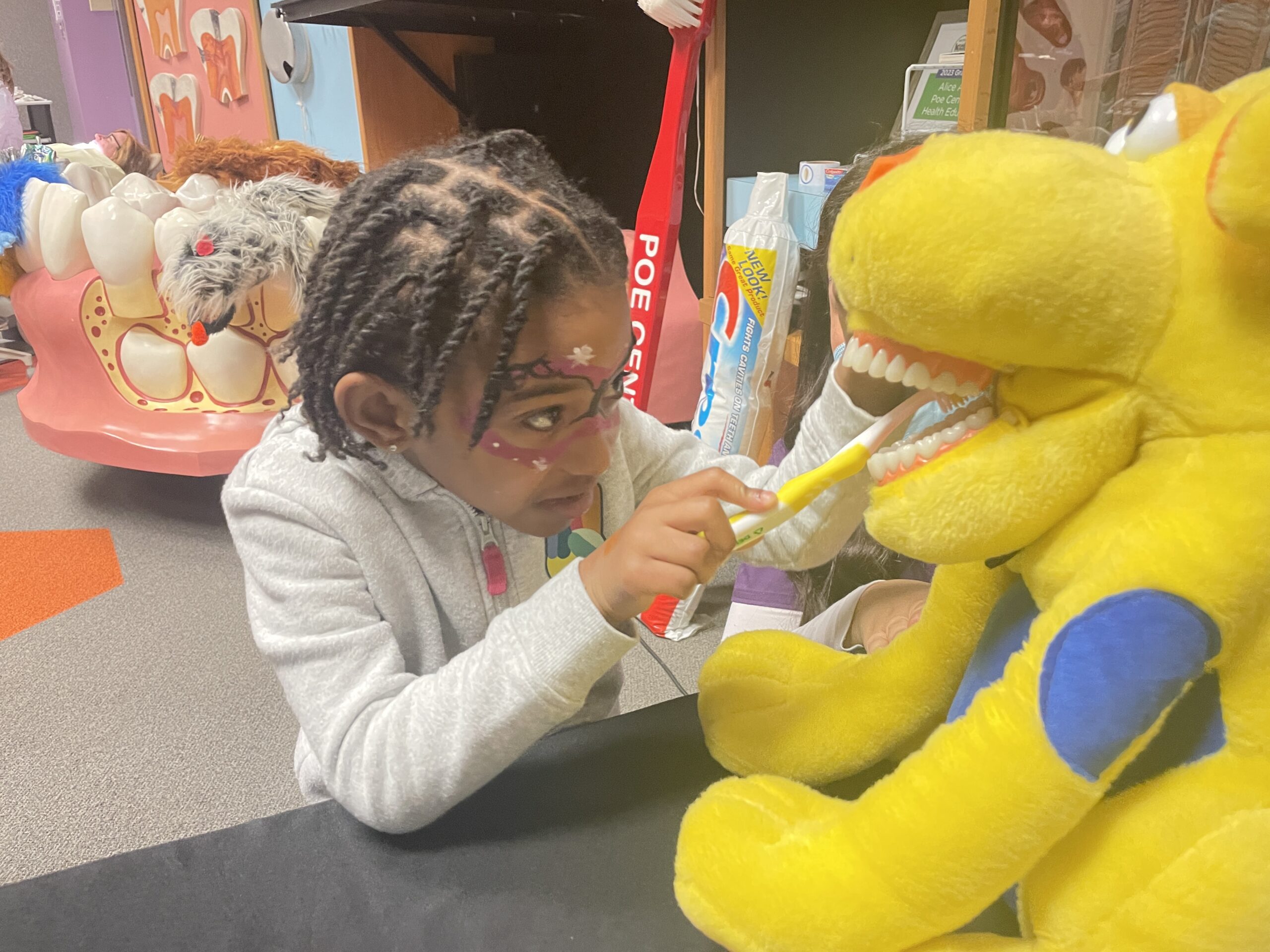
An exciting visit from Mr. Big Mouth will teach students the importance of proper brushing and flossing. Students play “Move It and Lose It” to demonstrate the exchange of primary teeth for permanent teeth. Annie and Moby™ take them on a visit to the dentist and a special guest, Captain Clean-Teeth, helps them leave this fun program with… Super Smiles!
Program Participants: Kindergarten, 1st Grade
Program Length In-Person: 45 minutes

Featured Resource:
Teach children and their caregivers the importance of good oral health habits. These oral health education resources and materials are available for download at no cost. Resources include activity sheets for kids, educational handouts and resources for large group instruction.


Growing Strong: Helping Children Thrive Using the 8 Dimensions of Wellness
Growing Strong: Helping Children Thrive Using the 8 Dimensions of Wellness
Virginia Johnson
Substance Use Prevention Senior Director
Poe Center for Health Education
Jessica Fowler, MS, CPS
MindWELL Associate Director
Poe Center for Health Education
As parents and caregivers, we want children to grow into healthy, confident, and resilient adults. One of the most powerful gifts adults can give children is the tools they need to increase their resilience and wellness.
There are eight dimensions of wellness that can be used as a map to guide your focus: physical, emotional, social, mental/intellectual, financial, occupational, environmental, and spiritual wellness.
As you focus on these dimensions, remember that wellness is not about being perfect. It is about learning balance, connection, and healthy coping. When families practice well-rounded wellness together, children develop habits that support lifelong health and happiness.
Teaching these skills doesn’t require extra classes or complicated lessons. You can weave the dimensions of wellness into everyday family routines.
Begin with weekly family check-ins by asking broad questions. Try asking:
“What helped your body feel good this week?”
“How did you help someone this week?”
“What made you feel proud or happy?”
Over time, family members will become more accustomed to asking and answering these broad questions. Your family can use the following tips to hone in on the eight dimensions of wellness together.

Physical Wellness
Promote physical wellness by moving, eating, and resting together through family walks, impromptu dance parties, stretching before bed, playing outside, cooking together, playing a sport, or riding bikes.
Try having a “Rainbow Meal” night by preparing foods filled with a “rainbow” of colorful produce, emphasizing the vitamins and nutrients in each fruit or veggie. Incorporating these activities helps children learn that caring for their bodies feels good.
Emotional Wellness
Help children increase their emotional wellness by talking about emotions, using a feelings chart, sharing highs and lows about each day at dinner, and practicing a new feeling word each week to build emotional vocabulary.
It is also important to open an honest dialogue and ask each other about both strengths and areas for improvement. When children feel their bodies becoming stressed, try suggesting a quick “reset” that will increase a child’s ability to bounce back.
Some resets include simple tasks such as:
-
- Taking a sip of water.
- Counting backward.
- Naming six colors in the room.
- 5-4-3-2-1 grounding using the senses.
Social Wellness
Promote social wellness by strengthening relationships and building connections through gathering for family game nights, watching a favorite movie together, doing puzzles together, and having playdates with friends.

Play the Poe Center’s custom-built Fortnite Island, Neural Fortification. Designed for middle-high school students, players embark on a journey to make healthy nutritional, social, and growth-mindset choices to fortify resilience within themselves. Try it out now!
Mental and Intellectual Wellness
Support mental and intellectual wellness by learning and growing together with visits to libraries, museums, and parks.
Try playing new games, working on a puzzle, having healthy debates that look at different perspectives, or experimenting with new hobbies. Learning together builds confidence and curiosity.
Spiritual Wellness
Spiritual wellness centers around meaning, purpose, and a sense of balance. Try to foster spiritual wellness by creating a gratitude jar, sharing one thing each person is thankful for before bed, or talking about shared family values.

Occupational Wellness
Foster a sense of occupational wellness by participating in activities that provide meaning and purpose to your children’s lives. This may include volunteering together, doing random acts of kindness, or helping with chores. These conversations and activities help children feel grounded and purposeful.
Environmental Wellness
Help children increase their environmental wellness by teaching them to care for their space. Some ideas include creating a calm corner in the home, composting together, recycling, and organizing as a family. Through these practices, children learn responsibility and teamwork.
CookWELL Kitchen
Learn about composting, recycling, and responsibility in the kitchen as you explore the Online CookWELL Kitchen.
Financial Wellness
An important facet of every child’s life is financial wellness. A sense of satisfaction with current financial situations can have an impact on overall wellness. Support your children’s financial wellness by teaching them how to pay for something at the store. Or, give children the task of creating a budget for an activity, meal, or toy.
As you implement the eight dimensions of wellness in your life and in your family’s routines, be sure to include room for self-care.
Remember, self-care is not selfish. Children learn self-care by watching adults, and they model their activity after you. When adults practice kindness toward themselves, this act teaches children to do the same. Small steps can make a big difference.
Wellness does not require perfection. It requires intention and consistency.
Sources
- Chen, S. (2018). Give Yourself a Break: The Power of Self-Compassion. Harvard Business Review, 116-123. Give Yourself a Break: The Power of Self-Compassion.
- Creating A Healthier Life A Step-By-Step Guide to Wellness. Substance Abuse and Mental Health Services Administration. Retrieved July 11, 2023, Creating A Healthier Life A Step-By-Step Guide to Wellness.

Featured Program:
As adults, we spend a lot of time caring for our children or others, and sometimes we forget our own self-care. This program will empower participants to explore the positives and negatives of stress and the effects ongoing stress can have on their mental, physical, and emotional health.
Participants will have an opportunity to explore self-care strategies and develop a plan to develop a wellness routine. During the discussion, we will also cover how stress affects youth, including tips on increasing mental wellness, promoting coping strategies, and building resilience.
Program Participants: Adults
Program Length In-Person: 90 minutes

Featured Activity:
Take a mindful stroll through the MindWELL Garden and Labyrinth, located in the Poe Center’s onsite PlayWELL Park. The garden is full of native and pollinator plants, plus a meditative labyrinth. Educational and mindfulness activity signs encourage visitors to explore. Visit the mindfulness activity library for a small souvenir.