Look Both Ways!
Look Both Ways!
Dana Orr, BS, MBA – Senior Health Educator
Look both ways….
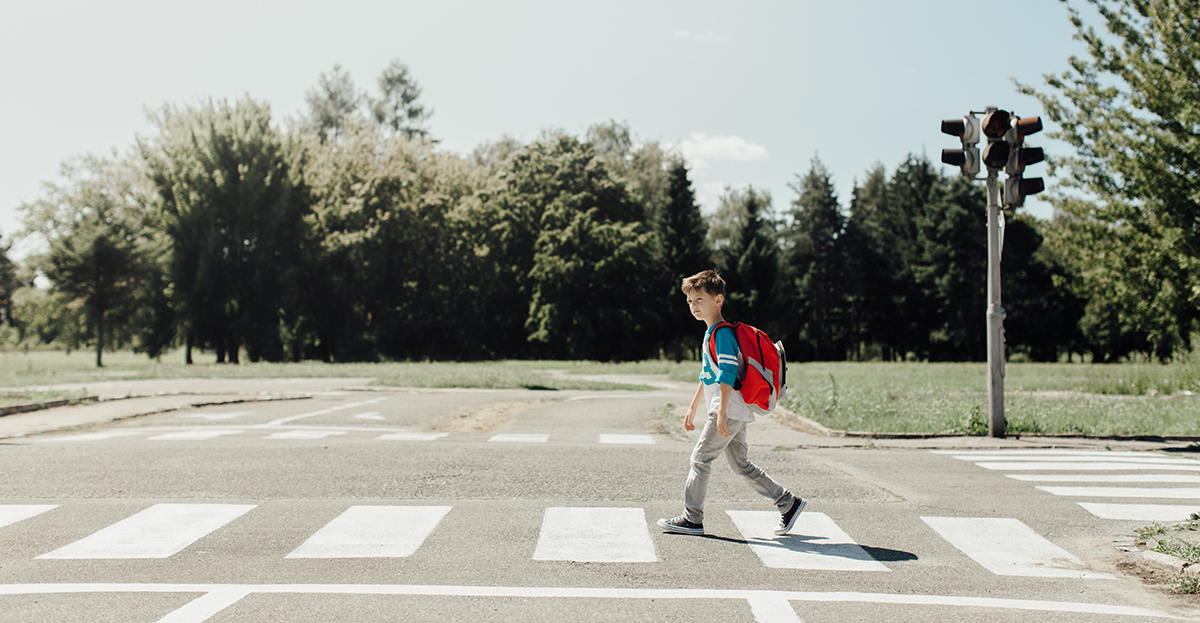
How often have you been reminded to “look both ways before you cross the street?" Of course, this is one simple and important tip of pedestrian safety, but not the whole message. In his article, “The Pedestrian State of Things in the United States,” Seth LaJeunesse, Research Associate, UNC Highway Safety Research Center, and Associate Director, National Center for Safe Routes to School, reports that in 2016, 5,987 pedestrians died on roadways in the United States. This represents a 9 percent increase from 2015 and the largest number of pedestrian fatalities in the U.S. since 1990. In light of these statistics, let’s review some basic walking and biking safety tips.
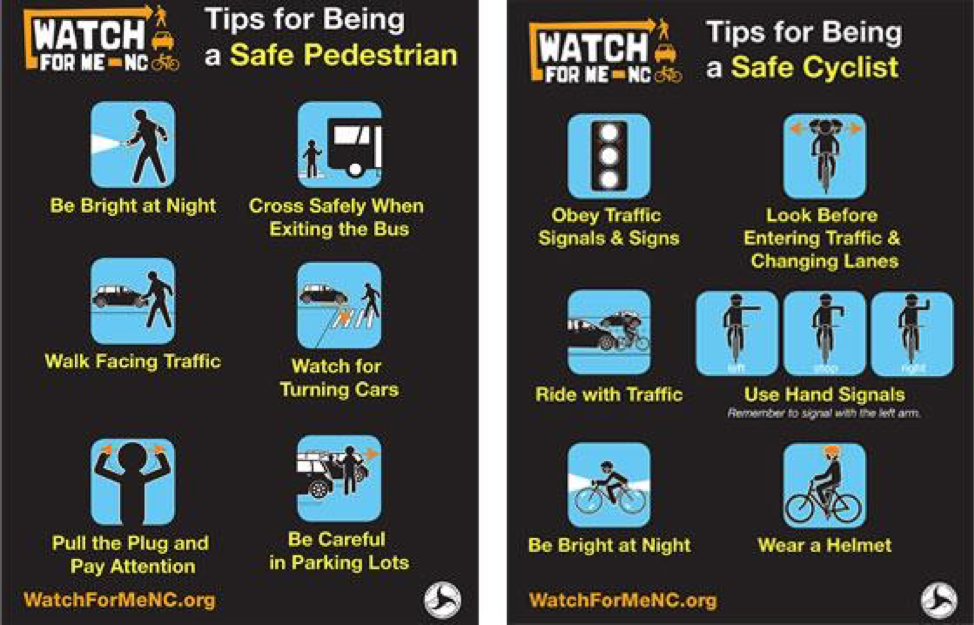
Be a safe pedestrian by...
Being bright at night: Enhance your visibility at night by carrying a flashlight, wearing reflective clothing like stickers or armbands, and walking in well-lit areas.
Crossing safely when exiting the bus: Cross behind the bus after exiting the bus to better see oncoming traffic, or cross at the nearest crosswalk.
Walking facing traffic: Walk as far away from the roadway as possible.
Watching for turning cars: Watch for turning cars before stepping off the curb.
Pulling the plug and pay attention: Put the phone in your pocket and focus your senses of hearing and sight on crossing safely.
Being careful in parking lots: Watch for cars backing up in parking lots, driveways, and parking garages.
Be a safe cyclist by...
Obeying traffic signs and signals.
Looking before entering traffic and changing lanes: Make eye contact with the driver. Don’t assume they see you just because you see them.
Riding with traffic: Ride in the same direction as car traffic.
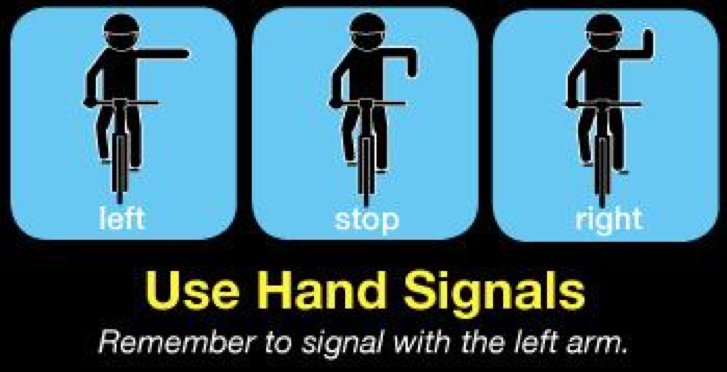
Using hand signals when biking:
Being bright at night: Wear reflective clothing like stickers and armbands, use a flashlight, use bike reflectors, and ride in well-lit areas when possible.
Wearing a helmet: Make sure helmet is properly sized and fitted.
Researchers in the United States remain hopeful to find causes for this rising death toll. LaJeunesse reports that “through collaborative research with colleagues in other parts of the world, including Australia, New Zealand, the Netherlands, and Sweden, we are exploring use of video technologies to estimate ‘pedestrian exposure to traffic danger.’ We are learning from each other how to coordinate police and hospital data toward getting a clearer picture of how and where pedestrians are injured. By knowing far more about how and where people get around on foot in the U.S. and abroad, we begin stepping toward making environments safer for all walkers in all places.”
So let’s do our part to make our streets safer for pedestrians and cyclists. Remember to share the road and be proactive and alert!
Be a safe driver and share the road with pedestrians and cyclists:
Drivers are reminded to turn on vehicle headlights at dusk and be vigilant in looking out for cyclists and pedestrians. Additionally, drivers should:
- Stop for pedestrians at crosswalks.
- Slow down and obey the posted speed limit.
- Yield to pedestrians and cyclists when turning.
- Look for pedestrians or cyclists before opening your door.
- Go slow if passing stopped vehicles in case they are stopped for pedestrians or cyclists.
- Allow three feet of space when passing bicyclists.
References:
http://www.berkeleywellness.com/healthy-community/environmental-health/article/defensive-walking-101
https://mpdc.dc.gov/page/share-road-tips-drivers-cyclists-and-pedestrians
https://www.nhtsa.gov/share-road-pedestrians-bicyclists-and-motorcyclists
http://www.triathlete.com/2015/02/training/defensive-riding_50226
https://www.ncdot.gov/bikeped/safetyeducation/safeRoutesToSchools/
https://www.ncdot.gov/bikeped/safetyeducation/letsgonc/7.html
https://www.nhtsa.gov/sites/nhtsa.dot.gov/files/8019_fitting-a-helmet.pdf
http://www.safetysign.com/pedestrian-traffic-signs
Let's Go NC! Simon Says Parking Lot Safety Game
Grades: K-5
Objective: Demonstrating how to be a safe pedestrian.
When the instructor calls out a key word, show what you should be doing if you were in a parking lot.
Allow all children to line up in rows in front of the instructor.
The instructor will call out several key words for children to mime:
- “Park” = sit in place
- “Exit” = look both ways
- “Walk” = walk in place
- “Vehicle” = freeze
- “Unlock” = open door
- “Enter” = sit and buckle seat belt
Featured Poe Program: Coming soon! Duke Energy sponsored Electronic Atrium Kiosk “Seymour’s Walk and Bike Safety Game!"
Participants will learn:
- How to navigate an interactive game when faced with various walking and biking scenarios.
- Safety tips for walking and biking.
- Cyclist hand signals.
- The proper way to walk and bike at night.
- Safe ways to cross the street.
- How to be a focused, attentive pedestrian and cyclist.
- Traffic and crosswalk signals.
- How to be safe with no sidewalks.
- How to be safe at a bus stop.
- How to safely walk and cycle in parking lots, driveways, and parking garages.
Call us to schedule a program today.

Beyond Sunscreen: Tips for Summer Safety
Beyond Sunscreen: Tips for Summer Safety
Cammie Bates - LAT, ATC, MPhys
Summertime is finally upon us, which also means it’s time to get outside and explore the great outdoors. Before you lace up those running shoes or don your new bathing suit, take a few minutes to consider summer’s unique safety challenges. The days are longer, hotter, and more humid, so it’s important to stay aware of weather, sun, hydration, water, and critter safety concerns.
Sun Safety:
It’s important to be sun safe all year long, but summer’s intense rays make this time of the year particularly critical. Rays are most intense between 10 a.m. and 4 p.m., which could lead to skin damage from ultraviolet (UV) rays. To avoid intense sunlight, check your shadow! If your shadow is shorter than you, the rays are too intense, and it is time to seek shade.
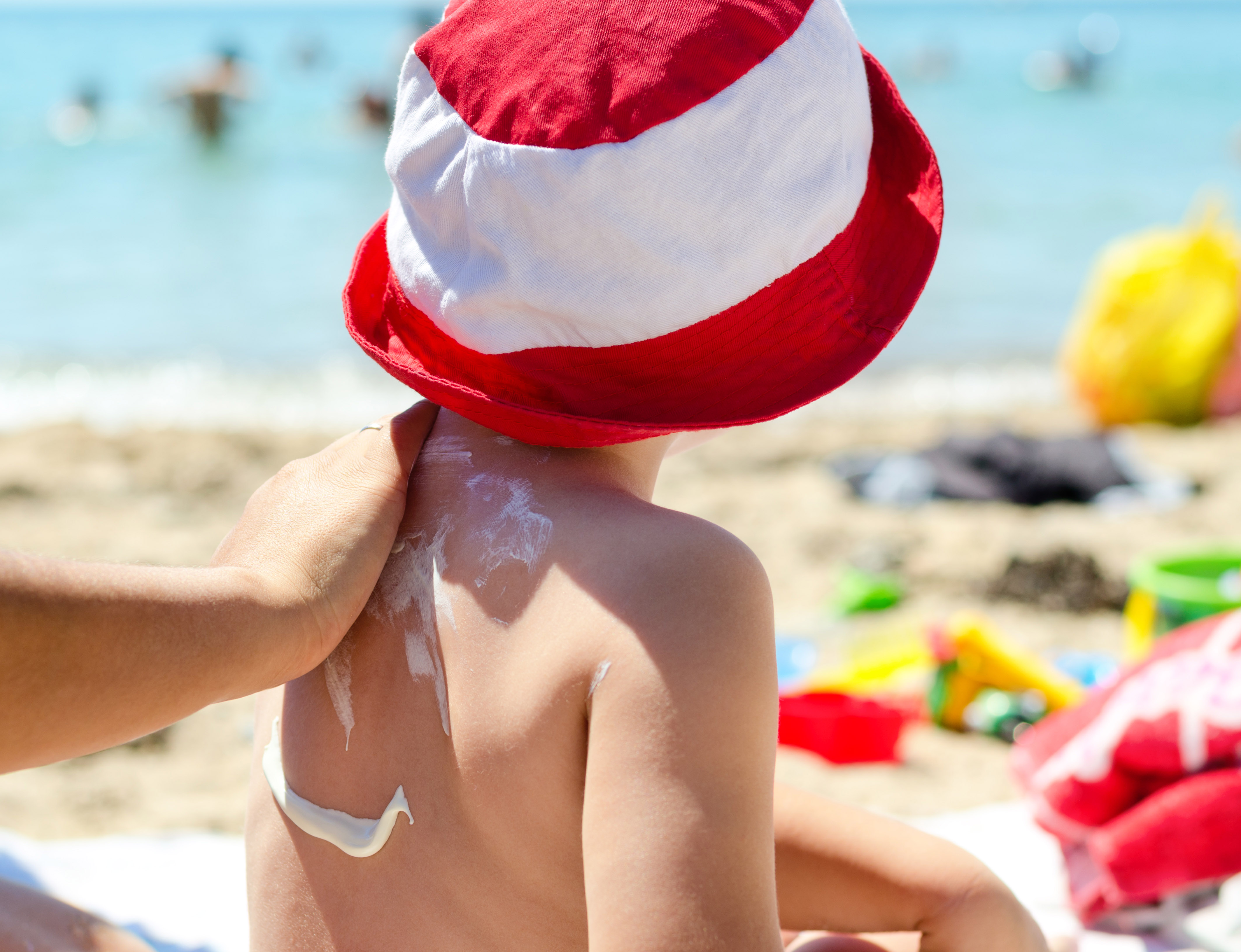
A common misconception is that sunscreen will protect your skin all day long. Sunscreen is only effective for up to two hours and needs to be applied at least 30 minutes before going outside. You must also reapply sunscreen throughout the day, especially if you are sweating or playing in the water. Remember, you don’t have to be by the pool or on the beach to experience sun damage. Sun damage can happen in your backyard, in the city, or on a cloudy day.
When choosing a sunscreen, choose an SPF of at least 30. Select a lotion rather than a spray, since lotions provide fuller coverage. Consider any medications that may make your skin more sensitive to UV rays, such as acne medication or antibiotics. Check with your doctor or pharmacist if you are concerned.
Another sun protective habit is to cover up! Wear protective clothing, sunglasses, or a wide-brimmed hat. Get creative. Kids can make hats from newspapers, which makes a fun summer activity. Check out our classroom activity below for ideas.
 Hydration:
As heat and humidity increase during the summer, remember to stay hydrated. Continue drinking at least eight cups of water per day and more if you are playing outside or exercising. Failure to stay hydrated in the heat can cause heat cramps, heat exhaustion, or even heat stroke. Learn the signs of each here.
Thirst is not an accurate measure of hydration, so make sure to drink up even if you don’t have the urge. Keep a water bottle nearby and enjoy hydrating foods, such as watermelon, strawberries, peppers, or celery. Add some pizzazz to your water by dropping in fruit, or make iced tea. Avoid sugar to keep your drink a healthy one.
Water Safety:
Swimming is a great way to be active during the heat of the summer. However, there are safety tips to keep in mind:
- When hanging out near bodies of water, make sure everyone can swim or is supervised and safe.
- Supervise children even if a lifeguard is on duty.
- Anyone under the age of 13 is required to wear a life jacket when boating, but encourage everyone, even adults, to wear them as well.
- Swim near lifeguards and educate everyone about rip currents when at the beach.
- Caught in a rip current? Don’t panic. Swim parallel to the shore until you escape the current.
- Seek shelter during inclement weather.
Bug/Critter Safety:
Bugs and other critters tend to thrive during the summer months. Be on the lookout for critters and make sure to check yourself and children before returning indoors.
Ticks can cause serious complications if not found and treated, so check your entire body when you come inside. Remove any clothing that may contain ticks and shower and wash as soon as you’re done with outdoor activities. If you do discover a tick, don’t fret. Grab a pair of tweezers, place them around the tick as close to your skin as possible, and pull the tick out. A thick credit card can help with removal if tweezers are unavailable. If you do notice a tick, pay attention to your body for the next few days. If you feel sick or develop a rash, go to the doctor.
Mosquitos pose a similar threat, as they can carry viruses as well. Protect yourself with insect repellant. Repellents with DEET offer 2-12 hours of protection, depending on the percentage of DEET in the product. These products are considered safe for normal use by the Environmental Protection Agency (EPA).
Being active and playing outside during the summer is good for your brain and body! Following basic safety practices helps avoid potential dangers and ensures everyone can thoroughly enjoy all that summer-time fun. Follow @PoeCenter on Twitter using the hashtag #PoeFit for more tips for a safe and healthy summer.
Resources:
CDC: Make Summer Safe for Kids
Parent: 10 Rules for Summer Safety
American Cancer Org: Be Safe in the Sun
American Academy of Pediatrics: Sun Safety and Protection Tips
American Heart Association: Staying Hydrated - Staying Healthy
Johns Hopkins Medicine: Heat-Related Illnesses (Heat Cramps, Heat Exhaustion, Heat Stroke)
American Academy of Pediatrics: Swim Safety Tips
For the Classroom: Making Sun-Safe Hats
Grades: Elementary students
Objective: Learn how to make a sun safe hat that is fun to make, decorate and wear!
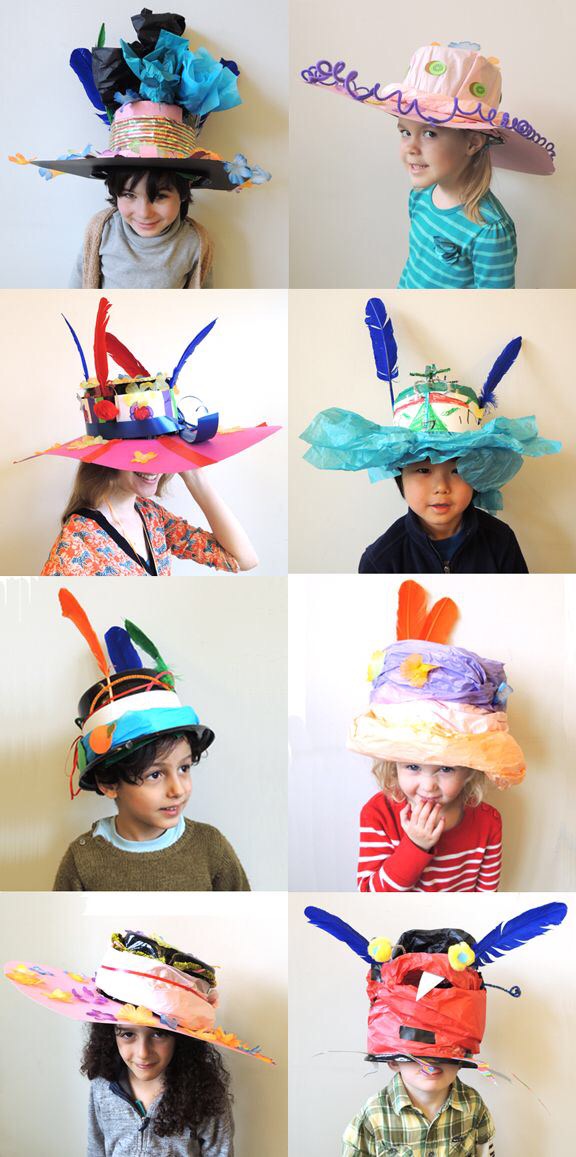 Make a sun hat! Remember hats that cover the eyes, face, neck, and ears offer the most protection from the sun.
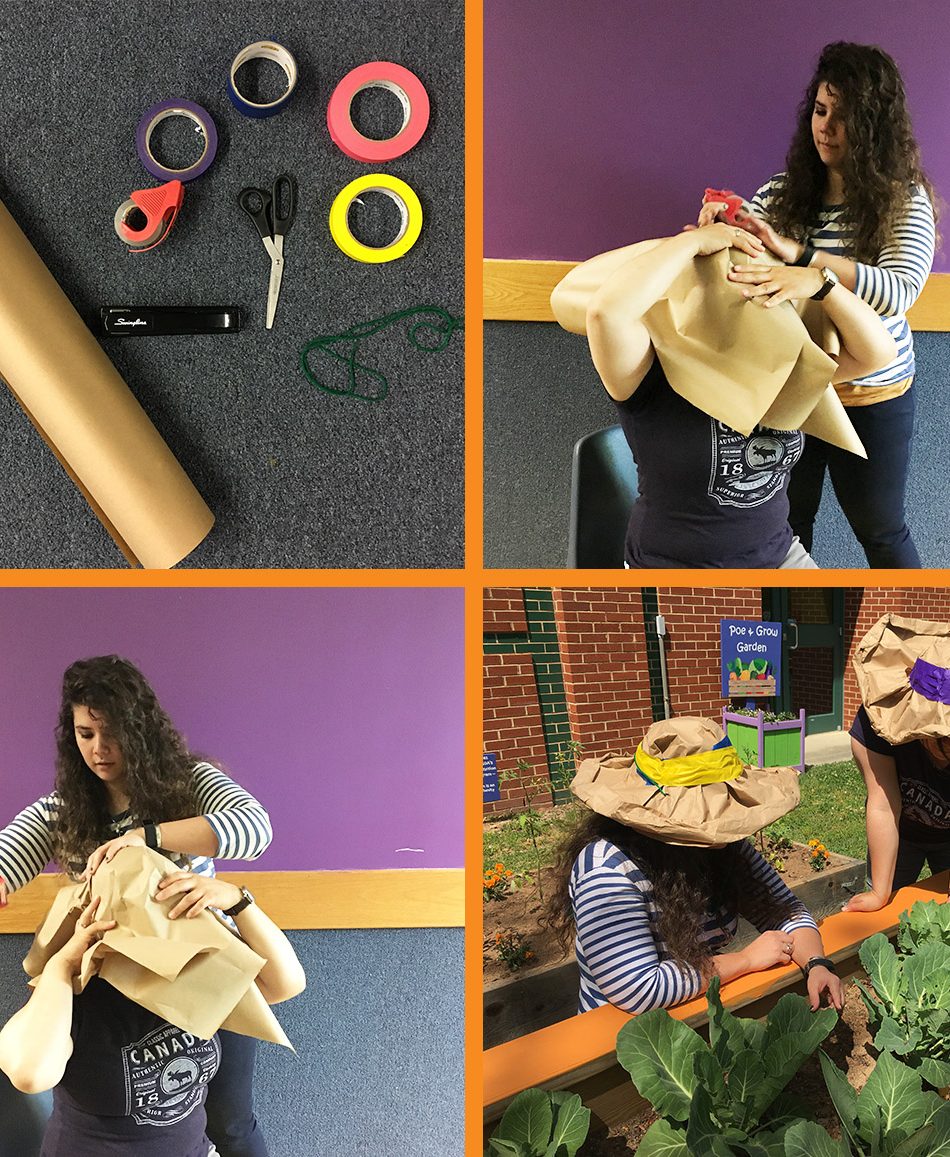
Here is what you need to make your own sun hat!
- 3-4 full-size newspaper sheets or butcher block paper
- Tape
- Stapler
- Decorations- ribbon, flowers, markers, tape, etc.
To begin, lay the 3-4 sheets of newspaper, unfolded, on top of each other at various angles.
Pick up the stacked newspapers and place them at the center of the child’s head. Begin to shape the hat by pushing the paper down, forming it around the shape of the head.
Once the crown/top of the hat is shaped, tape around the head just above the eyes.
After you have taped the shape of the hat, fold, roll, and staple the edges to create the circular shape of the brim. Now you’re ready to decorate!
Check out this page for more inspiration.
 Featured Poe Program: Summertime Safety
Grade Level: Kindergarten - 5th
Program Length: 45 minutes
Safe outdoor fun is the focus of this program. Children learn about protection from the sun, signs of overheating and dehydration, safe warm weather exercise and nutrition, poisonous plants, bug bites and more. Be active, stay safe, and have safe fun in the hot sun.
Schedule a program with Poe today!
National Prevention Week: Action Today. Healthier Tomorrow.
National Prevention Week: Action Today. Healthier Tomorrow.
Virginia L. Johnson - CSAPC Substance Use Prevention Manager
It is National Prevention Week, and it is time to stand up, speak out, and take action to raise awareness about substance use prevention and positive mental health promotion. National Prevention Week is SAMHSA’s (Substance Abuse and Mental Health Services Administration) annual observation to increase public awareness around these important issues that impact children, youth, families, and communities. According to SAMHSA’s National Survey on Drug Use and Health (NSDUH), youth are most likely to start using substances for the first time during the months of June and July. National Prevention Week is always held the third week of May, just before these prime summer months, when youth are most at risk.

During National Prevention Week, SAMHSA highlights significant challenges today's youth are facing. This year's themes include:
- Promotion of Mental Health and Wellness
- Prevention of Underage Drinking and Alcohol Misuse
- Prevention of Prescription and Opioid Drug Misuse
- Prevention of Illicit Drug Use and Youth Marijuana
- Prevention of Suicide
- Prevention of Youth Tobacco Use
So what can schools, communities, and families do to raise awareness throughout the year and not only during National Prevention Week? Get involved!
Individuals, parents, teachers, and organizations can get involved by hosting event(s) that raise awareness on these important topics. Events can be big or small. Examples include:
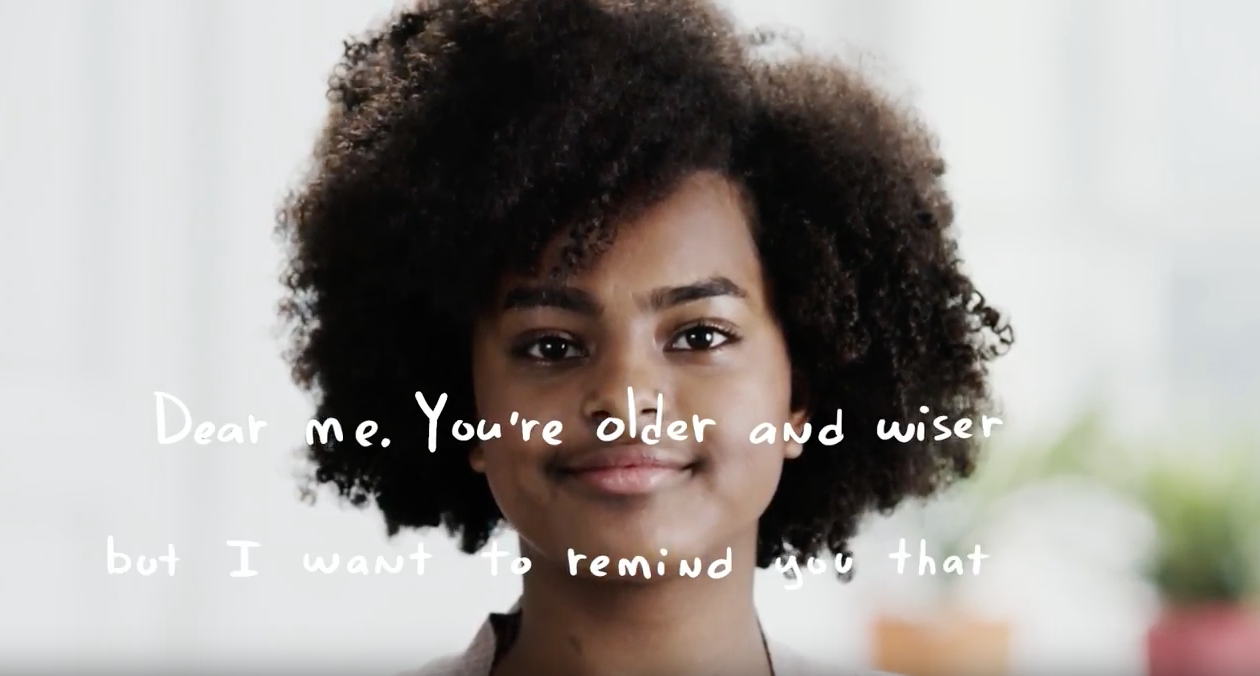
- Take the "Dear Future Me Challenge"
- Hosting a health fair.
- Painting a school mural or having art contests themed around healthy living.
- Hosting snack socials to reduce stress on campus.
- Sponsoring fun runs or walks for prevention.
- Having moments of silence during school or other events in honor of prevention.
Visit SAMHSA's National Prevention Week website to learn more about National Prevention Week and activities.
References:
For the Classroom: Dear Future Me Challenge
Grades: 6th - 12th grades, young adults
Objective: Commit to current healthy behaviors today that will impact long-term health
Youth can get involved in the Dear Future Me Challenge by writing a letter to their “future self” about what they’ve accomplished and what steps they’ve made to ensure a healthier tomorrow. “Letters” can even be in the form of a video and shared via social media. There are many creative ways to participate in this challenge. The goal is participation, involvement, and awareness of healthier decision making.
How to Participate
1.Write a letter or draw a picture about the choices you’re making to live a healthy, happy life.
2. Take a picture of your letter or record a video of yourself reading your letter.
3. Share it on social media using the hashtag #DearFutureMe and #NPW2018.
4. Tag a few friends so they can participate and add their Dear Future Me letter to the NPW conversation.
5.Share any or all of the Dear Future Me videos on social media to encourage others to participate as well.
Featured Poe Program: For the Health of It
Grade Level: 6th – 8th
Program Length: 60 minutes
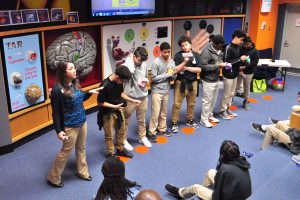
Students will discover how using drugs and alcohol can damage their brains and bodies. This class is centered around interactive activities that focus on “showing and not telling” kids how their brains are affected by alcohol and drug (inhalants, marijuana) use. Real life scenarios are used to help students analyze how a “drugged” brain affects their actions and decision-making skills. Students will also engage in role-play reinforcing refusal skills.
Schedule a program with Poe today!

Teacher Appreciation Week: Take Care of Yourself!
The Poe Center loves teachers! We couldn't do what we do without you. From making reservations to coordinating buses to organizing permission slips, you make field trips to the Poe Center possible. Your commitment to health education makes healthy students which makes a healthy NC. So we want to keep you healthy too!
In honor of Teacher Appreciation Week, we have compiled our top five tips for self-care. As you prepare for the busy end-of-year activities, it is important to spend time on self care in whatever way is most meaningful to you. Burnout, especially this time of year, can be tough, but here are a few tips to help manage stress and increase wellness. Try them with your students to help their stress, too.

1.) Breathe! Breathing is the fastest and easiest way to switch off the body’s stress response. Here are few of Poe’s favorite breathing techniques.
2.) Reach out to friends, family, and loved ones for support. Talking is an effective great way to process feelings and think of creative solutions to challenges.
3.) Exercise! Exercise releases feel-good endorphins and gets your body active. Even a few minutes of movement can have lasting positive effects throughout the day. Strive for 30 minutes every day. Brain breaks are a great physical outlet during the class day - they give your students and you a break. Learn more.
4.) Get creative! Utilizing a different part of the brain and being creative has many mental health benefits. Try drawing, coloring, acting, pottery, etc. and see what you and your students dream up.
5.) Go outside, especially during this pleasant spring weather. Just five minutes of outdoor activity - walking, gardening, etc. - can have a positive impact on mood and self-esteem.
Remember self care looks different to everyone. Finding strategies that work for you, even for a few minutes each day, can dramatically impact your health and mental wellbeing. Learn more about wellness here.
Effects and Prevention of Underage Drinking
Effects and Prevention of Underage Drinking
Jessica Jones – CSAC, LCAS-A
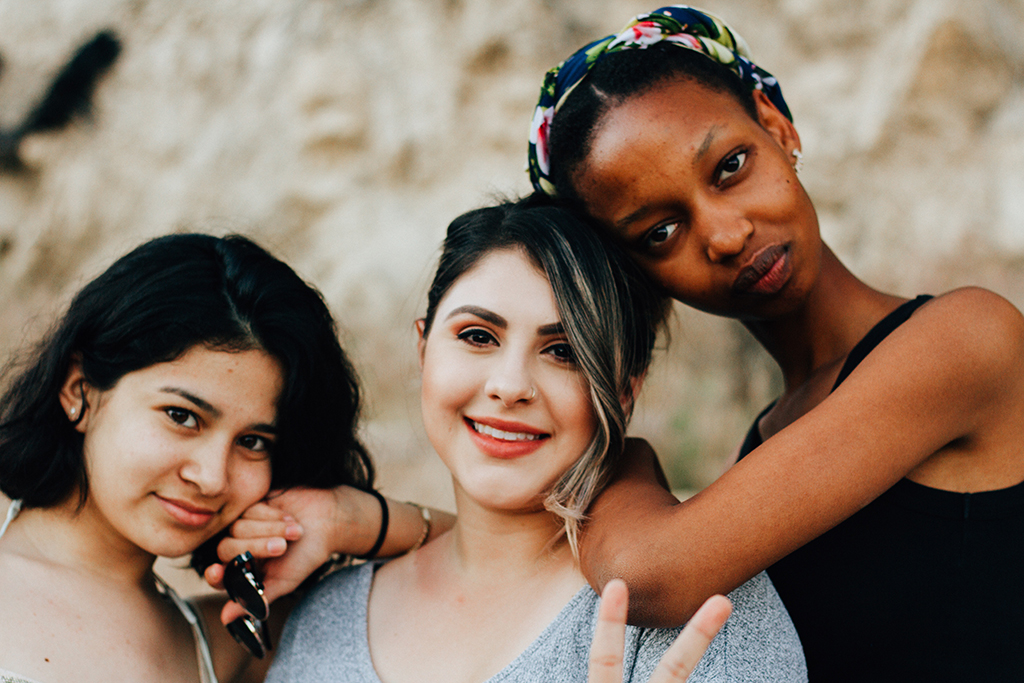
Underage drinking is a real concern for parents of adolescents as exposure to underage drinking may start as early as middle school, and for a small percentage, elementary school too. Since 1975 The Monitoring the Future Study has measured adolescent substance use trends in 6th, 8th, and 12th grades. While overall binge drinking rates are significantly lower than the peak in 1997 (16.6% of 12th graders today compared to 31.5% in 1997), binge drinking still remains a concern as underage drinking is linked with other negative health outcomes such as intimate partner violence and injury.
The 2017 survey revealed that underage drinking mostly involved binge drinking of five or more drinks in a row. Binge drinking rates steadily increase as adolescents get older: 3.7% of eighth graders, 9.8% of 10th graders, and 16.6% of 12th graders binge drink (Monitoring the Future 2017). Additionally, the opioid crisis has sparked new concerns about underage drinking. Nationally one out of eight high school seniors reported misusing opioids, and seven out of ten have combined opioids with at least one other substance (“Teens Mix”, 2013). Teens primarily mix opioids and marijuana (58.5%) with alcohol being a close second at 52.1%. Teens who have mixed opioids with other drugs are four times as likely to report frequently getting drunk (“Teens Mix”, 2013).
Frequent binge drinking increases the risk of accidents and violence, as underage drinking places youth at a higher risk of suicide, homicide, alcohol poisoning, sexual assault, and traffic accidents. Alcohol use, especially binge drinking, negatively impacts adolescent brain development and increases the risk of alcohol dependence later in life. Persons who begin drinking in their teens have a higher risk of developing substance use disorder when compared to those who begin drinking at 21 or later. Delaying onset of first use is critical to minimizing the risks of developing substance use disorder. (“Underage Drinking”, 2017). The video Under Construction: Alcohol and the Teenage Brain explains the effects of alcohol on the development of the teenage brain.
Understanding the motivations that prompt adolescents to binge drink will inform prevention efforts. Aside from individual differences, several common factors play a role in the initiation of underage drinking: accessibility of alcohol, peer influence, perceptions of drinking as a common teen experience, or masking an underlying mental health issue. Teens might also be influenced by the glorification of substance use in music, movies, and television. Substance use might also provide an escape from stress or an outlet to release life’s frustrations. Adolescents who struggle with being alone, staying busy, or satisfying the need for excitement might use alcohol to assuage those needs. Also, alcohol may provide a common ground to interact with other peers. Still, others might be attracted to the instant physical gratification that alcohol provides and short-term confidence to interact socially (“Top 8 reasons”, 2017).
According to the National Institute of Alcohol Abuse and Alcoholism parents can do the following to help prevent alcohol use at an early age:
- Talk about the dangers of drinking.
- Model positive behaviors. If you drink alcohol, drink responsibly.
- Serve as a positive role model in general.
- Do not make alcohol readily available in the home.
- Get to know your child’s friends.
- Get involved and have regular conversations with your child about life in general and what is going on with them.
- Get connected with other parents about sending a clear message about not drinking.
- Supervise parties to make sure alcohol is not involved.
- Encourage your children to participate in healthy and fun activities.
Research shows that teens are less likely to drink when their parents are actively involved in their lives (“Underage Drinking”, 2017). Parents should never forget the important role they serve in their child’s life. However, the parenting role often becomes challenging as a child reaches adolescence and prepares to transition into adulthood. Adolescents need to feel a sense of autonomy and independence. A teen’s transition into adulthood is made smoother by avoiding the use of substances. When parents openly and respectfully communicate boundaries and expectations, parents influence their adolescents’ decisions to avoid or delay alcohol use, a decision that has life-long advantages.
References
For the Classroom: Refusal Skills
Grades: 6-12
Objective: Demonstrating how to use refusal skills


Featured Poe Program: Drugs Uncovered: What Parents Need to Know
Interested in bringing this topic to your school or organization? The Poe Center offers substance use prevention programs for 3rd - 12th grades and adults. Call 919-231-4006 or go online to schedule a program.
Grade Level: Adults Only
Program Length: 2 hours
Drugs Uncovered: What Parents Need to Know is an interactive program that targets parents of upper elementary, middle school, and high school students. Drugs Uncovered introduces parents to the current trends regarding alcohol, tobacco, and other drugs; health risks associated with adolescent use/abuse; the North Carolina alcohol laws and parental responsibility; and techniques for open communication and dialog with adolescents.

Wait! Do my kids really need that snack?
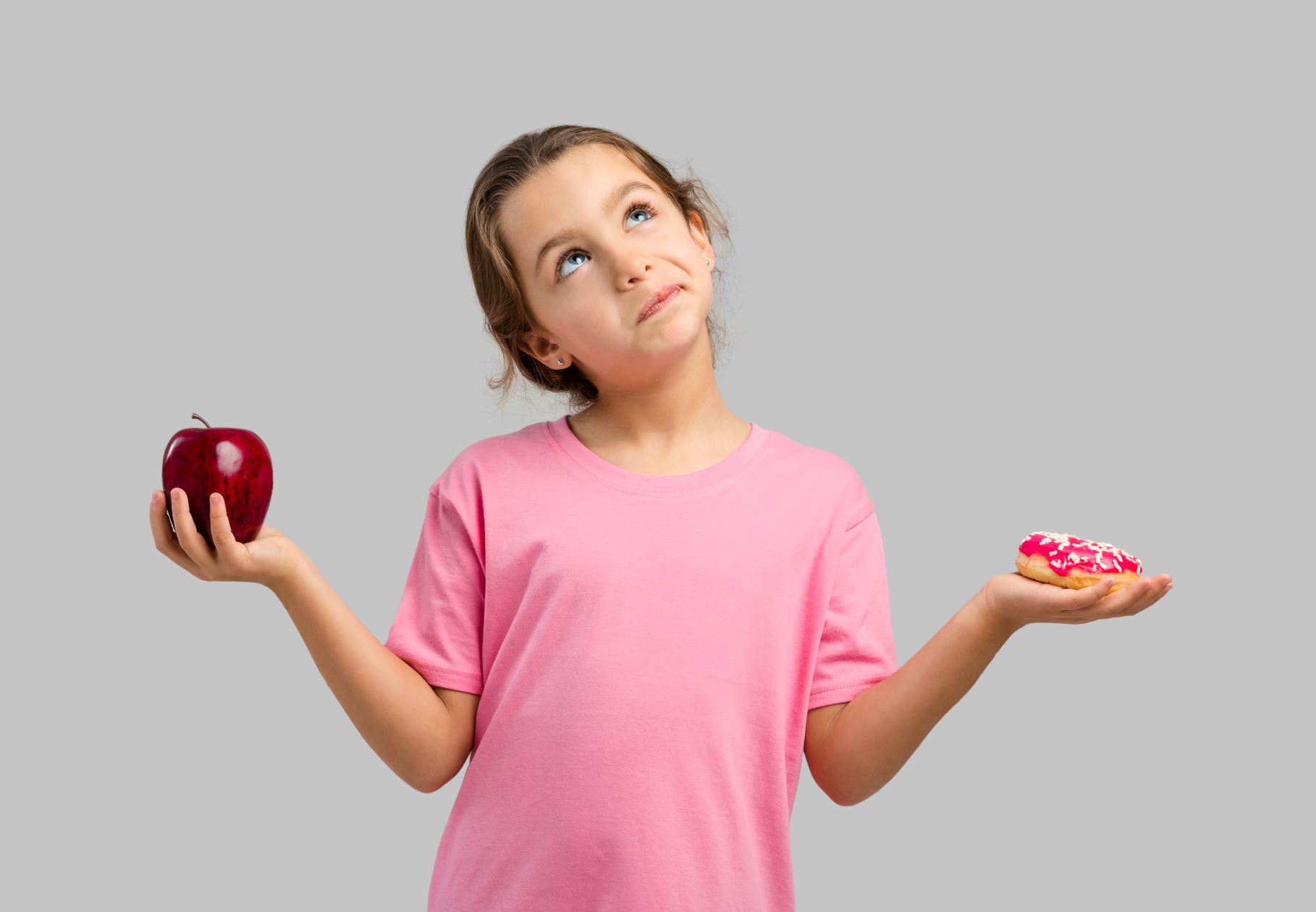
Wait! Do my kids really need that snack?
Marjorie Lanier, MPH – Regional Health Educator
“We’re over-snacking our kids,” my husband exclaimed. “I call it being prepared,” I shot back. As a working mom of three, I take pride in “thinking of everything.” The diaper bag is my on-the-go pantry. I have raisins for the inevitable car meltdowns and mandarin oranges for the after-work-errands-with-the-kids-meltdown. I even have the on-the-way-to-school-because-breakfast-was-so-early-snack tucked in the glove box of the car.
Like most parents, I want to avoid the crossover into the hangry (angry hunger) stage at all costs because, let’s face it, the unraveling that ensues at that stage is not pretty, especially in the middle of a traffic jam. However, my husband observed something I didn’t. My well-intentioned mom-hack backfired because inevitably we’d get to the dinner table, and the snackers would hum in unison, “I’m not hungry.” (Insert eye roll and the hanging of my head in defeat.) Ugh. I hate to admit it, but my husband was on to something.
According to a study by Barry Popkin, Ph.D., professor of nutrition at the University of North Carolina at Chapel Hill, our kids are snacking more than ever. In the late 1970s, the average kid between the ages of two and six ate one snack a day between meals. Presently, kids typically eat almost three snacks each day.
Do a quick back-of-the-napkin analysis of a child’s typical day, and these findings aren’t so surprising. My own analysis looked something like this: Sunday morning snacks during church followed by snacks during evening youth group. There’s the snack in the car on the way to school before I recalled it was "Donuts for Dads Day." Dr. Seuss’s birthday celebration snacks during afterschool were also on the list, plus the mindless snack at the grocery store while I picked up makings for dinner. Of course, there were the waiting-for-dinner-to-be-ready snacks. The weekend list was long, too: team snack after Saturday’s soccer game, birthday party snacks, and Saturday afternoon snacks because, come on, it’s the weekend. It was an endless supply of snacks, whether the snackers were hungry or not, being shoveled their way.
Although snacks may seem harmless to those tiny tummies, it occurred to me, by observing my own children, that many kids are rarely without food. (Of course, there are heartbreaking exceptions to that and should be discussed in a future blog.) To make matters worse, many of those snacks are high-calorie and contain little or no nutritional value. As a result, it shouldn’t be a surprise when kids come to meal times with little appetite for the healthy meal that was prepared for them.
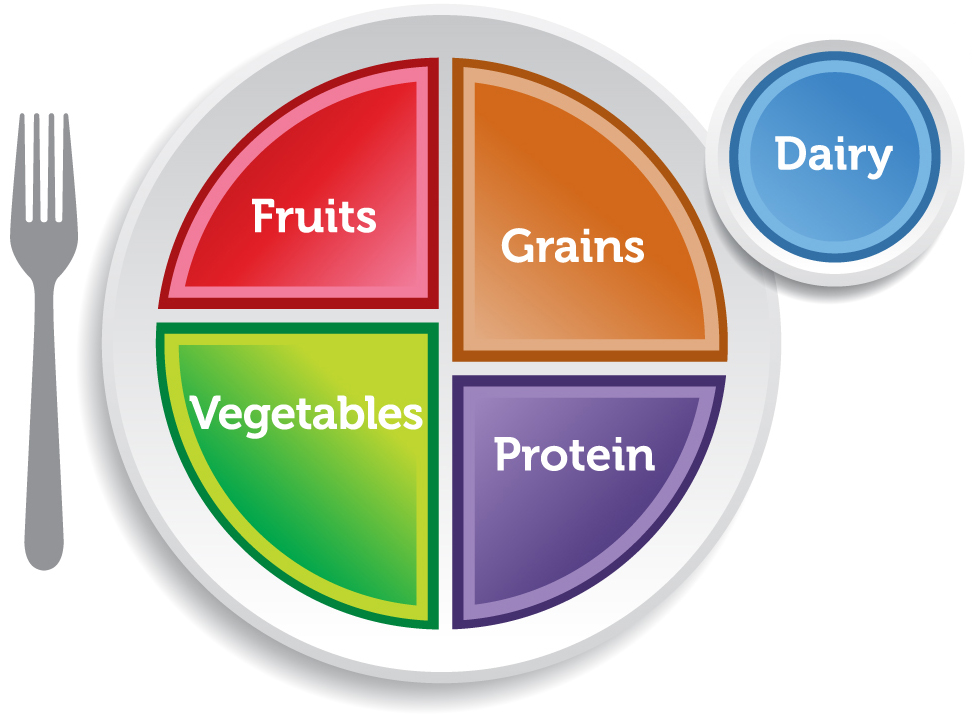
March is National Nutrition Month, which is a great time to review the recommendations for kids and snacks. According to the Academy of Nutrition and Dietetics, kids should consume small snacks that come from the MyPlate food groups at set times during the day to refuel small, active bodies. Sweet drinks (even juice) and desserts should be served in small amounts and considered "sometimes" foods. MyPlate recommends limiting sodium to 1,500 milligrams per day, saturated fat to 11-16 grams per day, and added sugars to 25-35 grams per day for young children.
Fruits and vegetables make perfect snacks because they help children get the recommended daily servings and are usually all that’s needed to curb hunger until the next meal. Some ideas include:
- orange wedges (easy peel, seedless mandarins work well)
- blueberries
- cut-up strawberries
- apple slices or small whole apples
- baby carrots
- grapes
- celery
Curb the snacking culture by re-thinking snack breaks in the settings where kids spend time: school, afterschool, sports, faith organizations, etc. Snacks aren’t necessary at every turn. Use activities as rewards, such as five minutes of extra recess in lieu of a cupcake party, or ditch the team snack altogether. As long as they have water, kids should be able to play an hour of soccer without a sugary snack at the end. Here are a few tools to help reign in the snacking madness:
- Sports Snack Game Plan
- Policy ideas that support healthy eating and physical activity in schools
- Healthy Celebrations and Events Guide
For me, it's a huge relief to know that I don't need to "think of everything,” and that I just need to follow a few simple guidelines to ensure I’m healthfully feeding my kids. Perhaps, we can all make a personal pledge to focus on fruit and vegetables as snacks for ANY occasion and pause to consider if a snack is needed at all.
References:
- US Children snacking more; junk calories leading the rise. (2010, March). UNC Gillings School of Public Health. Retrieved 3.13.18.
- What and How Much Should My Preschooler Be Eating? (2018, February). EatRight.Org. Academy of Nutrition and Dietetics. Retrieved 3.13.18.
For the Classroom: Caterpillar Kabobs
Grades: K-3
Objective: Demonstrating how to eat a rainbow of colors
Ingredients:
Variety of fresh fruits and vegetables (choose vegetables that can be eaten raw, such as carrots, zucchini, cucumber, peppers, broccoli, and tomatoes)
Wash and cut into bite-sized pieces.
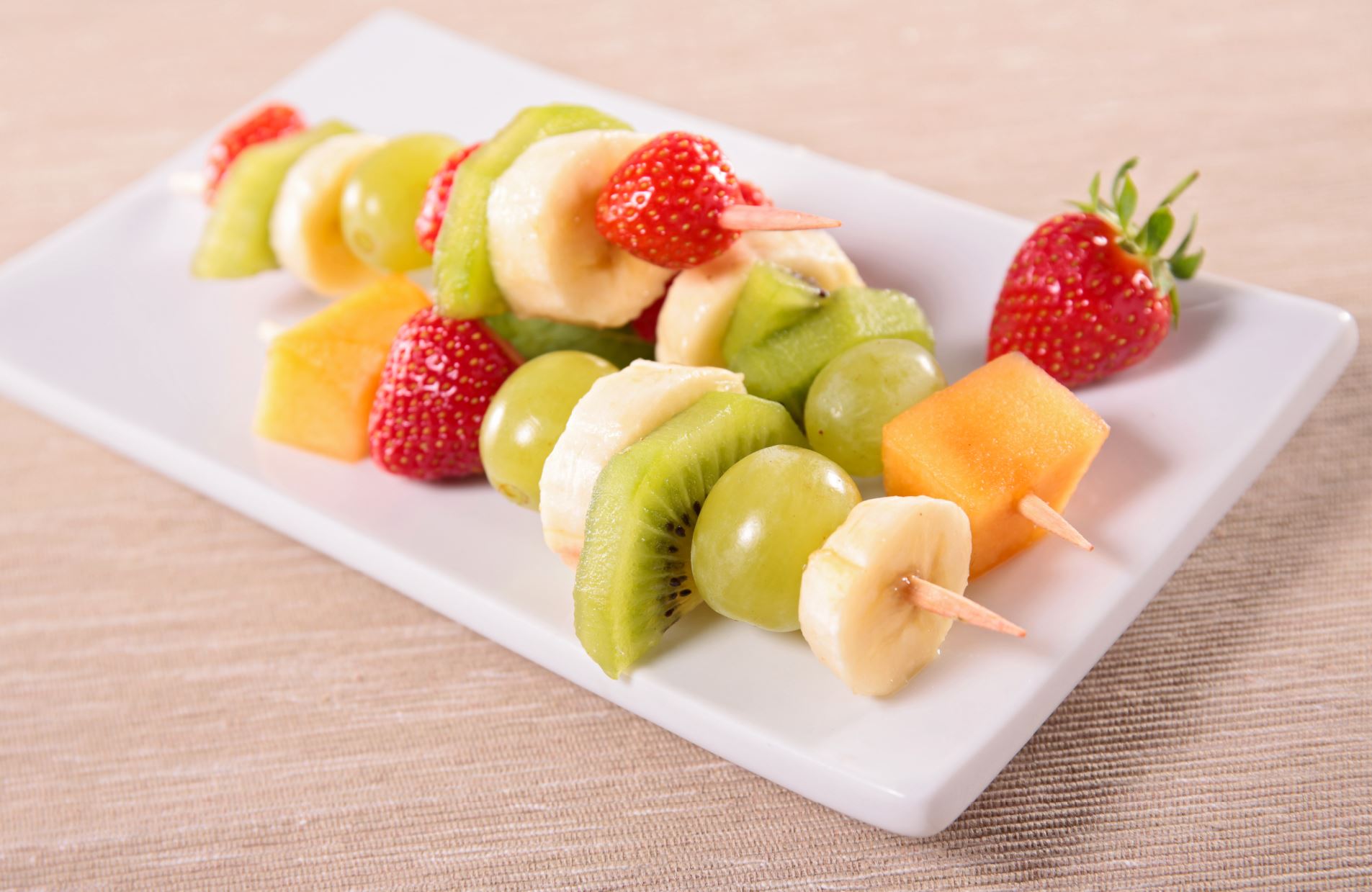
1. Fruit Kabobs: Assemble chunks of fruit in various colors, such as melon, apple, oranges, grapes, or pears on skewers in any order. Use low-fat yogurt as a side for dipping.
2. Vegetable Kabobs: Use raw veggies, such as zucchini, cucumber, carrots, sweet peppers, tomatoes, or squash. Pair with a ranch or hummus side for dipping.
Featured Poe Program: Mission Nutrition
Interested in bringing this topic to your school or organization? The Poe Center offers nutrition and physical activity programs for preschool - 12 grades. Call 919-231-4006 or go online to schedule a program.
Grade Level: 6th – 8th
Program Length: 60 minutes
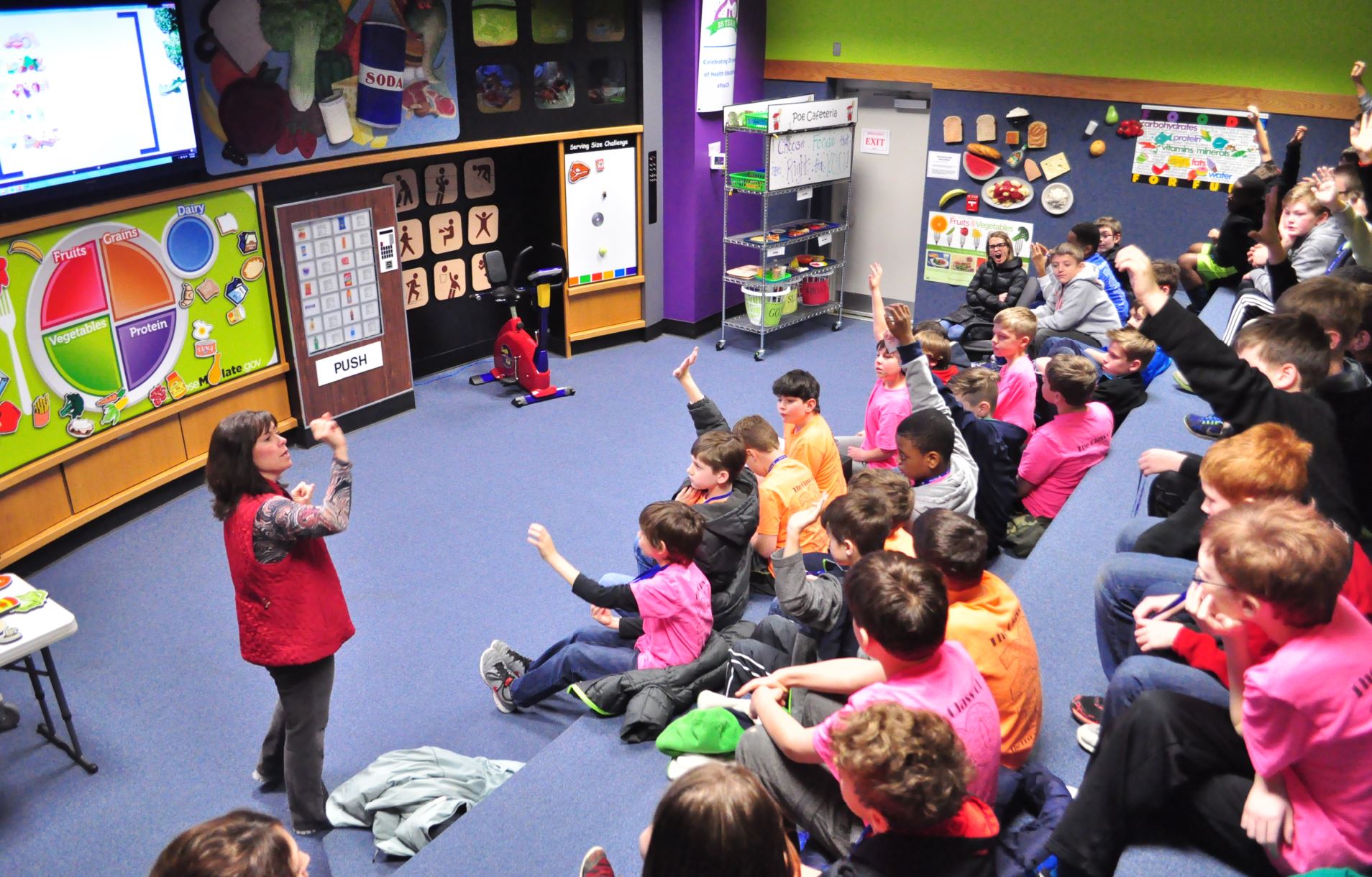
Mission Nutrition is an interactive and conversational program that explores the challenge of balancing food and physical activity. Activities are designed to help participants discover the importance of food labels and the barriers to healthy eating and the risk associated with over- and under-eating. Participants also are helped to understand messages in the media targeting teens, and how those messages may affect their food choices.
Poe Center and Johnston County Public Schools Host “Eat A Rainbow Week”
Poe Center and Johnston County Public Schools
Host “Eat A Rainbow Week”
Jennifer Bell, M.Ed. - Marketing Director, Poe Center for Health Education
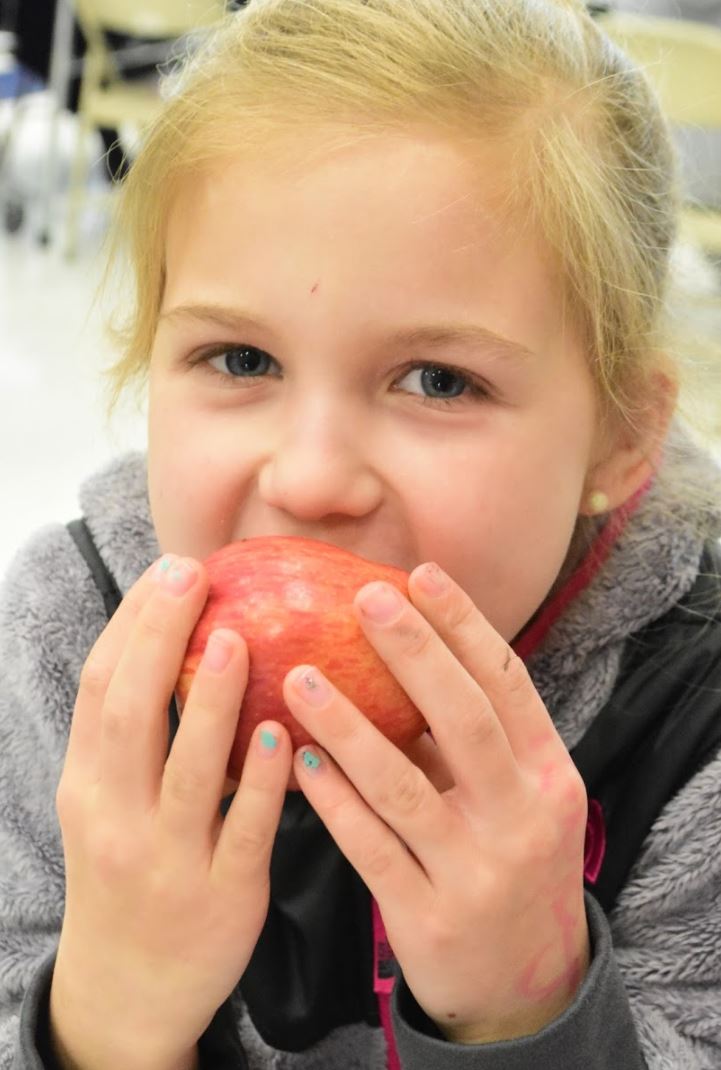
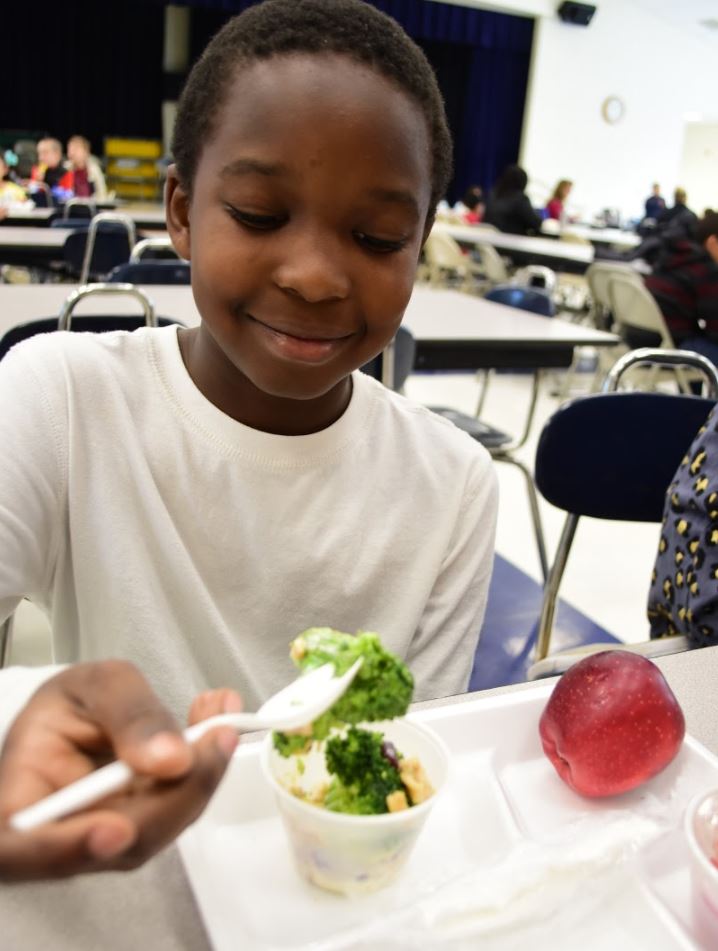
“How pretty!” a young student exclaimed, as she walked into the lunch line at South Smithfield Elementary School on Monday, March 5. She then proceeded to fill her tray with a bright red apple, shiny grape tomatoes, and a gorgeous green broccoli salad. Color was on the menu for lunch.
It was “Eat A Rainbow Week” at Johnston County Public Schools, and students were greeted with a festive display of colorful fruits and vegetables, along with decorations and a life-sized waving happy-faced apple. The goal was to encourage students to try a variety of fruits and vegetables rich in nutrients for a well-balanced diet.

Thanks to a partnership between the Poe Center for Health Education and Johnston County Public Schools (JCPS) Child Nutrition Services, five area schools participated in the program, including South Smithfield Elementary School, Cooper Elementary School, Micro Elementary School, Four Oaks Middle School, and Glendale-Kenly Elementary School. JCPS Child Nutrition Services planned a menu to highlight a different colored fruit of vegetable for each day of the week. The Poe Center provided educational materials and information for students and teachers, as well as decorated the schools with fun posters. Information and handouts were sent home to continue the educational process with students’ families.
“Eat A Rainbow Week,” March 5 – 9, 2018
Monday “Red” – strawberries, grape tomatoes
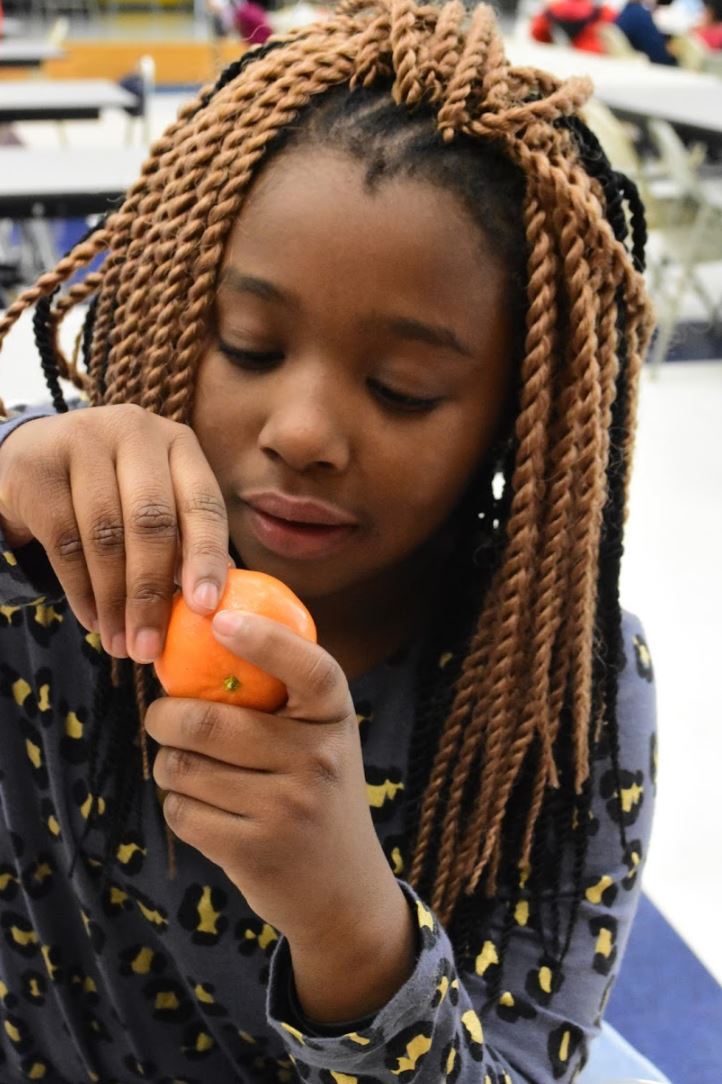
Tuesday “Orange” – carrots, oranges
Wednesday “Yellow” – bananas
Thursday “Green” – spinach
Friday “Blue” - blueberries

“Teaching students at a young age the value and benefit of eating the "colors of the rainbow" will hopefully foster a desire and a passion to live a healthy lifestyle. Children in today's society are often influenced by many things that may lead to non-healthy or non -productive lifestyles. Educating the whole child is more than just academics, it is reaching students who are and will be productive members of society. Eat a Rainbow Week teaches students that being healthy can not only be fun, but delicious as well!” - Laura Makey, Principal, South Smithfield Elementary School
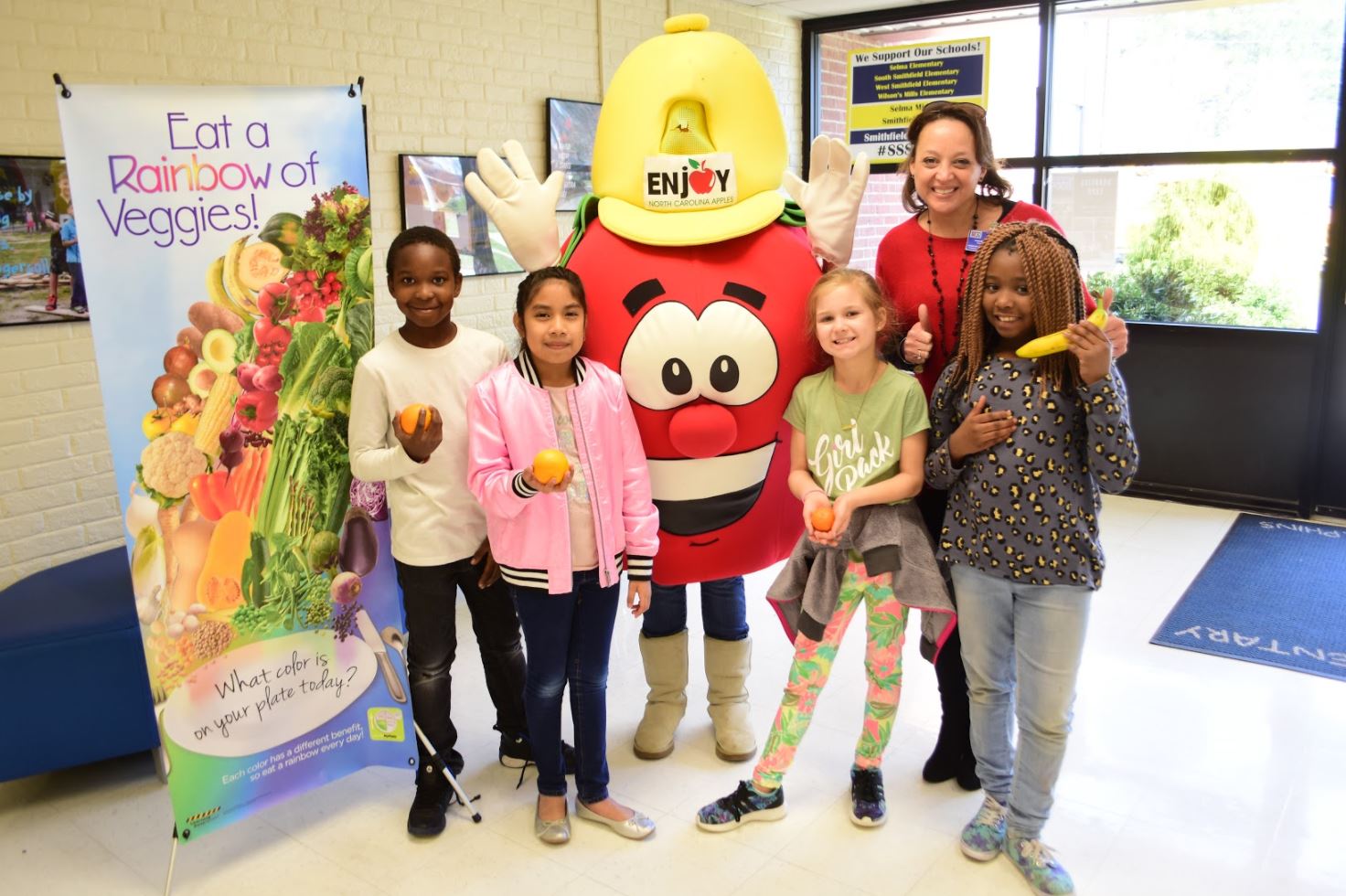
“The cafeteria is a classroom, too. We are constantly looking for ways to get our students involved and educated so when they are not in school they know what they are eating, what it does for their body, and how to make sound food choices. We are thrilled to be participating in this event and spreading the Rainbow county wide!” Mary-Catherine Talton, Johnston County Public Schools Nutrition Services
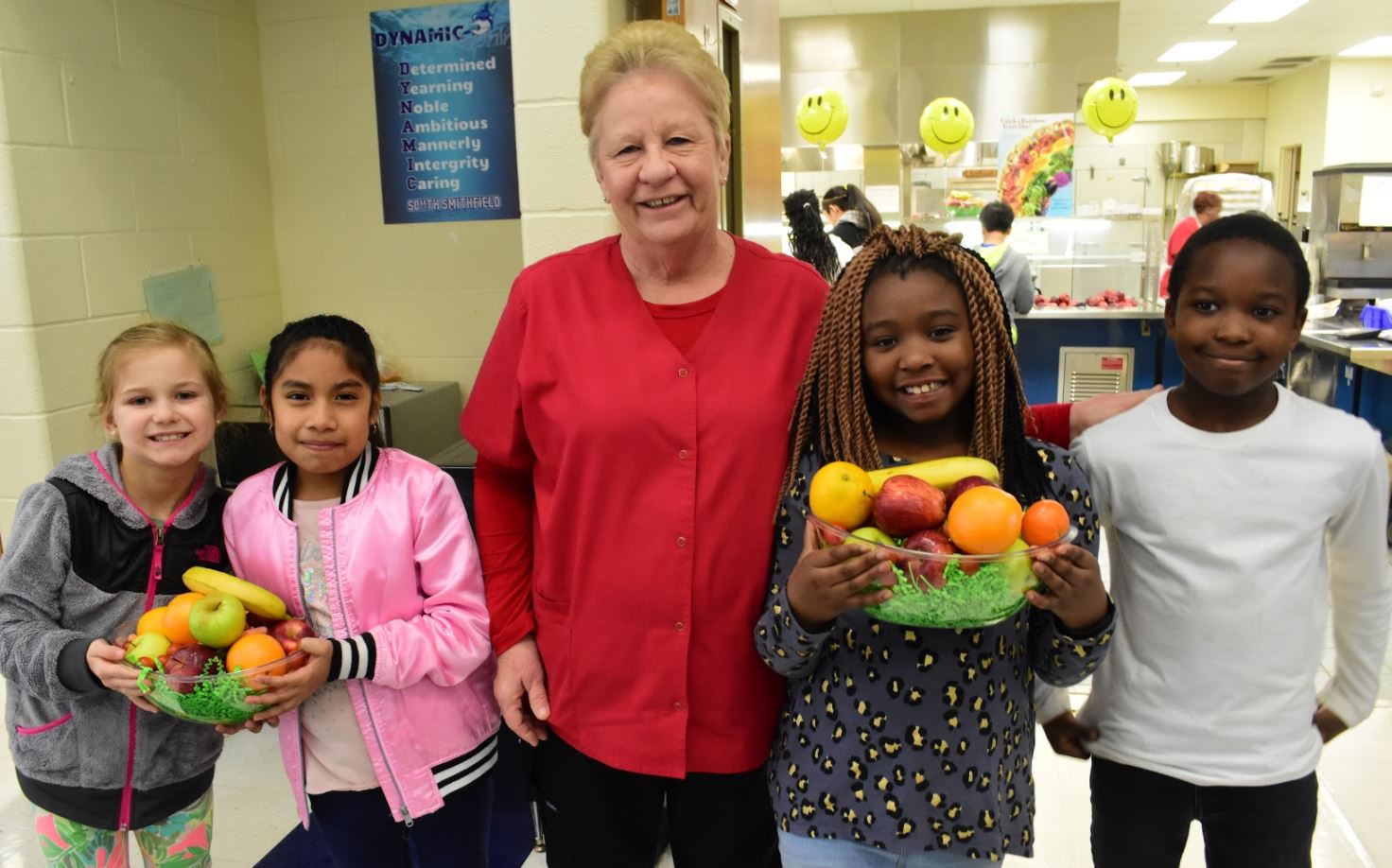
“As a health educator at the Poe Center, I teach hundreds of nutrition and physical activity classes every year focused on giving students the information they need to make healthy choices about their diets. “Eat A Rainbow Week” is an opportunity to put that information into action and turn behaviors into habits. Having the schools create this healthy environment makes it more likely for students to persist in their healthy choices.” – Lauren McCallum, Senior Health Educator, Poe Center for Health Education
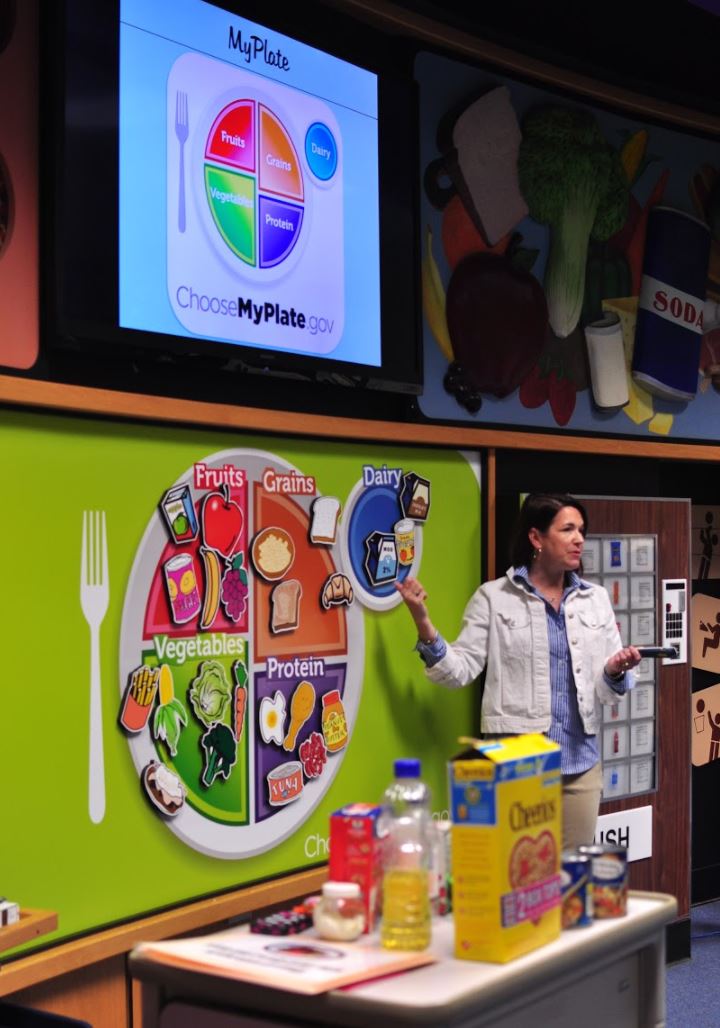
Thanks to funding from SNAP-Ed, South Smithfield Elementary is one of four North Carolina schools that participate in the Poe Center’s BeWELL with Poe program. Dedicated health educators work with each school to incorporate nutrition and physical activity education into the overall curriculum, support staff wellness, and pursue additional funding to support policy, system and environmental changes including extracurricular programs, such as bicycle clubs and building walking paths.
For more information about the Poe Center, visit www.poehealth.org
About the Poe Center
The Alice Aycock Poe Center for Health Education is a nonprofit organization dedicated to educating and empowering North Carolina’s children, youth and their families to make choices that increase positive health behaviors. Since establishing its Raleigh facility in 1991, the Poe Center has provided health education to over one million children throughout North Carolina. By engaging in fun, highly interactive lessons, preschoolers through twelfth graders receive information that follows the NC DPI Healthful Living Essential Standards on a variety of health topics, including nutrition, dental health, general health, family life, substance use prevention, and bullying prevention. For additional information about the Poe Center, please visit www.poehealth.org
About Johnston County Public Schools
Our mission is to empower our students to enrich their world by facilitating learning through relationships, and relevant, innovative experiences.