From Brushing to Broccoli: Nutrition is Also Key to Dental Health
From Brushing to Broccoli:
Nutrition is Also Key to Dental Health
Alaina Hart, MPH, CHES - Health Educator, Dental Health Theater Manager
Most elementary school-aged children know the basics of good dental health habits:
- Brush your teeth at least 2 times per day
- Floss your teeth at least 1 time per day, and
- Visit the dentist twice a year.

Kids practicing brushing "Mr. Big Mouth's" teeth at the Poe Center.
However, keeping your teeth healthy requires more than just these good habits. The food you eat also plays a major role in your oral health, in addition to overall health. According to the Centers for Disease Control (CDC), “tooth decay (cavities) is one of the most common chronic conditions of childhood in the United States.” Untreated tooth decay can cause pain and infections that may lead to other health problems, such as heart disease.
The great news is that tooth decay is preventable. Practicing a healthy brushing and flossing routine plus making good choices about the foods you eat is the perfect recipe for a healthy mouth and body.
5 Good Foods for Dental Health

The American Dental Association recommends the following nutrition for optimum dental health:
1. Water Rules!
Water, especially fluoridated water, is the best drink of choice for maintaining good oral health. Fluoride helps to strengthen teeth, which aids in preventing tooth decay. Sodas, juice, and sports drinks may be good for washing food down, but they can leave unwanted sugar behind on your teeth. Water helps to clean your mouth by washing away food residue and cavity-causing bacteria. Read more about "why water is the best beverage for your teeth."
2. Calci-Yum
Milk and other dairy products contain the mineral calcium, which is important for keeping teeth and bones healthy and strong. According to the National Academy of Science, children between 9-18 years old need the most calcium per day. Dairy foods are also rich in potassium, which helps regulate healthy blood pressure. Choosing low-fat or fat-free dairy products are best, as they contain little to no solid fat. Read more about why "a healthy mouth needs plenty of calcium."
Don’t fret if you’re lactose-intolerant. The following non-dairy foods are all good sources of calcium: dark-green leafy vegetables, canned fish, almonds, soy and soy products, milk alternatives, calcium-fortified juices, cereals, and breads
3. Lean Proteins
Next to calcium, phosphorus is the most plentiful mineral in your body. Phosphorus-rich foods, such as meat, poultry, fish, milk and eggs help strengthen, your teeth and gums and provide valuable protein. Phosphorus also works to keep your kidneys healthy, in addition to building, maintaining, and repairing your body’s tissues and cells. Read more about phosphorus.
4. Fruits and Veggies
Eating plenty of fruits and vegetables are important for maintaining a healthy diet and a healthy smile. Since they are high in water and fiber, fruits and vegetables balance out the sugar they contain and help clean your teeth. Crunchy fruits and vegetables act like a toothbrush and help scrape food particles and bacteria away from teeth. Lastly, chewing alerts the body to produce saliva (spit), which washes away harmful acids and food particles on teeth.
5. Nuts about nuts
Nuts contain protein and minerals important for overall good health. Most nuts are low in carbohydrates and don’t increase your risk of cavities. Why is that? Tooth decay is caused by acid-producing bacteria that are activated by carbohydrates.
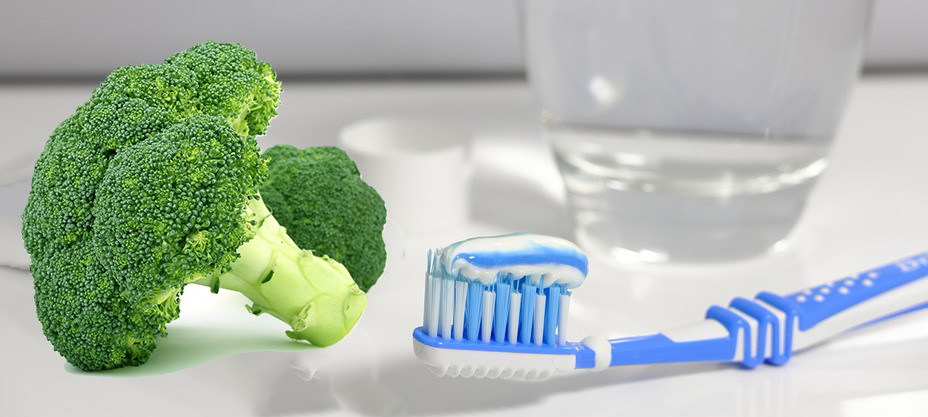
So next time you purchase toothpaste, add some broccoli to your shopping list. Your teeth will thank you for it.
References:
- Children's Oral Health. Centers for Disease Control.
- Four Reasons Water is the Best Beverage for Your Teeth. Mouth Healthy. American Dental Association.
- Good Foods for Dental Health. Mouth Healthy. American Dental Association.
- Healthy Nutrition for Healthy Teeth. Eat Right. Academy of Nutrition and Dietetics.
- Healthy Smiles, Healthy Hearts. Dental Dental.
- Nutrients and Health Benefits. Choose MyPlate.Gov. United States Department of Agriculture.
- Phosphorus. University of Maryland Medical Center.
Featured Program: Clean & Chompin'
Grade Level: 2nd – 3rd | Program Length: 45 minutes
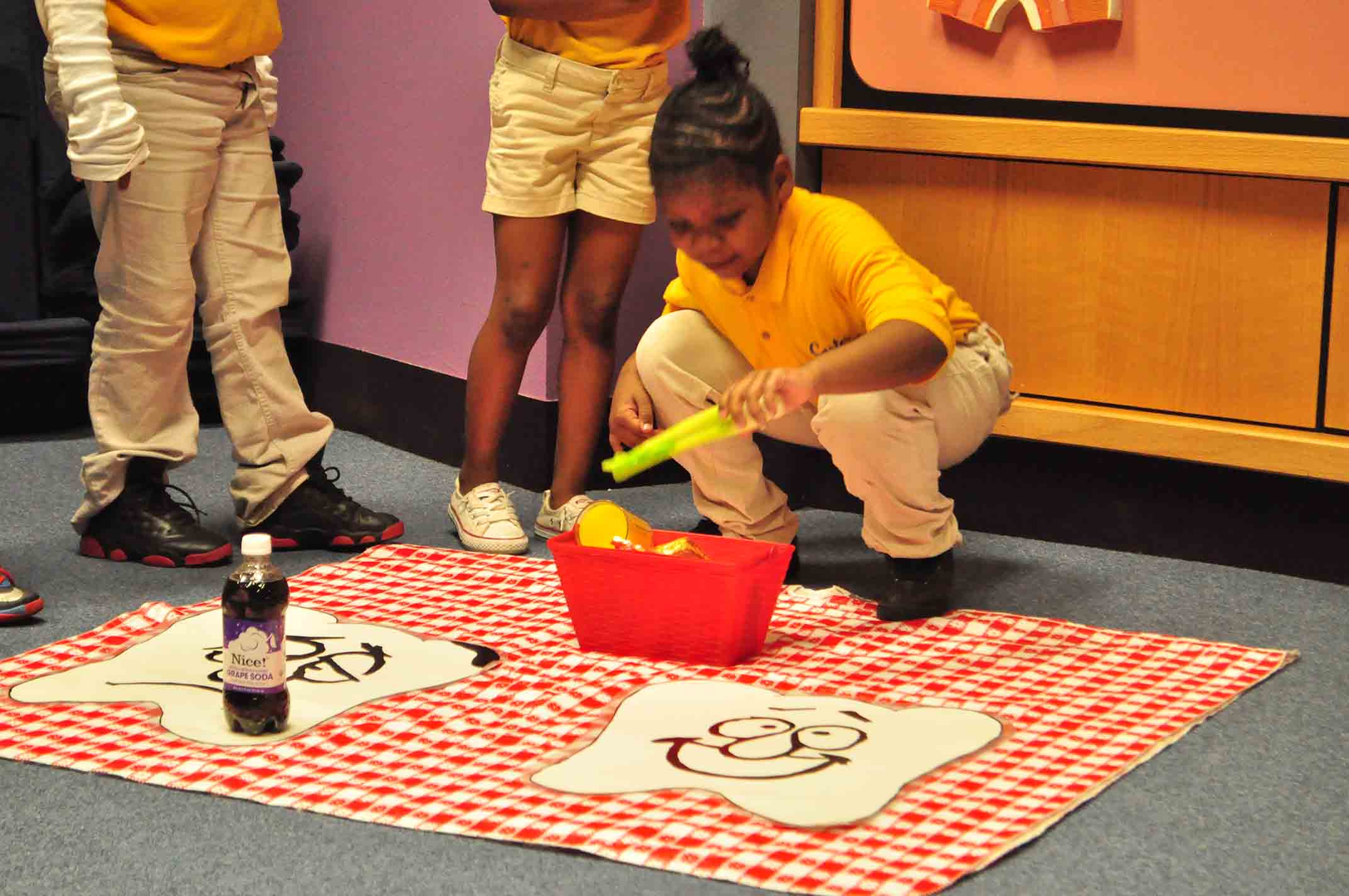
You be the dentist! Practice tooth brushing and flossing on Mr. Big Mouth’s extra-large teeth. Pick healthy habits and nutritious snacks to prevent tooth decay. To help reinforce the importance of regular dental check-ups, volunteers will create a decay equation explaining how sugar and plaque lead to cavities.
The Poe Center offers dental health programs for pre-Kindergarten - 3rd grade. Schedule a program with us today.
For the Classroom: What's In Your Bones
Objective: To demonstrate the effects of acidic foods on bones and teeth.
Grades: 5-8
Materials:
- 2 clear mason jars with lids
- 2 clean, cooked chicken wing bones with meat and cartilage removed
- Milk
- Vinegar
- Pins
Directions:
1. Have students examine bones before they are placed in jars. Poke the bones with straight pins to test how hard the bones are. Instruct students to record results.
2. Place one chicken bone in a jar and cover it with milk. Place other chicken bone in second jar and cover with vinegar. Cover both with lids and let soak overnight.
3. Each day for 7 days, replace milk in jar so it does not spoil.
4. After one week, take the bones from each jar and rise them off. Allow students to test bones again by pricking with pins and bending.
5. Record results. Which bone was stronger in the end? Discuss how the bone soaked in vinegar was weaker. Vinegar is an acid that pulls calcium from the bone. Sodas contain a type of acid called phosphoric acid, which can prevent your body from getting enough calcium if you choose soda over calcium rich foods.


How to Talk with Kids about Healthy Relationships
How to Talk with Kids about Healthy Relationships
Robin Pittman, MS, CHES – Senior Health Educator
Healthy relationships are something all parents want for their children. In pre-school, we teach them how to be a good friend and how to play well with others. In the elementary grades, we teach them about bullies. In the middle school years, puberty and “the talk” about sex often becomes the priority - so much so that the conversation of healthy romantic relationships tends to get delayed or neglected altogether.
While it is very important to have the discussion about sex, parents should also have “the talk” about love in order to protect children from unhealthy relationships. According to the Centers for Disease Control, one in ten high school students has been purposefully hit, slapped, or physically hurt by a boyfriend or girlfriend. By teaching children the key elements to healthy relationships, teens and young adults are more likely to have healthy long-lasting relationships.
According to a report from Making Caring Common, “large numbers of teens and young adults are unprepared for caring, lasting romantic relationships and are anxious about developing them. Yet it appears that parents, educators and other adults often provide young people with little or no guidance in developing these relationships." Harvard psychologist Richard Weissbourd conducted a survey and found that 70% of the 18-25 year old participants wanted information from their parents about the emotional aspects of romantic relationships, and 65% said they wanted to learn about the emotional aspects of relationships in their sexuality education classes in school. In other words, while most parents, schools, and educators are discussing abstinence, how to avoid pregnancy, and preventing sexually transmitted diseases, kids want more. Children want to know about how to love and be loved. You cannot talk about one without the other.
Here are some key points to start the conversation with your child. Keep in mind the best time to start these conversations is BEFORE your child is in a romantic relationship.
 1. Define, model, and give examples of what a healthy relationship is. There are several ways to discuss this, but emphasizing that all good relationships must have trust, honesty, respect, communication, and understanding is a good way to start. A healthy relationship will allow both partners to have other friends, develop personal interests, and remain individuals while being a couple. Defining each of these elements and showing them examples of what they look like is important.
2. Explain what an unhealthy relationship is. There are many factors that make a relationship unhealthy or abusive. According to breakthecycle.org, an unhealthy relationship is defined as “an imbalance in which one partner tries to exercise control and power over the other through threats, emotional abuse, and physical abuse. At its most extreme, an unhealthy relationship can include name-calling and insults, withholding of money or other resources, threats to isolate a person from friends and family, coercion, violent acts, stalking and significant physical injury.”
3. Discuss digital abuse. Technology is such a big part of teenagers’ lives these days. Constant and instant communication via social media and texting opens the door widely to many unhealthy behaviors, including digital abuse. Digital abuse occurs when a person uses technology, such as smartphones and computers, to harass another person usually through texting or social media. Digital abuse can include:
- Constant unwanted calls or texts
- Harassment/cyberbullying on social media
- Sexting - Pressure to send nude or private pictures or content
- Using social media, texts, calls to monitor whereabouts, send insults, or control other relationships
- Pressuring their partner for their passwords to social media sites and email
4. Help them define boundaries. Personal boundaries are something every teen needs to establish. Boundaries protect against sexual and physical abuse in a relationship. They also let each person in the relationship understand the other's values and what is okay and not okay. Work with your child to identify and articulate their personal values and boundaries. Revisit family values and how that translates to romantic relationships. While it is important for adolescents to understand their own boundaries, it is also important to understand that their partner has boundaries that need to be respected.
5. Look for signs of an unhealthy relationship and talk. Unhealthy relationships are all about lack of mutual respect, failing to respect a partner’s boundaries, and an inequity of power and control. If you feel like your child is spending a lot of time with his/her partner and not as much time with family, other friends, or hobbies, then that’s a warning sign. If you notice any of these red flags, it is time to talk with your teen. Offer strategies to get out of the relationship quickly and safely.
6. Ask for help when needed. This applies to your teen - and you. If your teen is struggling with a relationship, encourage him/her to seek help from you, a trusted adult, or local resource. Additionally, if you need some support to start a conversation about healthy relationships with your child or you are worried they are in an abusive relationship, seek help. There are plenty of resources and people who can help.
- Love Is Respect (loveisrespect.org) is an organization that gives support and information for teens and their parents or friends who have concerns about dating relationships. To get in touch with a trained peer advocate, call 1-866-331-9474, text “loveis” to 22522, or chat online at www.loveisrespect.org
- National Domestic Violence Hotline 1-800-799-SAFE (7233)
Teaching adolescents what it means to be in a healthy relationship is a very important message and needs to be talked about. Discussing these issues and explaining the difference between a healthy and an unhealthy relationship can help them understand what it means to have positive relationships and could possibly even save their lives.
References:
- A+ Relationships for Parents & Educators. Break the Cycle. Retrieved 1.16.18.
- The Talk: How adults can promote young people's healthy relationships and prevent misogyny and sexual harassment. Making Caring Common Project. Retrieved. 1.16.18.
- Youth Risk Behavior Surveillance - United States, 2003. Centers for Disease Control. Retrieved 1.16.18.
Featured Program: Healthy Relationships 101
The Poe Center offers a healthy relationships class for 8th graders-12th graders. Healthy Relationships 101 explores the facets of what makes a healthy relationship. Setting and communicating personal boundaries, identifying warning signs of unhealthy relationships, and identifying societal influences that impact relationships are discussed through engaging activities, multimedia, and thoughtful reflection.
To find out more information about this class or to schedule, call 919-231-4006.

Schedule a program with us today.
For the Classroom: Crossing the Line
Grades: Ideal for 8th-12th graders
Objectives: To highlight the importance of establishing boundaries within a romantic relationship.
Materials Needed:
- Painters or masking tape
- Situational prompts
- Large space
- Use as many volunteers as space will provide (the whole class would be ideal.)
Directions:
- Place a long straight line of tape on the floor.
- Have all participants stand on the line that you have placed on the floor.
- Once everyone has taken his/her place on the line, read the first prompt.
- If a person is comfortable with the situation on the prompt he/she will take a step forward from the line. If uncomfortable, he/she will take a step behind the line. It is not an option to remain on the line during any of the prompts.
- Once everyone has stepped forward or backward from the line, ask participants to explain their reasons for taking the steps they did.
- Repeat this process with other prompts.
Outcomes: Students will discuss how different scenarios and situations would make them feel within their own romantic relationships. Students will see the importance of establishing physical and emotional boundaries in their relationships.
Crossing the Line Prompts: When doing this activity, to keep within time allotment – pick 4-6 of these scenarios.
Sometimes we assume that everyone else thinks the same way we do, or that we should feel the same way as others. Most of the time two people won’t see everything exactly the same way. It’s important for us to communicate how we feel about our boundaries in a relationship.
“Within your own romantic relationship, how comfortable would you be if you partner did the following:”
- Pats you on the butt
- Holds your hand
- Gives you an extended hug
- Texts explicit messages
- Texts explicit picture messages
- Texts or calls you every hour
- Expects to know who you are with at all times
- Kisses you on the cheek
- Kisses you on the lips
- Massages your shoulders
- French kisses you
- Puts their arm around your shoulder
- Heavy petting / touching genitals
- Touches breasts
- Grabs you by the arm
- Tickles you
- Plays with your hair

For a Healthy Holiday Season: Keep it simple (AGAIN)
For a Healthy Holiday Season: Keep it simple. (AGAIN)
Rachel Pohlman, MPH, RD, LDN - Nutrition Manager
Editors' Note: In the spirit of simplification, we are running this popular 2016 blog post AGAIN as a reminder to slow down and be mindful during the holiday season. Join us in finding ways you can simplify your holiday routine to make room for reflection and mindfulness. It will help you stay physically and emotionally "fit" this holiday season and all year. Happy Holidays from the Poe Center!
Just about everyone has experienced the challenges of trying to stay fit during the holidays. It is cold and dark outside, which can discourage exercise, and indulgent food and drink seems to pop up everywhere. There are countless sources ready to bombard you with tips and tricks to manage it all. I could easily post a quick list of top 10 healthy holiday tips right now. To keep it simple, here are two comprehensive approaches that are my absolute favorites! They cover many of the smaller decisions you may make this time of year - and the rest of the year, as well.
My favorite advice is to slow down and reflect on the reason behind the celebration. My spouse and I come from different traditions and grew up with our own unique ways of celebrating the holidays. Raising kids, we quickly learned that it was too much to try to maintain every single ritual and tradition. This forced us to step back and really think about holidays and what they mean to us. We decided which holidays are important to us, what we want to teach our children, and how we want to honor the day. The deeper meaning of a holiday will be different for everyone, but ways to honor the day may include community service, special time with family or friends, religious practices, or even going for a hike for an active start to the New Year.
This leads right in to my second favorite strategy, which is to be mindful. Being mindful means you are taking the time to pay attention to your actions. You are being deliberate and putting thought into your decisions. I slowed down and was mindful about how to observe holidays. You can also be mindful about your daily activities. Are you choosing movies as your entertainment, or are you going bowling with the family instead? You can be mindful about your food. Are you grazing at the party buffet or are you making a well-chosen plate of snacks and stopping eating when you are done? Use your senses and pay attention to the flavors, textures, smells of the food instead of tossing it back and moving on to the next item. This can even increase your enjoyment of your food. Slowing down and being mindful also makes it easier to pay attention to your hunger cues. Not hungry? Stop eating and go socialize! Finally, it is very important to be mindful of your drinks this time of year since they add a substantial amount of calories. Drinks with alcohol can make us less mindful about the other behaviors and decisions we are making as well.

For those of you who were really hoping for 10 tips on staying healthy this holiday season, here you go:
- Step away from the buffet table. Take the conversations and your plate into another room.
- Get up and get moving! Dance, play with kids, walk the dog, play ball, etc. Do what gets you up and makes you happy. Make exercise part of the fun.
- Stay busy volunteering – more activity means less time to graze.
- Drink water often.
- Make less food.
- Give your recipes a makeover.
- Keep your protein lean.
- Eat whole grains instead of white flour.
- Eat your fruit!
- Eat your veggies!
And of course… be mindful of your decisions. Happy Holidays everyone!
- Worried holiday weight gain will weigh you down? Eat Smart Move More Weigh Less
- The Center for Mindful Eating
For the Classroom: Teaching Mindful Eating
Check out these great activities for teaching young students about mindful eating.
- Mindful Eating. Mindful Schools.
- Mindfulness Exercise for Kids with Chocolate (VIDEO)
Interested in bringing this topic to your school or organization?
Check out Food for Thought, which includes activities that teach mindfulness. The Poe Center offers a variety of nutrition and physical activity programs for grades k-12. Schedule a program with us today.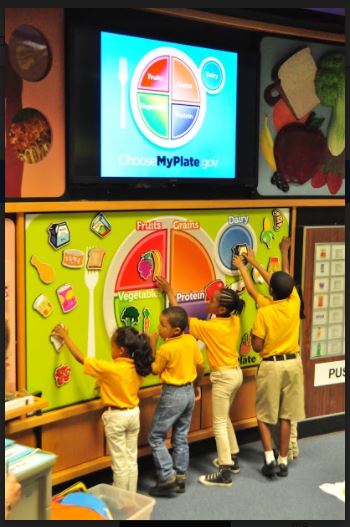
Food for Thought
Grade Level: 4th – 5th
Program Length: 60 minutes
Have your students ever asked… Why do we need food? What is “MyPlate”? What are the different food groups and do I need to eat foods from all of them? How does media influence food choices? Are all body types the same? Is dieting healthy? If you said yes to any of these questions, don’t give it a second thought; sign up for this program today. The session will answer each of these questions and more.
Schedule a program with us today.
Wanted: Quitters!
Wanted: Quitters!
Deborah Hendren, Substance Use Prevention Manager, CSPAC
Are you ready to be a quitter that wins? That's what the Poe Center for Health Education hopes!
Why wait for New Year’s Eve to make a positive resolution? Thursday, November 16 marks the American Cancer Society’s (ACS) Great American Smokeout, an event which encourages smokers to use the date to make a plan to quit. Americans have come a long way; as recently as 1965, more than 40% of adults smoked. While we’ve cut that rate by more than half, the ACS says that nearly one in every five American adults still smokes. Given the damaging effects that smoking has on your body and on the people around you, isn’t smoking a habit you should give up?
According to the Centers for Disease Control and Prevention (CDC), tobacco use is the leading cause of preventable disease, disability, and death in North Carolina. Of the top four leading causes of death in North Carolina (cancer, heart disease, chronic lower respiratory disease, and stroke), all are directly linked to tobacco use.
Additionally, secondhand smoke can be very damaging for children and adults alike. With minimal exposure, it can cause ear infections, respiratory problems, sudden infant death syndrome (SIDS), heart disease, and lung cancer. Those are some scary facts.
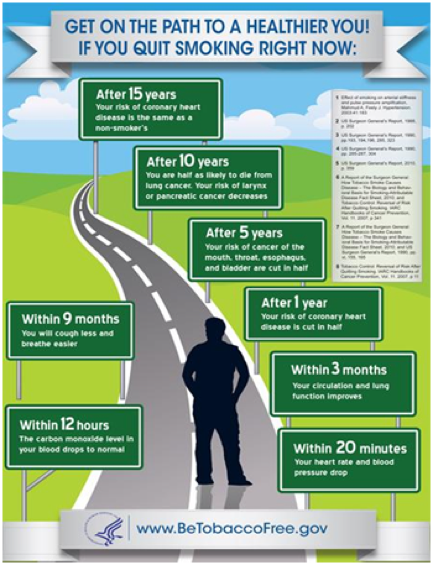
The good news is that every minute you don’t smoke helps improve your health. Learn more about the many energizing, life-prolonging benefits your body gets from quitting – you’ll be surprised by how fast recovery kicks in.
Easier said than done, though, as smokers who have tried to quit know too well. It often takes many tries to kick the habit for good. Each year, more than one-third of all smokers try to quit, but fewer than 10 percent succeed.
More good news: if you track smokers over their lifetime, more than half ultimately win the battle. The pathway to success is different for everyone. Quitting isn’t easy, but it’s easier when you have support. Take the “Do You Need Help Quitting?” Quiz to determine your level of nicotine addiction as well as the kind of personal cessation plan you’ll need.
- Quit for a Day
If you can give up cigarettes for 24 hours, you double your chance for permanent success. Within just 24 hours, the carbon monoxide—which hinders blood from bringing oxygen to your cells, tissues, and organs—will be removed from your body, and the mucus and smoking debris will start to clear from your lungs, making breathing easier. - Get the Facts, Get Motivated
Cigarettes and cigarette smoke contain in excess of 7,000 chemicals, including more than 70 known to cause cancer. Understanding how the addictive chemicals impact your health and learning how the body can begin to repair itself after quitting, can serve as a strong motivator. It helps to have a genuine reason to change a behavior in order to be successful long-term. For example, quitting for your family so that you are around to enjoy your kids and grandkids is a powerful one. You need to want it and believe you can do it. - Make a Plan
Talk to your healthcare provider about strategies to quit, such as cold turkey versus over the counter and prescription medication options. Research shows that making a plan and building a support system of family, friends, and professionals improves the chances that you will quit successfully and beat nicotine addiction. - Eliminate Temptations
Remove all ashtrays, lighters, matches, and cigarettes from the house because just seeing them can make you want to smoke. Eating sugarless hard candy or chewing crunchy vegetables helps keep your mouth busy, and the “burning” sensation of cinnamon candy mimics the feeling of smoking and kills the craving. Drinking a lot of water may keep you feeling full. Walking 30 minutes more per day, and reducing your calories modestly prevents you from gaining weight. - Use Available Resources
Take advantage of local resources (covered by Medicaid and many insurance plans) such as the Quitline NC at www.Quitlinenc.com or at 1-800-QUIT-NOW. The Quitline NC provides free cessation services to any North Carolina resident who needs help quitting tobacco use. Quit Coaching is available in different forms, which can be used separately or together, to help any tobacco user give up tobacco.
Be a winner. Quit.
Resources:
- A Day for Quitters: Great American Smokeout. University of Rochester Medical Center. Retrieved on 11.7.17.
- Chronic Disease and Injury Section. NC Health and Human Services. Retrieved 11.7.17.
- Dr. Hays. Fall - A Time for Fresh Starts. Ex-Commmunity. Retrieved 11.7.17.
- How to Quit. Center for Disease Control and Prevention. Retrieved 11.7.17.
- www.Quitlinenc.com
_______________________________________________________________
Featured Poe Program
Interested in bringing this topic to your school or organizations? The Poe Center's Substance Use Prevention curriculum offers programs for 3rd-12th grades and adults. Book a program on line or call 919-231-4006.
It’s Up 2 U!
Grade Level: 3rd – 5th
Program Length: 45 minutes
Students learn about the “Gateway Drugs” and their effects on the body in a fun and engaging session. Interactive activities and a short movie illustrate key concepts, as well as alternatives to drug use and abuse. This important information will help keep children on the right track!
_______________________________________________________________
For the Classroom: What in the Tar?!?
Take this topic back to your students with this educational activity.
Objective: To demonstrate the amount of tar that can accumulate from one or more cigarettes.
Tar is a sticky substance found on tobacco leaves. Tar coats the lungs and air sacs in smokers, preventing them from getting enough oxygen. Tar paralyzes the cilia in a smoker’s windpipe so that dust particles and pollen are not swept out of the air passages. Tar contains more than 40 cancer-causing chemicals. Organs affected by these poisons include the mouth, vocal chords, throat, and lungs, as well as the kidneys, bladder, and uterus and ovaries (in women).
Supplies:
- Filterless cigarettes and matches
- Cotton balls
- “Smoking Machine”
- Turkey baster or empty ketchup bottle
- Large syringe procedure
Activity:
- Stuff cotton balls into the end of the smoking machine.
- Tape an unfiltered cigarette onto the end of the smoking machine.
- Light the cigarette and draw the smoke back through the cotton balls by pulling back on the syringe or by squeezing the bottle or baster.
- Examine the tar accumulation by looking, smelling, and touching.
Key Points:
- Not all of the tar was caught.
- Smell the inside of the smoking machine to see what a smoker’s breath smells like.
- The accumulation was from only one or two cigarettes. Imagine what the tar accumulation would be from a whole pack of cigarettes.
Additional Great American Smokeout information and teacher activities:
- The Great American Smokeout Anti-Smoking Activities. Education World.
- Smoking, Lesson Plan Library. Discovery Education.