
Quitting Tobacco: A Marathon, Not a Sprint
Quitting Tobacco: A Marathon, Not a Sprint
Deborah J. Hendren, CSAPC - Substance Abuse Prevention Manager
If you smoke, you’ve probably heard that quitting is beneficial at any age. You’ve also probably heard quitting is good for your health, can make you feel and look better, and saves you money.1
You also know, from personal experience or the experiences of family or friends, that quitting is very challenging. Take heart. Smokers can and do quit smoking. In fact, today there are more former smokers than current smokers. 2
Just when do the benefits of stopping smoking kick in? Almost instantly.3
- At 20 minutes: Your heart rate and blood pressure drops.
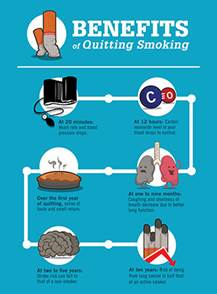
- At 12 hours: The carbon monoxide level in your blood drops to normal.
- At two weeks to three months: Your circulation improves, and your lung function increases.
- At one to nine months: Any coughing and shortness of breath you may have decrease due to better lung function. Your risk of lung-related infection is reduced.
- Over the first year of quitting, your energy level increases, breathing becomes easier, and sense of taste and smell return.
- At one year: Your excess risk of coronary heart disease is half that of an active smoker’s.
- At two to five years: Your stroke risk can fall to that of a nonsmoker.
- At five years: Your oral, throat, esophageal and bladder cancer risks are cut in half compared to active smokers. Cervical cancer risk falls to that of a nonsmoker.
- At ten years: Your risk of dying from lung cancer is half that of an active smoker. Your risk of larynx (voice box) cancer and pancreas cancer decreases.
- At 15 years: Your risk of coronary heart disease is the same as a nonsmoker’s.
Quitting is more than a matter of will power. Smoking is a chronic illness that involves a physical addiction and a powerful emotional addiction. Nicotine is a highly addictive and powerful drug. Many tobacco products are perfectly manufactured to give you enough of it to ensure you are hooked.4
Together, these powerful addictions are tough to overcome. Both the physical and emotional addictions need to be addressed. Developing a quit plan is the most effective way to quit – one that is personalized, involving education, counseling, and often medicines. There are also more and better tools to help people quit. Support comes in numerous modes:
- Telephone smoking-cessation hotlines
- Stop-smoking groups
- Online quit groups
- Counseling
- Nicotine replacement products
- Prescription medicine to lessen cravings
- Guide books
- Encouragement and support from friends and family members
Using two or more of these measures to quit works better than using any one of them alone. For example, some people use a prescription medicine along with nicotine replacement. Other people may use as many as three or four of the methods listed above.5
Telephone stop-smoking hotlines are an easy-to-use resource, and they are available in all states. North Carolina offers the Quitline at 1-800-QUIT-NOW (1-800-784-8669) and is open 24 hours a day, 7 days a week. Depending on your health insurance plan, you may qualify for free nicotine replacement therapy to include transdermal patches or gum.
 On November 17, 2016, the American Cancer Society will hold its Great American Smokeout — an annual event dedicated to curbing the costly habit of cigarette smoking. The event, which is held each year on the third Thursday in November, provides smokers with a specific date to mark their calendars and move on—to draw a line between the smoky past and a clear future.
Need more motivation?
- Over time, you can get back years of life that would otherwise be lost if you keep smoking. By quitting, you’ll reduce your risk of diabetes and help your heart, lungs, and blood vessels work better.
- You’ll save money. Start out by figuring out how much you spend. Multiply your smoking costs per year by the number of years you’ve been smoking. You may be surprised to find out how much money you could be saving.
The average pack of cigarettes in NC costs $5.81. The average person smokes about one pack per day, which costs:
$40.67 per week
$127.72 per month
$2,120.65 per year
- You will reduce risk for family members. Smoking hurts those around you. Children who breathe second hand smoke are more likely to develop bronchitis, pneumonia and ear infections.3
Ready to give it a try? Thursday, November 17 may be the perfect time for some to stop smoking and to start looking forward to the benefits of living tobacco-free.
Remember, you don’t have to do it alone – and your chance of success is much better with a quit plan and supports in place. Quitting even for one day is an important step towards a smoke-free life. Take it one step at a time. The most important step is the first one — making the decision.6
More information:
- The Great American Smokeout
- Tobacco use among youth
- How to successfully quit or call 1-800-Quit-Now
Interested in bringing this topic to your students?
- The Poe Center offers substance use prevention programs for 3rd - 5th grades and adults. Call (919) 231-4006 or go on line to schedule a program today.
Choices & Consequences
Grade Level: 5th | Program Length: 60 minutes
Students will learn the truth about the dangers of inhalants and the gateway drugs (tobacco, alcohol and marijuana) through an interactive classroom game modeled after the popular television program, Are You Smarter Than a 5th Grader? The dangers and consequences associated with use and abuse will be discussed through the use of exhibits, BrainPop videos and interactive activities. Students will conclude the session with participation in an activity reinforcing refusal skills.
- For the Classroom: Tobacco and Hands-on Science. Take this topic to your students with this educational activity.
Resources:
1. Join the Great American Smokeout. Harvard Health Publications.
2. U.S. Department of Health and Human Services. The Health Consequences of Smoking—50 Years of Progress: A Report of the Surgeon General. Atlanta: U.S. Department of Health and Human Services, Centers for Disease Control and Prevention, National Center for Chronic Disease Prevention and Health Promotion, Office on Smoking and Health, 2014 [accessed 2015 May 21].
3. Help to Quit Smoking. Froedtert & Medical College of Wisconsin.
4. Nicotine (Tobacco Addiction and Abuse). MedicineNet.com.
4. American Cancer Society's Great American Smokeout. Comtrea.
6. Smokers: Make the Choice to Improve Your Life Today. American Cancer Society.
For the Classroom: Tobacco and Hands-on Science
For the Classroom: Tobacco and Hands-on Science
Objective: Educate students on a few of the physical dangers of smoking
Time: 30 minutes
Supplies for each student or group:
- 2 large cotton balls
- small plastic bottle
- cigarette
- modeling clay
Hands-on science. (At the lower elementary grades, teachers should perform this demonstration.)
1. Place a large cotton ball inside the small plastic bottle.
2. Seal the bottle with a chunk of modeling clay.
3. Poke the filter end of a cigarette through the clay so that it's inside the bottle.
4. Light the other end of the cigarette -- the end that's sticking out of the bottle.
5. Slowly pump or squeeze the plastic bottle 6-10 times to simulate a person puffing on the cigarette. Then remove the cigarette from the clay. Crush out the lit end.
6. Invite students to take a close look at the cotton ball and compare to an unused cotton ball.
Discussion: Ask students engaging questions such as:
- What does this demonstration show us about smoking?
- How does what we see on the cotton ball tell you about what smoking a cigarette may do to our lungs?
- How do you think the lungs look on a person that smokes a pack of cigarettes a day? Over a year span? 20 year span?
Adapted from www.educationworld.com.
Additional Great American Smokeout information and teacher activities:
- The Great American Smokeout: Anti-Smoking Activities. EducationWorld.
- Lesson Plan Library: Smoking. Discovery Education.
National Bullying Prevention Month: Dissecting Bullying & Attacking It at the Root
Dissecting Bullying and Attacking It at the Root
Thomas Ray, MA, NBCT - Senior Director of Educational Programming
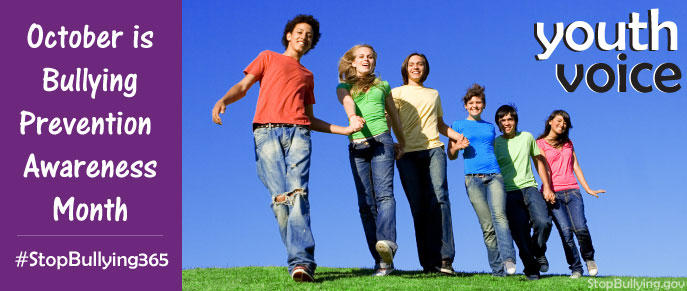
Like any pressing social concern, there is no quick fix to eliminating bullying in our schools and communities. However, understanding the structure of what bullying is may be helpful as we individually seek to undermine bullying behavior and pull it out by its roots.
So what exactly is bullying? The answer comes in a three-part definition:
- Purposefully mean and hurtful behavior
- Repeated behavior (or has the potential to be repeated, such as cyberbullying)
- An existing or perceived power imbalance (one person has a hard time defending himself or herself)
At the root of bullying behavior is the imbalance of power which may manifest itself in a number of ways. Common power imbalances lie in physical size or strength and social prowess. Undermining the power imbalance is one effective way to prevent bullying from occurring. Following are three approaches that can help put bullying off balance:
Voice – Research indicates that as many as nine out of ten young people disapprove of bullying. However, many do not voice their disapproval for fear of retribution, hurting their reputation, or gaining no positive results. Unfortunately, silence communicates approval of the bullying behavior to the perpetrator and unintentionally perpetuates the bullying.
For many young people, exercising their voices does not come naturally (though parents may think otherwise). Adults can help by creating opportunities for young people to practice voicing their disapproval of bullying. Repeated practice and role play develops the confidence and word choice that allows young people to skillfully voice their position on bullying.
Numbers – There is power in numbers, and that power can tip the power imbalance in the other direction. Encouraging young people to stand together with their peers and with adults to use their voices against bullying can quickly change the power dynamic in a bullying situation. Potentially, a group of friends could agree that when they see bullying occurring they will all give voice to their disapproval with something as simple as, “Bullying is not ok. You cannot treat him/her like that.” If nine out of the ten who disapprove all use their voices, the bullying would end.
Norming – Creating a culture that clearly communicates that bullying is unacceptable is important. The prevalence of mean and hurtful behavior on many popular shows among young people sets the norm that bullying behavior is expected to be a regular occurrence. That acceptance leads to the false narratives of “kids will be kids” or “rite of passage.” Families, schools, and communities can re-norm through conversations about bullying and identifying that it is unacceptable.
Training young people to use their voices and develop positive coping skills coupled with campaigns and events that promote acceptance of differences will help develop a norm of treating one another with respect.
Interested in bringing this topic to your classroom? The Poe Center offers Bullying Prevention programs for pre-school - 8th grades. Schedule a program on line or call 919-231-4006.
Featured Program: Friend Power
45 minutes - 2nd - 3rd grade