For the Classroom: Sleep Hygiene Journal
For the Classroom: Sleep Hygiene Journal
© Rebecca Wenrich Wheeler 2016
Sleep deprivation affects Americans from all age groups. The following activity is great for students. Teachers and parents may benefit from participating as well.
Week 1:
Follow normal sleep routine and record the following in a journal on a daily basis labeled with the date:
- Log all activities one hour prior to bedtime, including screen time, food and drink consumed, and hygiene activities (brushing teeth, bath time, etc.).
- Record the time you went to sleep and when you awoke.
- As soon as you wake up, rate how awake you feel on a scale of 1-10 (1 being “I can barely get out of bed” to 10 being “Let’s take on the world!”)
- Record whether the alarm woke you or you woke on your own. If you woke up by an alarm, write down how many times you hit the snooze button.
- Record on a scale from 1-10 how you would describe the quality of your sleep (1 being “Very light sleep, woke up several times” to 10 “Very deep sleep”).
Week 2:
Turn off all screens one hour before bedtime (including televisions, computers, cell phones, iPads and eReaders). Reading a physical book or magazine 30 minutes before bedtime is okay. Record the following in a journal on a daily basis with a date:
- Log all activities one hour prior to bedtime, including screen time, food and drink consumed, and hygiene activities (brushing teeth, bath time, etc.).
- Record the time you went to sleep and when you awoke.
- As soon as you wake up, rate how awake you feel on a scale of 1-10 (1 being “I can barely get out of bed” to 10 being “Let’s take on the world!”)
- Record whether the alarm woke you or you woke on your own. If you woke up by an alarm, write down how many times you hit the snooze button.
- Record on a scale from 1-10 how you would describe the quality of your sleep (1 being “Very light sleep, woke up several times” to 10 “Very deep sleep”).
After the two week experience, review the results and write a short report comparing the data for the two weeks. The length and description required in the report can be adjusted for grade level of students. If you would like to extend the experiment for a third week, continue with the removal of screen time and then add another sleep hygiene tip for instance: “Add an hour of exercise two or more hours before bedtime.”




Make Sleep Hygiene as Routine as Brushing Your Teeth
Make Sleep Hygiene as Routine as Brushing Your Teeth
Rebecca Wenrich Wheeler, MA, M.Ed. – Health Educator
Imagine you heard similar excuses for not brushing one’s teeth as you hear for inadequate sleep.
“I would brush my teeth, but I just have too much work to finish.” “No one in my family ever needed to brush their teeth much. It’s just genetic.” “Having my phone and computer in the bathroom doesn’t interfere with my brushing.”
Granted it only takes a few minutes in the morning and evening to brush your teeth, and sleep requires hours, but shouldn’t sleep warrant more attention? Sleep deprivation contributed to 72,000 automobile crashes in 2013 alone (“Drowsy Driving”, 2015). Sleep deficiency is a widespread public health concern. People in all age groups report sleeping difficulties, causing negative implications in all facets of daily life.
Before grappling with the topic of sleep deprivation, it is helpful to understand the processes of sleep. The sleep-wake cycle and circadian rhythm both influence the duration and quality of sleep. The sleep-wake cycle theory assumes that the longer someone is awake the sleepier he/she will eventually become, which is influenced by the release of the hormone melatonin. However, one’s own biological clock can work against the sleep-wake cycle (Spinks). For instance, have you ever stayed up late and experienced a “second wind,” increasing your alertness and making sleep even harder to find? Researchers have found that teenagers are especially prone to staying alert when they should be experiencing drowsiness. This phenomenon is called “phase-delay” (Spinks).
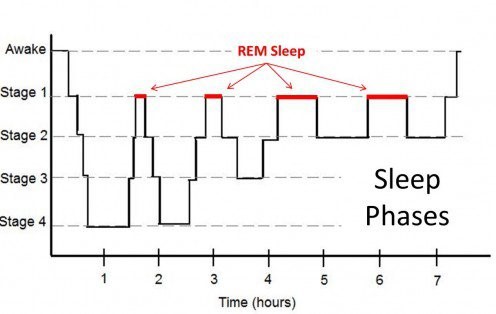
The human sleep cycle, which occurs in a regular pattern three to five times per night, takes about 90 minutes to complete (“What are Sleep”, 2012). The sleep cycle is divided into two major divisions: non-REM and REM sleep. Non-REM sleep includes deep slow-wave sleep. During this stage, it is very hard to wake a person. If your alarm goes off during slow-wave sleep, it will take longer to rouse you, or you may not hear the alarm at all. Over the course of the night, non-REM sleep decreases with each cycle, and REM sleep increases. REM sleep, or rapid-eye movement sleep, is characterized by vivid dreams. Since the sleep cycle ends with REM, if you wake up naturally, you would have done so at the end of a dream. During REM your muscles are actually immobile as to not act out your dream and possibly injure yourself, although your brain is teeming with neural activity (Myers, 2013).
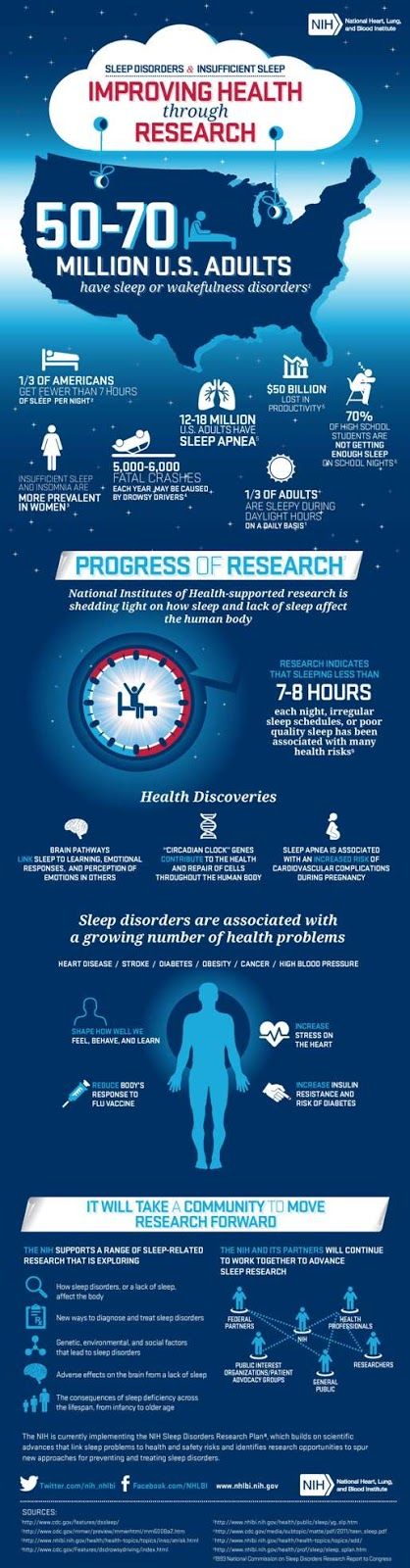
Against popular beliefs, a person cannot make up sleep nor bank extra sleep when he/she anticipates a future period of sleep loss. “Nearly 40 percent of adults report unintentionally falling asleep during the day at least once a month,” and many of those adults do not recognize they are sleep deprived (“What are Sleep”, 2012).
What are some indicators a person is sleep deprived?
- Falling asleep at the wrong time of day.
- Yawning or blinking frequently during the day.
- Episodes of “microsleep.” (Brief periods of sleep when you should be awake. For instance, you might experience a lapse in time while driving and not remember you had driven for several miles.)
- Trouble focusing, learning, and reacting during the day.
- Difficulty with emotional control (“Why is Sleep”, 2012).
Understanding why the brain needs sleep has intrigued neuroscientists for decades. Evidence indicates that sleep plays a role in memory consolidation, but how this happens is yet to be determined (Winerman, 2006; “Sleep, Learning”, 2007). Consolidation is the stage between memory acquisition (initial learning) and recall. Slow-wave sleep seems to be crucial for processing declarative memories, fact-based information, and REM sleep facilitates consolidation of procedural memories, “how-to” memories (“Sleep, Learning”, 2007). When a person experiences sleep deprivation, he/she will suffer problems with memory recall. Additionally, “low-quality sleep and sleep deprivation also negatively impact mood, which has consequences for learning” (“Sleep, Learning”, 2007). Negative impacts on mood include difficulty controlling emotions and coping with change, as well as, depression and lack of motivation (“Why is Sleep”, 2012). Children and teens who are sleep deprived also exhibit anger, impulsivity, and difficulty getting along with others (“Why is Sleep”, 2012).
Sleep deficiency also impacts one’s ability to perform daily tasks. “People who are sleep deficient are less productive at work and school. They take longer to finish tasks, have a slower reaction time, and make more mistakes” (“Why is Sleep”, 2012). Decreased reaction time and attentional difficulties greatly impact driving skills in particular. Studies have shown that drowsiness impairs driving ability as much as being drunk (“Why is Sleep”, 2012). The CDC reports that approximately 1 in 25 adults, 18 and older, reported falling asleep at the wheel in the past 30 days (“Drowsy Driving”, 2015). Saying that you need adequate sleep is not a sign of weakness. It is rather quite the opposite, sleep is vital to our health and well-being. In general, adults need at least seven hours of sleep a day, and teens need at least nine (Spinks).
Even if poor sleep habits are commonplace in your life, it is never too late to establish a sleep hygiene routine. Begin to integrate the following tips for a healthier snooze. (Spinks; “Healthy Sleep”, 2014)
- Have a bedtime routine, even on weekends.
- Avoid “binge-sleeping” to catch up on sleep. This will only confuse your biological clock. Instead, you will get more benefits from sleeping an hour or two extra with your regular routine.
- Sleep in a cool, dark room.
- Turn off music, Internet, television, and other screens that will overstimulate the brain at least 30 minutes before bedtime.
- Do not use technology where you sleep.
- Dim the lights in the evening to encourage drowsiness and get a lot of daylight in the morning. This will help reset the biological clock.
- Those who regularly exercise report having better sleep than those who do not. However, try to exercise earlier in the day, rather than in the few hours before bedtime.
- If you do not fall asleep in 20 minutes, get out of bed and try a calming activity without using a screen (i.e. yoga exercises, coloring). Getting into bed when you are not sleepy will increase frustration.
Now turn off your electronic devices, brush your teeth, and get some sleep.
Interested in bringing this topic to your school or organization? The Poe Center's #YouthCulture series, which is designed for parents, caregivers, and professionals who work with youth, addresses this topic among many others. Ask for the Adolescent Brain Development & the Role of Social Media module. #YouthCulture may be offered as a series or individual programs.
#YouthCulture
Grade Level: Adults Only | Program Length: 2 hour workshop
The Poe Center’s #YouthCulture program is designed to empower parents and guardians by providing insight into the environment and culture around our youth. This two-hour workshop explores how the developing adolescent brain shapes perceptions and behavior. All participants will receive a free packet of supportive materials and resources. Covered topics will include substance use, Internet safety, sexting, and healthy dating relationships. In addition we will explore ways to enhance parent-child communication.
Works Cited
Drowsy Driving: Asleep at the Wheel. (2015, November 05). Retrieved July 04, 2016.
Healthy Sleep Habits. (2014). Retrieved July 05, 2016.
Myers, D. G. (2013). Psychology (10th ed.). New York, NY: Worth.
Sleep, Learning, and Memory. (2007, December 18). Retrieved July 05, 2016.
Spinks, S., Adolescents and Sleep. Retrieved July 04, 2016.
What Are Sleep Deprivation and Deficiency? (2012, February 22). Retrieved July 05, 2016.
Why Is Sleep Important? (2012, February 22). Retrieved July 04, 2016.
National Safety Month: The Importance of Wearing a Bicycle Helmet
National Safety Month:
The Importance of Wearing a Bicycle Helmet, My Story
Thomas “Tex” Bennett - Guest Blogger
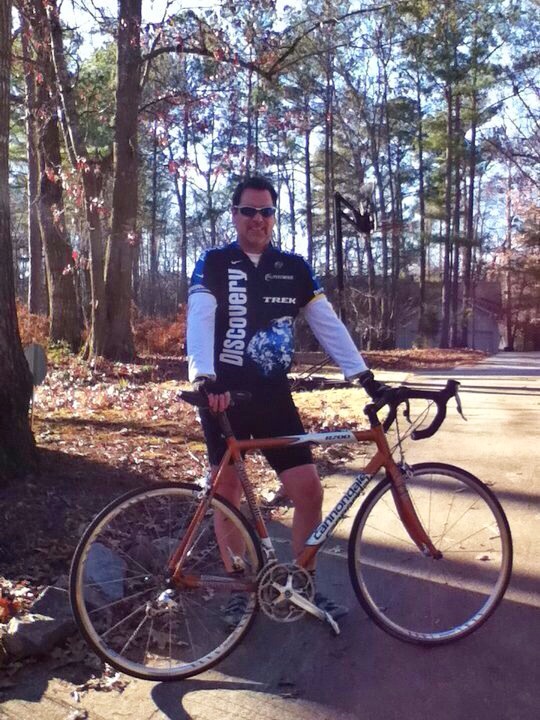
June is National Safety Month, which focuses on reducing leading causes of injuries and deaths at work, on the road, and in homes. The Poe Center would like to thank Tex Bennett for sharing his personal story to remind us about the importance of bicycle safety.
It was one of those wonderful gorgeous weekends that we are sometimes blessed with in NC during the winter months. It made me remember the main reason that I moved down here from Pennsylvania in 1986. It was a Sunday morning. I was very excited because I was planning a bike ride for the day. It had been months since I rode my bike because of some back issues that had been plaguing me for a long time.
I had decided that for today’s ride I was going drive to the Neuse River Trail Greenway about 25 minutes away from my house. Normally in the past, I would just jump on my bike and go for a ride from my house and onto the highways near my house in southeastern Wake County. But, I was very tentative to ride the highways on this day. My tentativeness was the result of the number of serious accidents between cars and bikes in the recent months. On this day, I was going to play it safe and ride about 20 miles on the Neuse River Greenway. No crazy drivers to deal with, just a beautiful smooth asphalt trail along the meandering Neuse River. What could go wrong?
After my relatively short drive from home to the Auburn Knightdale parking lot on the Neuse River Greenway Trail, I removed my bike from the car and did my normal suiting up for my ride. I decided that I was going to ride south on the trail to the end, which is located in Johnston County. After I started on my ride, the beautiful Carolina blue sky was starting to turn gray. Once I entered into the Johnston County section of the trail, the wind was picking up, and the sky was looking like it was definitely going to rain. While I was riding in Johnston County, I just happened to see a couple that are very good friends of mine. I was excited to see them; so I stopped and talked to them for a little bit, but I did notice that neither was wearing a helmet. I proceeded to give them a good natured hard time. They gave me the typical excuse of “since we are on the trail and not the road, we are pretty safe.” I then made my case on why it was important to wear a helmet at all times. At this point, it started raining, and I decided I needed to head back to the car about six miles back.
In less than 10 minutes, I was back in Wake County and then the whole world seemed to fall out from under me. I was going around a turn at about 20 miles an hour and suddenly hit a very slippery spot on the trail. I went down so fast that I was totally confused about what happened. I have one of the racing type road bikes with the very thin tires. At that point, I knew that I was in bad shape. I was definitely aware that I had some broken bones. At first I thought that I had seriously hurt my back. Fortunately, I was not alone, but there was a family that was walking the trail coming from the opposite direction. They were witness to the whole incident. They offered to call an ambulance, but I asked them to call my wife instead. After about 10 minutes of laying on the trail, I was painfully able to get up. There was another young man that fortunately had a first-aid kit with him. He cleaned up my left arm which was bleeding profusely from some serious road rash.
Fortunately, where I crashed was at one of the many parking lots that line the trail. This made it very easy for my wife to find me and take me to a hospital. It was raining very hard at this point. There just happened to be a “Trail Ambassador” that was also present to witness the whole crash. She just happened to be parked at that exact parking lot. She was very nice and let me sit in her car out of the pouring rain until my wife was able to arrive and transport me to the nearest hospital.
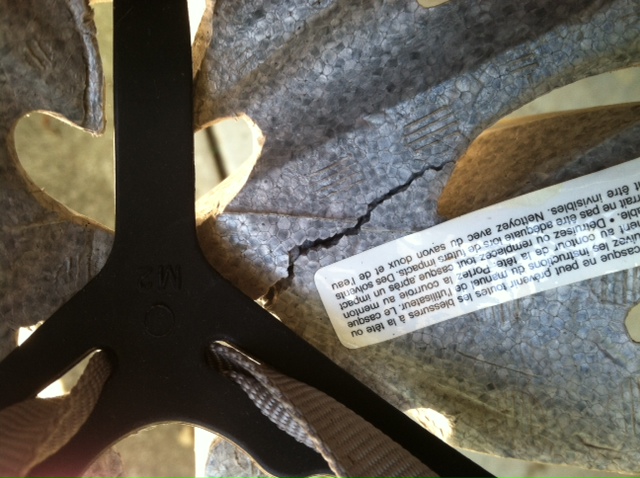
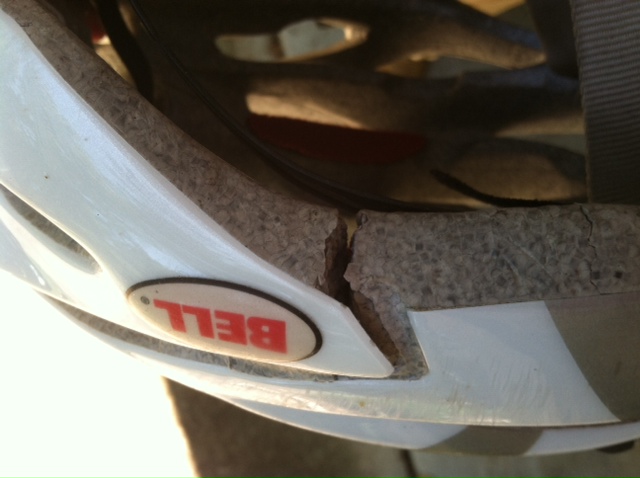
In the end, I had two broken ribs, a broken collar bone, and a punctured lung. I had to have surgery to fix the broken collar bone. This was relatively minor compared to what could have happened. On my way to the hospital I noticed that my $150 helmet had three significant cracks in it. If I had not been wearing a helmet that day, I would have just been another statistic or at least had a major head injury.
This is my story. Please wear a bicycle helmet at all times, no matter what age. If you have children, teach them at the very earliest age to wear a helmet.
Thomas “Tex” Bennett, is a Program Specialist for Wake County Cooperative Extension/4-H and has worked for 4-H for almost 14 years. Tex grew up in the Pittsburgh, Pennsylvania area - Go Steelers! - and graduated from Westminster College in Pennsylvania with a BA in Political Science. He moved to NC in 1986 and is married with 2 daughters. His oldest daughter just graduated from UNC Chapel Hill, and the youngest is getting ready to graduate from Garner High School. She too will be going to UNC Chapel Hill. Tex has been an avid cyclist all his life.
Interested in bringing this topic to your students? Contact the Poe Center to schedule a program.
It’s All About Me!
Grade Level: Kindergarten – 1st | Program Length: 45 minutes
You are someone special! Through a series of hands-on activities and games, this program illustrates the message of protecting yourself from the everyday dangers of daily activities. Learn how to stay safe and healthy while still having fun!
For the Classroom: Teaching students the warning signs of suicide
For the Classroom:
Teaching students the warning signs of suicide
 An adolescent’s peers are often the first to recognize changes in a friend’s typical behavior and emotional patterns. It is important to teach young people the warning signs for a mental health crisis and suicide ideation, as they just might be the ones to intervene and save a friend’s life. Adolescents need to know they can seek out a trusted adult if they or someone they love is experiencing such a crisis.
Share with your students the warning signs for suicide and ask them to identify a trusted adult they can turn to if they or a friend are experiencing a crisis. Recommended lists of warning signs can be found on the following sites:
- It's OK 2 Ask...about suicide. What to Look For.
- American Foundation for Suicide Prevention. Risk Factors and Warning Signs.
Once the class has discussed these warning signs, for an extension assignment, ask the students to create a meme to post on social media. The meme should be designed to target teens, include warning signs, and the National Suicide Prevention Hotline: 1-800-273-TALK.

Mental Health Awareness Month: 5 Common Myths About Suicide
Mental Health Awareness Month:
5 Common Myths About Suicide
Rebecca Wenrich Wheeler, MA, M.Ed. - Health Educator
May is Mental Health Awareness month. The purpose of the awareness month is to decrease stigma and increase the general public’s knowledge base of mental health. Unfortunately, deep-rooted myths about mental illness, substance abuse, and suicide remain. Could the greatest deterrent to suicide prevention be the endurance of long-held myths?
Myth 1: Suicide occurs most often in the winter.
In the northern hemisphere, suicide rates increase in spring reaching a peak in May. In the Southern hemisphere, the peak happens in the spring as well, around September/October. In fact, this trend dates back to studies from the 1820s (Stoll, 2013). The high rates of completed suicides in the spring still confound researchers. The theories surrounding this trend tend to fall into two categories: biological and social. Some theories point to the increased inflammation in the body and vulnerabilities to pollution that comes with warm weather. On the other hand, while winter has many of us bundled indoors, spring invites more social interaction and change. When a person is in the throes of depression, social engagement is very difficult. When he sees those around him lifting out of winter sadness and he is not, it can make the person feel even more isolated (Palmer, 2012).
Myth 2: Suicide is a young person’s illness.
The origin of this myth mostly likely stems from ranking causes of death for age groups. For instance, in North Carolina, suicide is now the 2nd leading cause of death for ages 15-24, slightly higher than a just few years ago. (Nationally, suicide ranks as the 3rd leading cause of death for ages 15-24, with NC ranking 35th out of 50 states). In North Carolina, suicide is the 11th leading cause of death for all ages combined. With age, other illnesses, such as heart disease, become more of a danger, causing such illnesses to out-rank suicide. The highest amount of suicides occur in middle age, white men in particular. In 2014, white males accounted for 7 of 10 suicides, a 30% increase since 2010. Just a few years ago, older white men showed the highest rates of suicide. An unstable economy, unemployment, and veteran suicides helped contribute to the rate change. (“Suicide Prevention”, 2013).
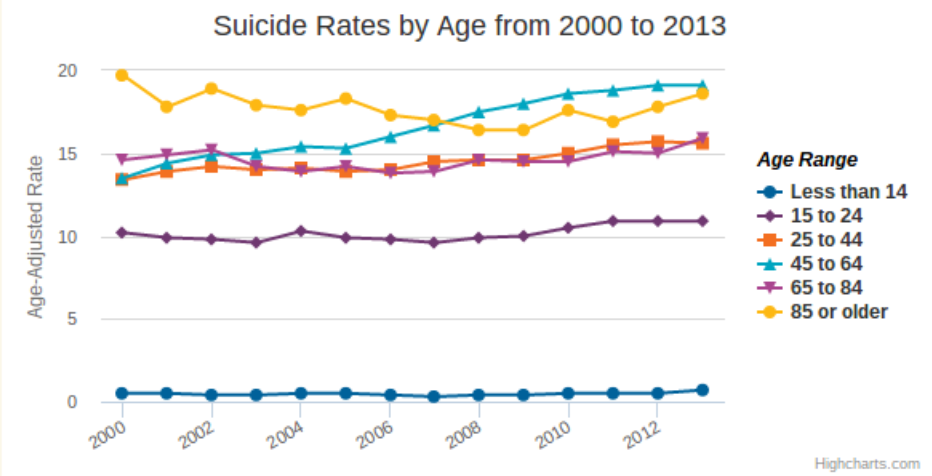
In relation to race, white men still significantly die by suicide at higher rates than black men. Though it should be noted, that the African-American community is disproportionally young in comparison to whites, which highlights that the average age of suicides in the African-American community is 10 years younger than for whites (“Suicide Statistics”, 2014). In terms of proportion, Native Americans have the highest rates of suicide deaths in comparison to the general population. In relation to youth, LGBTQ teens are at greater risk of suicide than adolescents as a whole.

Myth 3: The gender suicide paradox is a universal truth.
In the United States, men complete suicide at much higher rates than women, and women attempt suicide at higher rates than men. Though women are more likely to have suicide ideation, men account for 77.9% of completed suicides (CDC, 2015). This paradox doesn’t hold true in other countries. For instance, women from China complete suicide at higher rates than their male counterparts; in Finland and Ireland, the rates are roughly equal between sexes for suicide attempts (Bryner, 2010). Such differences demonstrate that suicidal tendencies aren’t biologically predisposed, but influenced in part by culture. Powell (2015) argues that we couldn’t imagine a breast cancer prevention campaign not targeted at women, as females suffer the majority of deaths from this cancer. Why wouldn’t we see suicide prevention in the same way? Powell writes, “Let’s stop marveling at the suicide paradox. How does our understanding and expectations of men affect the way we should address suicide? Let’s make a plan, and in that plan, can we talk about gender.” In terms of prevention, if we aren’t willing to address these gender differences will we be able to curb increasing suicide rates?
Myth 4: Asking “Are you thinking of killing yourself?” will plant the idea in a person’s mind.
Asking a loved one the question will not plant the idea of suicide in his or her mind. If you are concerned enough to ask, you would have noticed warning signs that already indicate the person is thinking of suicide. Asking the question brings the person’s feelings into the light, and recognizing and validating another’s pain can bring a great sense of relief to the suicidal person. When talking with a person who is experiencing suicide ideation or has experienced a previous attempt, the Canadian Centre for Suicide Prevention (2009), found the person most benefited from the following:
- Seeking help from family and professionals, and being included in treatment discussions
- Being treated with kindness and respect, and approached without judgement
- Affirming the person is worthy and valuable
- Being seen as a whole person and not just a “suicide attempter”
- Allowing the person to honestly express their thoughts and feelings
- Building problem-solving and coping skills
- Being connected or reconnected with significant others, culture, or spiritual beliefs
When talking with a person who has suicidal thoughts or has attempted, discuss any protective factors that may be present. Research has shown “that some of the most significant protective factors are: Effective mental health care, connectedness to individuals, family, community, and social institutions problem-solving skills, contacts with caregivers” (Suicide Prevention Resource Center, 2013). Additionally, include the person in problem solving goals and in decision making when seeking professional help.
Myth 5: The language we use to talk about suicide doesn’t matter.
Committed suicide
The word commit is most often used in conjunction with a crime or a sin (committed a crime), which then places a value judgement on the act. It is more appropriate to say died by suicide.
Failed or unsuccessful attempt
When talking to a person in an already vulnerable situation, referring to the attempt as failed or unsuccessful might further the person’s feelings of inadequacy. Would a completed suicide then be a success? Using the phrase survived and attempt or non-fatal attempt, would be preferable.
Suicide is selfish.
When a person is in the depths of depression, the sense of hopelessness and isolation is overwhelming. The person often doesn’t want to die, but sees death as the only way out of the suffocating depression he or she is experiencing. Additionally the person might perceive themselves as a burden to the family and suicide as a way to release their loved ones.
The most important words you can tell a person experiencing suicidal thoughts: You are not alone.
Youth Mental Health First Aid Training
Youth Mental Health First Aid trains participants on how to appropriately respond to a mental health crisis in an adolescent’s life. Some training topics include: psychosis, non-suicidal self-injury, panic disorder, and suicide ideation. Participants will also work through scenarios in order to feel more comfortable working through the action steps. The course is 8 hours in length and may be broken up between a couple days. The training is for any adult who interacts with young people. To learn more information about the program and schedule a training, contact Rebecca Wheeler.
Works Cited:
Bryner, J. (2010, September 12). Suicide Stereotypes Exposed as Myths. Retrieved April 30, 2016.
Canada, Canadian Mental Health Association, The Centre for Suicide Prevention. (n.d.). Attempted Suicide: Part 1. The Perspective of Attempters. Retrieved January, 2009.
CDC, National Center for Injury Prevention and Control. (2015). Suicide Facts at a Glance. Retrieved April 30, 2016.
Palmer, B. (2012, December 7). The Season of Renewal and Suicide: Why are people more likely to kill themselves in springtime than during the holidays? Retrieved April 28, 2016.
Powell, J. (2015, January 29). The Gender Paradox of Suicidal Behavior and Why We Can't Address the Issue. Retrieved May 01, 2016.
Stoll, B. (2013, March 23). Suicide cycle: ‘April is the cruelest month’. The Daily Herald. Retrieved April 28, 2016.
Suicide Prevention Resource Center. (2013). Suicide among racial/ethnic populations in the U.S.: Blacks. Waltham, MA: Education Development Center, Inc.
Suicide Statistics (Rep.). (2014). Retrieved April 29, 2016, from American Foundation for Suicide Prevention website.
Additional Reading:
Mittal, V., Brown, W., & Shorter, E. (2009). Are Patients With Depression at Heightened Risk of Suicide as They Begin to Recover? Psychiatric Services, 60(3). doi:10.1176/appi.ps.60.3.384
Presidential Proclamation -- National Mental Health Awareness Month, 2016. (2016, April 28). Retrieved May 05, 2016.
Robertson, G. D. (2015, October 19). Report: North Carolina youth suicides double since 2010. Retrieved April 29, 2016.
#Add25 Challenge Reaches Thousands
NC Students & Teachers Reach Thousands with Messages about Fitness & Nutrition
Jennifer N. Bell, M.Ed. - Marketing Director
From purple carrots to hula hooping to BBQ bugs, NC schools found very creative ways to improve their fitness and nutrition during National Nutrition Month thanks to the Poe Center’s #Add25 Challenge hosted by Miss North Carolina.
Designed to inspire students, staff and teachers to find creative ways to increase their fitness and nutrition, the contest invited North Carolina schools to share on social media how they incorporate healthy habits into their routines. Miss North Carolina 2015, along with many of her city and regional Miss NC sisters, provided daily motivation with their own nutrition and fitness social media posts.
Participating schools, along with Miss NC and her supporters, posted over 250 messages to Facebook, Twitter, and Instagram, which reached over 52,000 Poe Center social media followers. See the collection of posts.
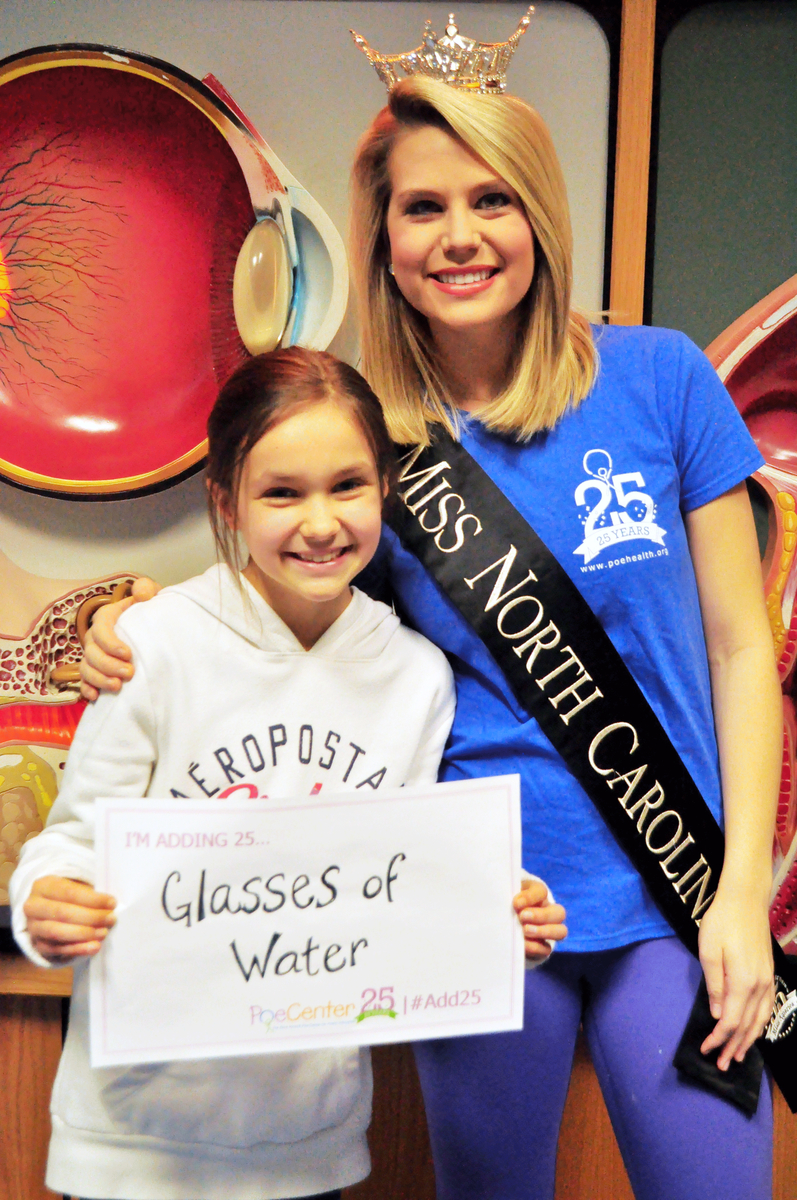
“I have thoroughly enjoyed being a part of the #Add25 Challenge and partnering with the Poe Center. My goal was to reach as many people, especially children, in NC as possible and inspire them to make changes to improve their health and nutrition,” said Kate Peacock, Miss North Carolina 2015.
Savannah Royal, a senior at Sampson Early College High School, coordinated the contest as her senior project. She said, “I wanted to do the #Add25 Challenge and get my school involved because I think it is important that people should make healthy choices throughout their daily lives…This challenge has actually helped me make better lifestyle choices and make changes to my daily food intake. I hope it has helped to encourage more people to do the same! It was fun being able to do the #Add25 Challenge with my school.”
“My kids truly enjoyed it and looked forward to our #Add25 activity each day!...They wanted to make sure that I would continue with the fitness brain breaks and the Tasting Thursdays to try new foods once the challenge ended,” said Michelle LeRoy, fifth-grade teacher at Penny Road Elementary in Cary, NC.
Participating schools included:
- Conn Active Learning and Technology Magnet Elementary - Raleigh, NC
Jump rope for heart!! #add25 @ConnPTA pic.twitter.com/MMnN1oqxjZ
— Conn Elementary (@ConnMagnet) March 23, 2016
- East Garner Elementary School – Garner, NC
I was able to join PreK on their #add25 goal of 25 laps in March @PoeCenter pic.twitter.com/9IebVZGofa
— East Garner Phys. Ed (@EastGarnerPE) March 10, 2016
- Penny Road Elementary School – Cary, NC
Keeping track of all our efforts to #add25 @PennyRoadES @poecenter pic.twitter.com/zQd36Y8C9I
— Michelle LeRoy (@MichelleLeRoy66) March 9, 2016
- Sampson Early College High School – Clinton, NC
The Poe Center and Miss NC are honoring the two schools with the most #Add25 social media posts. Sampson Early College High School and senior Savannah Royal will be recognized on May 10 at the school’s senior awards night. The Poe Center and Miss NC will present PoeMANIA, a fun and interactive game-show style nutrition assembly, for 100 students and staff at Penny Road Elementary on May 4.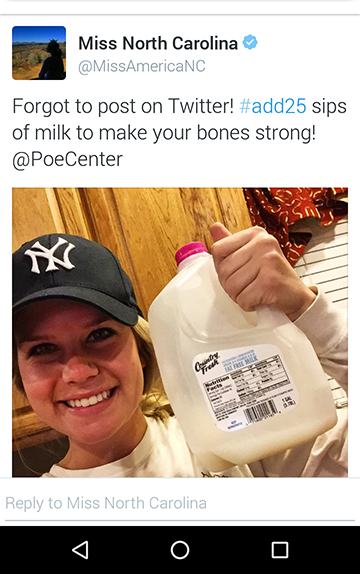
The Poe Center would like to thank Miss North Carolina 2015, Kate Peacock for donating her time and energy to hosting the #Add25 Challenge. We couldn't have done it without you Kate!
Special thanks also goes to the local Miss NC pageants for supporting the #Add25 Challenge:
- Miss Garner 2016, Grace Ann Carroll
- Miss Greater Carolina 2016, Ashley Underhill
- Miss Fayetteville 2016, Victoria Baskett
- Miss Statesville 2016, Mallory Outen
The #Add25 Challenge is one of several activities the Poe Center has planned in celebration of its 25th Anniversary.