For the Classroom: Activities to Help Prevent Type 2 Diabetes in Children
For the Classroom: Activities to Help Prevent Type 2 Diabetes in Children
Marjorie Lanier, MPH - Healthy Communities Facilitator, Southeastern NC
Type 2 diabetes is a disease that results in blood sugar levels being too high. If blood sugar levels stay too high for too long, it can damage the heart, eyes, kidneys, nerves, and even the teeth and gums. In the past, only adults got type 2 diabetes. However, as more children and adolescents in the United States become overweight or obese and inactive, type 2 diabetes is on the rise among young people. The Centers for Disease Control estimate that approximately 17% (or 12.7 million) of children and adolescents in the United States aged 2—19 years are obese.
The first stage in the development of type 2 diabetes is often insulin resistance, requiring increasing amounts of insulin to be produced by the pancreas to control blood glucose levels. Initially, the pancreas responds by producing more insulin, but after several years, insulin production may decrease and diabetes develops. Type 2 diabetes usually develops slowly and may occur without symptoms.
Diabetes screening is recommended for all children and adolescents at high risk, even if they have no signs or symptoms of the condition. A child may be at high risk if he or she:
- Is overweight
- Has a sibling, parent, grandparent, aunt, uncle or cousin with type 2 diabetes
- Is black, Hispanic, Native American, Asian-American or Pacific Islander, as these racial groups have a higher incidence of type 2 diabetes
- Has signs of insulin resistance, such as darkened skin on the neck or armpits
A child should also see his or her doctor if any of the signs or symptoms of diabetes are present — increased thirst and urination, increased hunger, weight loss, fatigue, blurred vision, slow-healing sores, or frequent infections.
How Can You Help?
Promoting a healthy weight through healthful eating and more physical activity is the best way to prevent a child’s risk for developing type 2 diabetes. Check out resources that can be used in the classroom to promote healthy habits:
MyPlate Activity Sheets- a variety of printable activities that offer kids ideas and tips for healthier eating
Blast Off- an interactive website game that challenges kids to build a healthy plate
Energizers - classroom based physical activities for grades K-8 that integrate physical activity with academic concepts
Activity Bursts for the Classroom- shows elementary schools how to restructure physical activity into multiple, brief episodes throughout the day without taking away valuable time for classroom instruction
GoNoodle - offers 5-minute brain breaks that can be used to calm, focus, or energize students. Sign up is free.
References:
Overview of Diabetes in Children and Adolescents, From the National Diabetes Education Program.
National Diabetes Education Program, a partnership of the National Institutes of Health and the Centers for Disease Control.

Today is a Great Day to Quit: Great American Smokeout, November 19, 2015
Today is a Great Day to Quit: Great American Smokeout, November 19, 2015
Tobacco is the leading cause of preventable and premature death and accounts for an estimated 443,000 deaths (includes those who smoke and those exposed to secondhand smoke) in the United States each year. (1) In 2012, the US adult population smoking rate was 17.8% and the North Carolina adult smoking rate was 20.9%. (2,3) Thirteen percent (13%) of Wake County adults smoke. (4)
The effects of smoking extend to others as there is no safe level of exposure to secondhand smoke, hence choosing to quit benefits not only yourself, but those around you!
Started in the 1970’s, the Great American Smokeout takes place every year on the third Thursday of November, as a way to empower smokers to quit, at least for the day, if not for a lifetime.
Quitting smoking is not an easy task. Here are some tips to quit and overcome the challenge and cravings (5):
- Pick the date and mark it on your calendar
- Tell friends and family about your Quit Day
- Get rid of all cigarettes and ashtrays in your home, car and at work
- Take care of yourself – eat right, sleep well, and exercise
- Spend time in places where smoking is not permitted or present
- Practice saying, “No thank you, I don’t smoke”
- Identify triggers and/or activities associated with smoking (e.g. regular breaks at work; drinking alcohol or coffee; stressful situations)
- Stock up on items to satisfy your hand-to-mouth habit: hold a pencil/pen, toothpick, straw, sugarless gum, sugar-free lollipops, etc.
- Take deep breaths to relax
- Call a friend, family member, or the Quitline when you need extra help or support
- Think about past quit attempts and try to figure out what worked best and what didn’t. By practicing these tips, your urges for a cigarette should lessen over time.
- If you want to quit, choose the Great American Smokeout as your quit date!
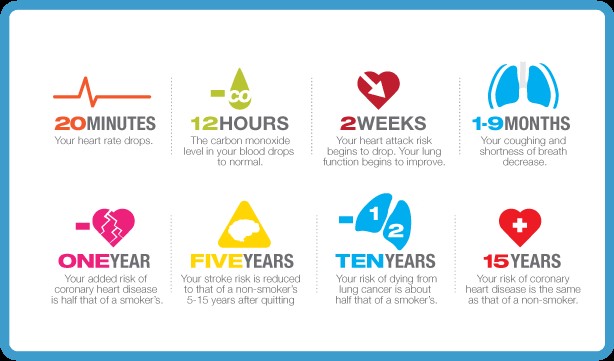
To see how your body recovers within minutes of quitting view the infographic and share with others.
Need help quitting: Contact QuitLineNC.com or 1-800-Quit-Now.
References:
2 Centers for Disease Control and Prevention. (2015). Current Cigarette Smoking Among Adults—United States, 2005–2013. Morbidity and Mortality Weekly Report 2014;63(47):1108–12.
4 County health rankings indicators and measurements-Wake County, NC-2015. Retrieved October 21, 2015.
Have a Healthy, Happy Holiday Season
Have a Healthy, Happy Holiday Season
Maggie Perkins, RD, LDN - Nutrition Health Educator
On average, Americans gain one to two pounds during the holiday season. This may not seem like a lot of weight, but if the extra pounds are not eventually lost, they can accumulate over time. For example, if a 50-year old person gained two pounds every holiday season since the age of 20, that person would have gained 60 pounds of extra weight. Being overweight or obese increases the risk of lifestyle diseases, such as cardiovascular disease, type II diabetes, and some types of cancer.
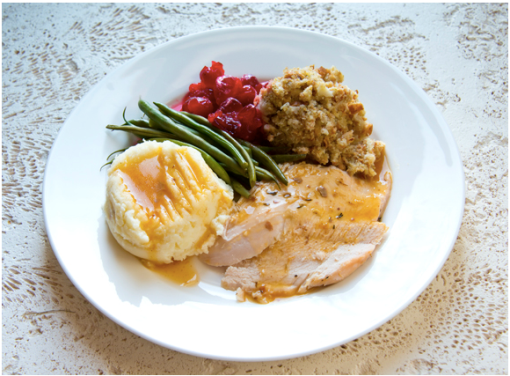
According to the American Council on Exercise, the average Thanksgiving meal is 3,000 calories, which is approximately 1,000 more calories than most people need in an entire day! Here are some tips to help prevent weight gain during the holidays.
Tips:
Be mindful. Eat slowly! Enjoy your surroundings and the food you are eating. Take time to talk with your loved ones while you are gathered around the table.
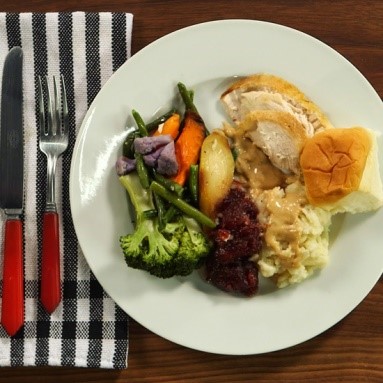
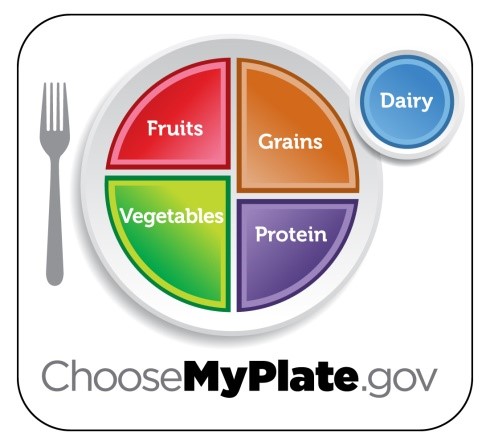 Remember the MyPlate. There is often an abundance of food choices at holiday meals. Before you make your plate, check out the selections and plan which foods you really want to eat and which you could do without. Create a balance meal with selections from of all five food groups: fruits, vegetables, grains, protein, and dairy.
Avoid drinking calories. Save your calories for the feast. Pick calorie-free beverages, such as water, seltzer water with lemon, and diet drinks. Try to avoid regular sodas and juices. If you would like to drink alcohol, then do so in moderation, which is one drink per day for women and two drinks per day for men.
Do not linger over the food table. The food table is often the place for people to gather and talk. This often leads to grazing mindlessly or filling another plate. Fill your plate once and suggest taking the conversation to a different location.
Have fun with physical activities. Throw a football or go on a walk. Try to burn some extra calories to balance the large meal.
Keep a food journal. There are a lot of useful apps to track foods or you can do it with paper and pencil. People are likely to eat less if they track what they are eating.
Bring a healthy choice to the party. If your holiday get together is a potluck, make sure to bring a healthy choice. Bring a fall fruit salad or a roasted veggie dish.
Keep in mind that every little healthy change makes a difference. Any way that you can cut calories or get extra physical activity over the holidays will make a difference. Do the best you can and have fun with your healthy, holiday season!
References:
The Poe Center Supports Breast Health Education in Halifax County
The Poe Center Supports Breast Health Education in Halifax County
Terri Moore, M.Ed. - Health Educator
Halifax County is battling breast cancer. Breast cancer incidence rates in Halifax have steadily increased over the last 17 years. The county also has the highest incidence and second highest mortality rates out of 29 counties in its region. Screening numbers for women 40 and over in the county are also much lower than the state average.
During the last year, the Poe Center collaborated with Halifax Community College, Audrey Hardy and the Roanoke Valley Breast Cancer Coalition to create “Gladiators 4 the Girls,” an education and mammography referral program for Halifax County women. The program was funded through a grant from the Susan G. Komen, Triangle to the Coast Affiliate.
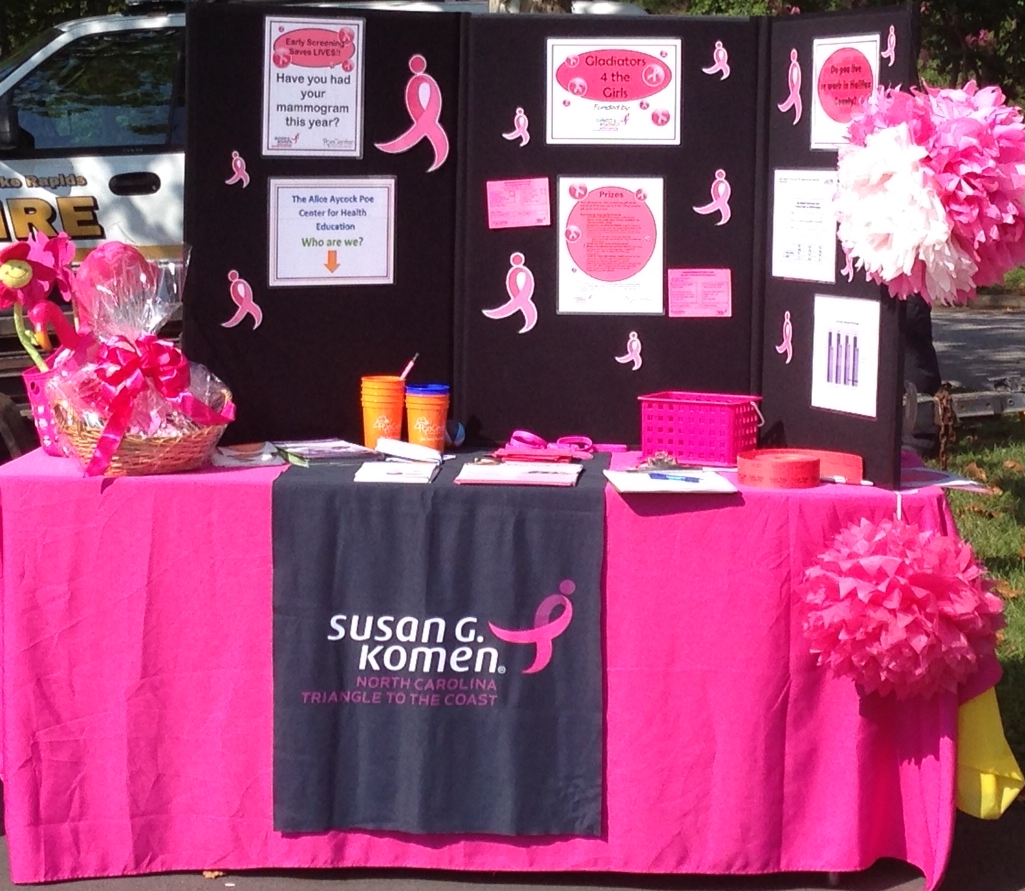
During the program, Poe Center staff recruited and trained ten lay health educators (aka Gladiators 4 the Girls) from Halifax Community College’s Women of Excellence program. For seven months, the Gladiators worked in the community providing education about the importance of mammography. They also offered referral information for both screening mammography and screening for possible enrollment in the Breast and Cervical Cancer Control Program (BCCCP). BCCCP offers funding for uninsured and under-insured women to have screening mammography free of charge, as well as follow-up treatment when necessary.
The Gladiators and Poe Center staff offered thirty-minute educational sessions, as well as information, referral and incentives at community events all across the county. In those months, the Gladiators provided education to almost 850 women and made 450 referrals for BCCCP and mammography.
The Poe Center would like to thank the following Halifax County businesses for their support of this important program. Each business donated merchandise and/or gift cards. With the generous donations, the Poe Center was able to offer prizes to attendees at events and conducted drawings for two gift bags from all of the referrals that went to the mammography department for screening.
WalMart, Roanoke Rapids - Manager Kevin Hotovy and Assistant Manager Derrick Branford
Cracker Barrel, Roanoke Rapids - Manager Chris Kopka
Ralph’s BBQ, Weldon - Manager Kim Amerson
New Dixie Oil Company, Roanoke Rapids
Abram’s BBQ and Seafood, Scotland Neck - Owner Gerald Abrams, Co-Owner Powell Kemp
Dunkin Donuts, Halifax - Manager Chuck Martin
Piggly Wiggly, Littleton - Manager Gloria Hedgepath
Op-Ed: Unregulated E-Cigs are Creating the Next Generation of Nicotine Addicts
Op-Ed: Unregulated E-Cigs are Creating the Next Generation of Nicotine Addicts
Deborah Hendren, CSAPC – Substance Abuse Prevention Manager
Each year, the third Thursday of November welcomes the Great American Smokeout - a nationwide opportunity for those who want to give up smoking to find mass support. Much has changed since the start of the Great American Smokeout in the early 1970’s. There is a new name and face of addiction to nicotine.
Once thought to be a “safe” alternative to traditional cigarettes, electronic cigarettes (also called e-cigarettes), are appearing to be a risky substitute, based on information that is emerging.
E-cigarettes are battery-powered devices that heat nicotine — along with other chemicals — into a vapor that is inhaled. While e-cigs do not produce smelly smoke or dangerous tar that causes lung cancer, there is still much we do not know about them. What is clear is alarming.
- The FDA has not found any e-cigarette to be safe and effective in helping smokers quit. Some people believe e-cigarette products may help smokers lower their nicotine cravings while they are trying to discontinue their tobacco use. However, it is unclear whether e-cigarettes may be effective as smoking-cessation aids. There is also the possibility that they could perpetuate the nicotine addiction and thus interfere with quitting.Many e-cigarette users are continuing to use e-cigarettes while still using conventional cigarettes. In 2013, 76.8 percent of people who recently used e-cigarettes also currently smoked conventional cigarettes. While e-cigarettes are often promoted as safer alternatives to traditional cigarettes, which deliver nicotine by burning tobacco, little is actually known yet about the health risks of using these devices.
- E-cigarettes are unregulated tobacco products. The Food and Drug Administration (FDA) does not have regulatory powers over e-cigarettes unless the products claim to offer therapeutic benefits, such as for help quitting smoking. The agency's Center for Tobacco Products only regulates cigarettes, cigarette tobacco, roll-your-own tobacco, and smokeless tobacco.
Nearly 500 brands and 7,700 flavors of e-cigarettes are on the market, and none of them have been evaluated by the FDA. We do not know for sure what's in them. Studies have found toxic chemicals in e-cigarettes, including an ingredient used in antifreeze and formaldehyde. Because the FDA does not regulate these products, e-cigarettes are not required to display ingredient disclosures on warning labels.
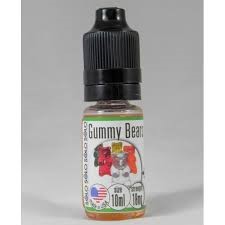
Marketing tactics are also unregulated. E-cigarettes are being promoted using the same tactics cigarette companies have used to addict generations of teenagers, including celebrity endorsements, slick TV and magazine ads that portray e-cigarette use as glamorous or masculine, and the use of sweet flavors such as gummy bear, cotton candy and sweet cereals.

The good news. According to the North Carolina Youth Tobacco Survey, the state’s middle school cigarette smoking rate dropped to 2.5 percent in 2013. During the same period, the high school rate dropped to 13.5 percent. These are the all-time lowest rates ever recorded for each group, according to the NC Department of Health and Human Services (DHHS).
Now for the bad news. For the first time ever, teens are smoking e-cigarettes more than traditional cigarettes, and there has been rapid rate at which teenagers who have no previous history of smoking have embraced the devices. Current use of electronic cigarettes among North Carolina high school students jumped by 352 percent from 1.7 percent in 2011 to 7.7 percent in 2013. In addition to the unknown health effects, early evidence suggests that e-cigarette use may serve as an introductory product for youth who then go on to use other tobacco products, including conventional cigarettes. From a front line observation, I suspect a continued increase in teen e-cigarette initiation and use with the next release of a data set survey.
Despite heavy advertising and lack of safety data, some states are already implementing measures to curb e-cigarette use. In North Carolina, e-cigarettes cannot be sold to anyone under age 18. North Carolina also taxes the sale of e-cigarettes and bans their use on school property and in 100 percent smoke-free sites.
Basic FDA oversight, including stronger youth access restrictions and advertising limitations, is needed to protect kids from becoming the next generation hooked on nicotine.
Leaving these issues unaddressed is a big mistake. The cigarette industry has long understood that virtually all new tobacco users in the United States are children and that if it doesn’t hook them as kids, it probably never will. We can’t let the e-cigarette industry do the same. As a nation, we have worked so hard to deglamorize cigarette smoking. And it worked. But the aggressive marketing of e-cigarettes to teenagers threatens to undermine these gains and make smoking cool again. We cannot afford to waste more time while the tobacco industry addicts another generation of kids.
Sources:
- U.S. Food and Drug Administration - Electronic Cigarettes
- American Cancer Society. The Great American Smokeout.
- American Lung Association - E-cigarettes and Lung Health
- NC Health and Human Services. Youth Tobacco Survey Shows Less Smoking, More E-cigarette Use Among NC Teens
- Medical News Today. The Great American Smokeout: a great day to quit smoking
- The New York Times. It's Time To Regulate E-Cigarettes.
EDUCATORS' ACTIVITY: The Cost of Smoking
The Role of Health Education in North Carolina
The Role of Health Education in North Carolina
Maggie Perkins, RD, LDN - Nutrition Health Educator
National Health Education Week (NHEW) highlights public health issues and promotes consumers’ understanding of the role of health education. NHEW is sponsored by the Society of Public Health Education (SOPHE) and is observed the third full week of October (19th-23rd 2015)1.
In honor of NHEW, let’s examine the health status of North Carolina. According to the United Health Foundation, North Carolina ranks number 37 out of the 50 states in the US for the healthiest state2. The United Health Foundation lists the state's biggest challenges as:
- A high percentage of children in poverty. In 2013, 25.1% of children lived in poverty3. Twenty four percent of children in North Carolina were living in households that had food insecurity at some point in the year in 20123.
- Limited availability of dentists. Seventeen percent of children entering kindergarten in NC have untreated tooth decay4.
- A high prevalence of type II diabetes. Unfortunately, the number of diabetes will most likely continue to increase because of increased risk factors in our youth. For example, in 2011-2012, 31% of NC teens were overweight or obese3.
North Carolina has its work cut out for it. Unfortunately, there are also numerous health disparities working against progress. Health disparities are inequalities that exist when members of certain populations have a lower health status than other groups5. For example, one third of North Carolinians have low health literacy (ability to obtain, process, and understand basic health information). The lowest rates of health literacy are those with lower education levels, racial/ethnic minorities, the uninsured and publicly insured, and the elderly6. One initiative to improve health literacy and the overall health of our state is to provide health education to all children and adults in North Carolina.
The American Cancer Society, the American Diabetes Association, and the American Heart Association advocate for health education in school systems, as they can improve the well-being and health of the state's youth. Through promoting healthy behaviors, such as participating in physical activity, eating healthy, and avoiding tobacco use, health education can reduce the risks for chronic disease. Research studies have shown that promoting healthy behaviors for younger people is far more effective than efforts to change established, unhealthy behaviors in adults7.
That’s where the Poe Center comes in. The Poe Center’s mission is to educate and empower North Carolina children, youth and their families to make choices that increase positive health behaviors. The vision is that all North Carolina children and youth become healthy adults. The Poe Center's health educators offer over 50 programs addressing:
- Family Life and Adolescent Development
- General Health and Body Systems
- Nutrition and Physical Activity
- Dental Health
- Substance Abuse Prevention
- Bullying Prevention
90% of students who attend programs from the Poe Center demonstrate retained information six weeks after participation. Booking a program with the Poe Center will educate the communities with whom you work to live healthier, happier lives. Education is the first step in addressing the health challenges faced in NC.
The Poe Center receives funding from grants, corporate sponsors, and private donors to keep costs low so that everyone has access to health education. Support the Poe Center this National Health Education Week by signing up to volunteer or making a donation. The Poe Center could not provide health education to North Carolinians without the support of the community!
References:
- National Health Education Week. SOPHE.
- America’s Health Rankings. United Health Foundation.
- North Carolina Indicators. Kids Count Data Center.
- The North Carolina Partnership for Children, Inc. Smart Start.
- Health Disparities Defined. Fox Chase Cancer Center.
- America’s Health Literacy: Why We Need Accessible Health Information. US Department of Health and Human Services.
- Health Education in Schools – The Importance of Establishing Healthy Behaviors in our Nation’s Youth. American Cancer Society, American Diabetes Association, American Heart Association.
National Childhood Obesity Awareness Month: Is Heading Back to School WEIGHING on You?
National Childhood Obesity Awareness Month:
Is Heading Back to School WEIGHING on You?
Marjorie Lanier, MPH - Healthy Communities Facilitator - Southeastern NC
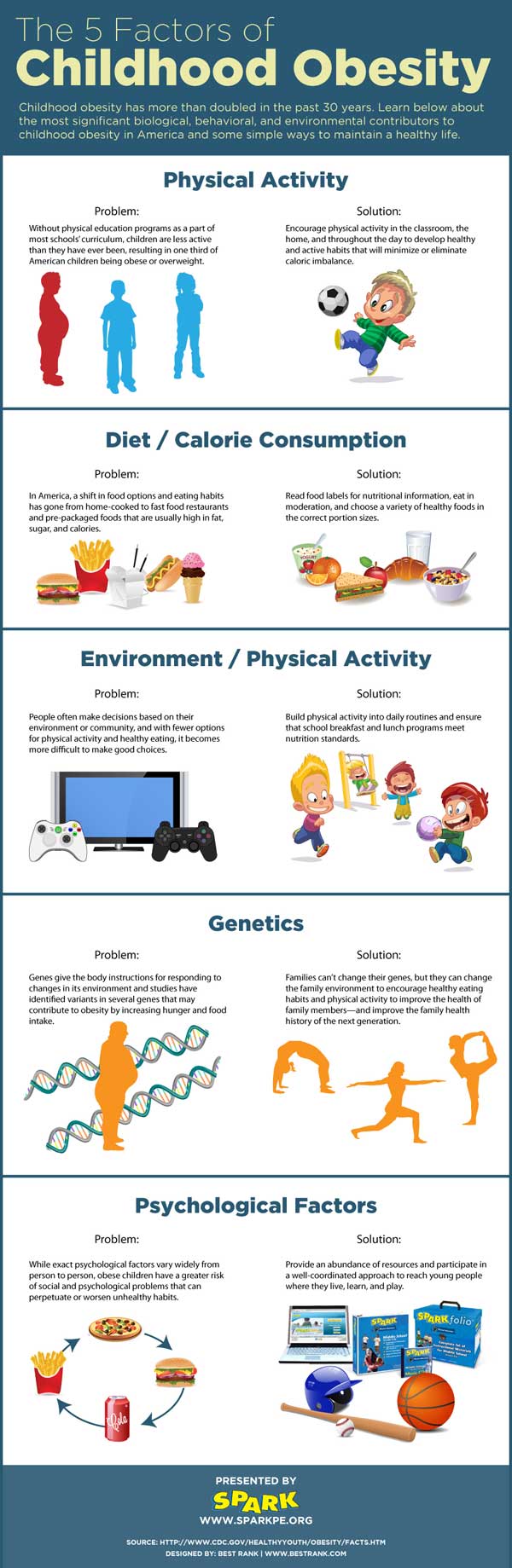
One in 3 children in the United States is overweight or obese. Childhood obesity puts kids at risk for health problems that were once seen only in adults, such as type 2 diabetes, high blood pressure, and heart disease.
The good news is that childhood obesity can be prevented. Parents and schools can work hand in hand to develop solutions. Community organizations, such as the Poe Center, can be resources for healthy change. As we prepare for kids heading back to school, let’s also consider small steps we can take as parents, school administrators and teachers to help children stay at a healthy weight.
- Participate in National Walk or Bike to School Day.
- Rethink classroom rewards.
Telling kids to eat healthy, but rewarding them with candy, pizza parties and ice cream celebrations sends a confusing message. Instead, consider non-food rewards or special privileges, such as getting to choose “free time” activities for the group, sitting on the "special” beanbag chair, or going first during activities. - Don’t use physical activity as a form of discipline.
When we use or withhold physical activity as a form of punishment (“You weren’t listening; give me 5 laps around the field” or “You were late for dinner; so you can’t play basketball tonight.”), we are promoting negative attitudes toward exercising that can carry over into adulthood. It is also recommended that kids get at least 60 minutes of vigorous or moderate levels of physical activity daily to promote good health. Taking away active time as a punishment reduces key time during the day when children can get their bodies moving. - Serve more vegetables, fruits, and whole-grain foods whenever possible.
Orange and apple wedges, carrots with hummus dip, or popcorn popped without butter (look for options cooked in oils, such as sunflower or olive oil) are good snacks or lunch accompaniments. - Always choose water over sugary drinks.
Even beverages that appear healthy, such as juice drinks, vitamin water, sports drinks, energy drinks, etc. can contain lots of sugar, which means extra calories that kids don’t need. - Move more with your kids.
Provide short classroom based ENERGIZERS or go for a family walk or shoot hoops after dinner. Check out this short video for more ideas. - Limit screen time.
Keep screen time (time spent on the computer/iPad, watching TV, or playing video games) to 2 hours or less a day. - Refuel a child’s body the healthy way.
After a game or sports practice use the Sports Snack Game Plan. - Be the change.
“Monkey see, monkey do," as the saying goes. If you eat smart and move more, kids will likely want to follow your lead and do the same.
Let’s lighten the load on our kids by instilling healthy habits that can last a lifetime.
References:
- Health Finder.Gov
- Walk Bike to School
- Advocates for Health in Action
- National Association for Sports and Physical Education
- NC Department of Public Instruction
National Health Center Week: August 9-15, 2015
National Health Center Week:
50 Years of Caring for America's Communities
Ann Rollins, Executive Director
This week marks the 50th Anniversary of America’s Health Centers. As the need for affordable healthcare and access to services increases, the need for community health centers also increases. America’s health centers were created in 1965 as part of the Office of Economic Opportunity (OEO). Their history is rooted in empowering people by providing health and social services to neighborhoods. They have also become the most successful primary care services in America. Demand for health centers continues to grow mainly due to the excellent services they provide their patients.
Where are they located?
Health centers are located in all 50 states.
Who receives their services?
They serve low-income, mostly female and young patients. Over 90% of patients are under 65 years old.
What services do they provide?
Since patients are primarily female, there is a need for obstetric/gynecologic and pediatric services. Health centers also provide extended services, including case management, translation, transportation, outreach and health education. Dental, mental health and substance abuse services are also provided in many areas of the county. Many health centers often have pharmacies.
Who provides the services?
Health centers utilize a number of trained staff, including clinical directors, primary care physicians, nurses, dentists, administrative support staff and other healthcare professionals.
It is estimated that health centers save our healthcare system over $24 billion a year by eliminating unnecessary emergency department visits and other hospital care. With over 21 million patients seen annually, health centers have created over 148,000 jobs though out the United States.
Continuing to support health centers is a wise investment in our communities. Without the services health centers provide, millions of Americans could lose access to primary health care.
2015 is a hallmark year to celebrate and support the work of health centers across the country. We celebrate National Health Center Week and thank them for the contributions they have made and are making to help people across America.
Resources:
National Carolina Community Health Center Association
National Health Care for the Homeless Council