
Shut Up and Drive: 7 Tips for Avoiding Teen Distracted Driving
Shut Up and Drive:
7 Tips for Avoiding Teen Distracted Driving
Thomas Ray, MA, NBCT Senior Director of Educational Programming
Tip #1: Parents, talk with your teen drivers about the dangers of distracted driving. Be a model of the behavior you want from your teen.
While we don’t promote the intended message of music pop star Rihanna’s Shut Up and Drive, the title itself does send an important message: Just Drive! Most teen drivers do not text and drive, and parents have an influence in a teen’s choice to engage in distracted driving. Talk with your teen about distractions and model appropriately driving without engaging in distractions, such as putting on makeup or messing with electronic devices.
Tip # 2: Put your electronic device away before you put the car in gear. Turn the phone off and place it in the trunk or glove compartment.
That may seem a bit extreme, but as the slogan goes, “It can wait.” Most of us adults remember a day without cell phones and the need for an immediate response. Let’s encourage our teens to respond responsibly. If they do have a passenger in the car, they may want to make them a “designated texter” or “designated caller.”
Tip # 3: Consider installing an app that automatically replies to texts and calls. Some apps to consider include txtBlocker, CellSafety, Textecution, and iZUP. And take care of eating and grooming BEFORE getting behind the wheel.
In a recently released (2014) study conducted by UNC’s Highway Safety Research Center, only about 6.7% of observations included any use of an electronic device by an adolescent driver (including holding phone to ear, talking hands free, and texting or suspected texting). For this study, g-force triggered an in-vehicle camera to collect a short video clip capturing data prior to and following the sudden velocity change. Almost as frequently, the trigger was related to adjusting vehicle controls (6.2%). Grooming (3.8%), eating or drinking (2.8%), and reaching for an object in the vehicle (2.5%) were the other most common driver behaviors. Using an app to block the electronic device while driving can help, but taking care of business before getting behind the wheel will make a big difference, too.
Tip # 4: Limit the number of passengers in the vehicle with a teen driver. In addition to following North Carolina’s graduated license process, make sure that each passenger understands the need to avoid loud conversations and help the driver keep her or his eyes on the road.
Get this – in the same study, passenger behaviors were big time distractions for teen drivers. When passengers were present, loud conversations were distractions in 12.6% of the observations! Horseplay was present in 6.3% of the observations with the driver participating in the horseplay in over half of those (3.7%) [1].
Tip # 5: Remind drivers and passengers that horseplay needs to take place outside of the car. Horseplay just doesn’t belong inside a moving vehicle.
So what’s the big deal? According to a national study analyzing accidents for drivers of ages 15 – 18, “recognition errors” were involved in 46.3% of teen driver involved serious crashes. These errors include inadequate surveillance (21.3%), internal distraction (13.9%), external distraction (6%), and inattention (2%) along with other errors [2]. We spend a lot of time talking about teen distractions with a focus on texting, but we probably need to spend more time focusing on educating passengers about the importance of their behavior in the vehicle with inexperienced drivers. Eliminating horseplay can cut down on teen driving distractions.
Tip #6: Passengers should offer to navigate, adjust controls, and reply to texts or calls for the driver as appropriate.
By simply removing the distractions for the driver, the passenger can help reduce the opportunities for distracted driving. Turn that potential problem (a distracting passenger) into a solution by designating the passenger the role of watching the GPS and providing the turn-by-turn. Passengers can also help with adjusting the air conditioner controls and vent direction, adjusting the music selection and volume, and securing items that could potentially be sliding (or flying) around.
Tip #7: EVERYONE in the vehicle should be in a seatbelt. Unbelted passengers – even in the back seat – can cause fatal injuries for other passengers in the case of a vehicle crash.
Loose people and loose objects become projectiles and potentially deadly in a vehicle crash. By keeping everyone and everything secured with seatbelts or cargo straps, damage to human passengers can be minimized.
In terms of policy, we should commend our legislators for the graduated driver’s license that allows inexperienced drivers to take the time to move from a more controlled learning setting to more independence as the driver gains experience on the road.
References
[1] Foss RD, Goodwin AH. Distracted driver behaviors and distracting conditions among adolescent drivers: Findings from a naturalistic driving study. Journal of Adol Health 2014; 54:S50 – S60.
[2] Curry AE, Hafetz J. Kallan MJ, et al. Prevalence of teen driver errors leading to serious motor vehicle crashes. Accid Anal Prev 2011; 43:1285 – 1290.

Understanding Non-Suicidal Self Injury (NSSI): Breaking Through the Myths
Understanding Non-Suicidal Self Injury (NSSI):
Breaking Through the Myths
By: Rebecca Wenrich Wheeler, MA, MEd - Health Educator
Non-Suicidal Self Injury (NSSI) was classified as a psychiatric disorder for the first time in the most recent 5th edition of the Diagnostic and Statistical Manual of Mental Disorders (DSM). Hopefully this new classification will increase research and recognition of NSSI. Unfortunately research is lacking on NSSI-specific intervention and treatment, particularly because the disorder was once thought to be conjoined with other psychiatric disorders rather than standing alone (Washburn, et al. 2012). Previous to the DSM-V, self-injury was assumed to be symptomatic of other psychiatric disorders, such as borderline personality disorder, post-traumatic stress disorder and major depression (Walsh 2007). On the contrary, recent research has shown that self-injurious behaviors occur more often in high performing populations, such as Air Force cadets and Ivy League college students, who are not diagnosed with any other psychiatric disorders (Walsh 2007). As new research is conducted on the causes for and treatments of NSSI, one challenge for professionals is to dispel long-held myths about self-injury.
Myth 1: Self-injury equals cutting.
Some of the most common self-harming behaviors are scratching or pinching skin with fingernails, carving words onto the skin, banging or punching objects repeatedly to the point of bruising/bleeding, biting the skin, and pulling out hair, eyelashes, and eyebrows with the intent of harm, preventing wounds from healing. Most who self-injure repeatedly use multiple forms. (Whitlock 2009) Although rare occurrences, injury to the face, breasts, and genitals is an indicator of a psychotic issue or past trauma (Walsh 2007). Tattoos and body piercings are not considered self-harming behaviors, unless done repeatedly with the intent of destroying body tissue (Whitlock 2009)
Myth 2: Self-injurious behavior is a middle school phenomenon.
Among adolescents and young adults surveyed, 13-25% of had some history of self-injury, though many of these youth only engaged in the behavior once or twice and then stopped. In two college studies approximately 25% of students self-reported they started self-injuring in college, with 6% self-injuring chronically. These behaviors may persist well into adulthood. Middle school youth may have slightly higher rates than other age groups since that is when the behavior is typically initiated and tapers off as the student ages. Initiation of self-harming behaviors may begin in childhood or adulthood as well. (Whitlock 2009)
Myth 3: Only upper class white females self-injure.
One cannot designate a single “self-injurer” profile. Very few studies show an indication that rates among upper class white females are higher compared to other groups. In fact, some recent studies have shown similar rates in males and females. (Whitlock 2009)
Studies related to race are mixed. Some studies show higher rates in whites, others show no significant differences between races. As related to socio-economic status, studies have shown little significant difference between SES groups. In comparison with other demographic constructs, LGBTQ teens have higher rates of self-harming behaviors than other teen groups. (Whitlock 2009)
Myth 4: Those who self-injure are suicidal.
A defining characteristic of NSSI is that the self-harming behavior is not motivated by suicidal resolve, as “Individuals who self-injure are generally aiming to feel better, not end life” (Whitlock 2009).
The most common self-harming behaviors rarely cause death, and in fact the forms of self-injurious behavior listed under Myth 1 do not appear on the CDC’s list of lethal suicide methods (Walsh 2007). If those who self-injure are not suicidal then what is the purpose of the behavior? At the core, self-injury is a negative coping response to stress. “There is considerable evidence that most people self-injure to regulate emotional distress and interpersonal relationships” (Walsh 2007). Cognitive-behavioral therapy has shown to be helpful in treating NSSI as the person is taught to decrease emotional triggers and learn alternative ways to handle negative feelings (Walsh 2007).
It should be noted that even though self-injury is not often a result of suicide ideation, self-injury is a risk factor for suicide, especially if the self-injurious behavior has gone untreated for a prolonged period of time, and the person does not experience physical pain while engaging in the self-harming behavior (Walsh 2007).
Myth 5: Self-injury only has psychological motivations.
Recent research has focused on the biochemical connection to NSSI. Some of these biological aspects include: “limbic system dysfunction, depleted serotonin levels, problems with endogenous opioid system, and diminished pain sensitivity” (Walsh 2007). Those with NSSI often report a sense of physical relief after engaging in the behavior which researchers have related to the increase in endorphins and serotonin in the brain. Other biological elements that might impact the severity of self-injury are fatigue, insomnia and substance use (Walsh 2007).
Myth 6: The sole purpose of self-injury is to seek attention.
Those who self-injure often go to great lengths to hide their behavior from family and friends. A person might wear long sleeves or long pants year-round to hide wounds, or avoid participating in swimming or other activities that require less clothing. (Whitlock 2009) Those with NSSI often will injure inconspicuous places on the body that can be easy covered, for instance the abdomen and inner thigh, and typically engage in the behaviors while alone (Walsh 2007).
Some persons who self-injure report reluctance to seek help due to negative encounters with professionals in the past (Walsh 2007). Professionals who have minimal training in NSSI might react with shock and assume the person is suicidal, which is not addressing the concerns of the person with NSSI (Walsh 2007). In order to seek out anonymous support, people who engage in NSSI might visit social networking sites. Some studies have shown that after interacting with these e-communities people exhibit reduced self-harming behaviors, seemingly because they have a forum to express emotion (Lewis, et al. 2012). On the other hand, not all people experience this behavior reduction rather the behavior is reinforced by social media.
Resources:
For tips on reducing Self-Injurious behaviors:
Serani, D. (2012, February 28). Depression and Non-Suicidal Self Injury. Retrieved June 26, 2015, from https://www.psychologytoday.com/blog/two-takes-depression/201202/depression-and-non-suicidal-self-injury
NSSI as depicted in Media:
Purington, A., & Whitlock, J. (2010, February 1). Non-Suicidal Self Injury in the Media. Retrieved June 28, 2015, from http://www.selfinjury.bctr.cornell.edu/perch/resources/non-suicidal-self-injury-in-the-media.pdf
NSSI and college students:
McCoy, K., Fremouw, W., & McNeil, D. (2010, November 1). Thresholds and tolerance of physical pain among young adults who self-injure. Retrieved June 29, 2015, from http://www.ncbi.nlm.nih.gov/pmc/articles/PMC3008662/
Works Cited:
- Lewis, S., Heath, N., Michal, N., & Duggan, J. (2012, March 20). Non-suicidal self-injury, youth, and the Internet: What mental health professionals need to know. Retrieved June 28, 2015, from http://www.ncbi.nlm.nih.gov/pmc/articles/PMC3464157/
- Walsh, B. (2007). Clinical Assessment of Self-Injury: A Practical Guide. Retrieved June 26, 2015, from http://cemh.lbpsb.qc.ca/professionals/BarentWalsh-ClinicalAssessmentofSelf-Injury.pdf
- Washburn, J., Richardt, S., Styer, D., Gebhardt, M., Juzwin, K., Yourek, A., & Aldridge, D. (2012, March 30). Psychotherapeutic approaches to non-suicidal self-injury in adolescents. Retrieved June 26, 2015, from http://www.capmh.com/content/6/1/14
- Whitlock, J. (2009, December). The Cutting Edge: Non-Suicidal Self-Injury in Adolescence. Retrieved June 26, 2015, from http://www.actforyouth.net/resources/rf/rf_nssi_1209.pdf
Healthy Habits Camp 2015
Happy Healthy Kids @ Healthy Habits Camp 2015
Article - Katie Harlow, Nutrition Education Intern
Video - Emily Bell, Volunteer
During the week of June 15-19, Poe Staff and an energetic group of rising 1st-5th grade campers had an amazing time at the June 2015 Healthy Habits Camp! The group convened at the Poe Center each day for a full schedule of fun, health-related activities. Campers participated in lessons on nutrition, dental health, bullying, and germ safety, enjoyed a scavenger hunt at PlayWell Park, and ran off extra energy with physical activity exercises and exciting games.
Each day brought a new adventure for the campers. On Tuesday, Marbles Kids Museum provided a collection of bugs and worms for campers to observe up close with magnifying glasses. On Wednesday, swim suits and bare feet replaced shorts and tennis shoes for a Wet Wednesday water party. On Friday, campers presented their parents with fun, walking exercises they can do as a family.
By the week’s end, campers had become Nutrition Detectives, flexed their creative muscles with arts and crafts, and learned about the importance of taking care of their bodies with healthy habits.
Don't just take our word for it.
Check out our highlights reel and hear what the kids had to say.
The Poe Center offers over 15 programs on nutrition and physical fitness. Let us bring this great information to your organization and help make more happy healthy kids. Book a program today.
In Honor of National Safety Month: Be Aware. Be Safe.
In Honor of National Safety Month:
Be Aware. Be Safe.
Dana Orr, BS, MBA - Senior Health Educator
Did you know that injuries are a leading cause of disabilities for people of all ages, and they are the leading cause of death for Americans ages 1 to 44? According to the Office of Disease Prevention and Health Promotion, accidents related to safety issues, such as prescription painkiller abuse, transportation safety, and slips/trips/falls make up the majority of injuries. One of the main keys to injury prevention is simply being more aware of your surroundings and taking common sense precautions.
Prescription Painkiller Abuse: Prescription painkiller overdoses are a growing problem in the United States, especially among women. About 18 women die every day from prescription painkiller overdoses, which is more than four times as many as in 1999.
Safety Tips:
- Take all prescription medication as directed by your physician.
- Never share medications with friends or family. If someone is in pain, he/she should see a healthcare professional for a prescription appropriate for his/her circumstances.
- Store medications in a safe and secure place. Properly dispose of expired medications. Operation Medicine Drop provides a number of locations and events at which you may safely dispose of medication.
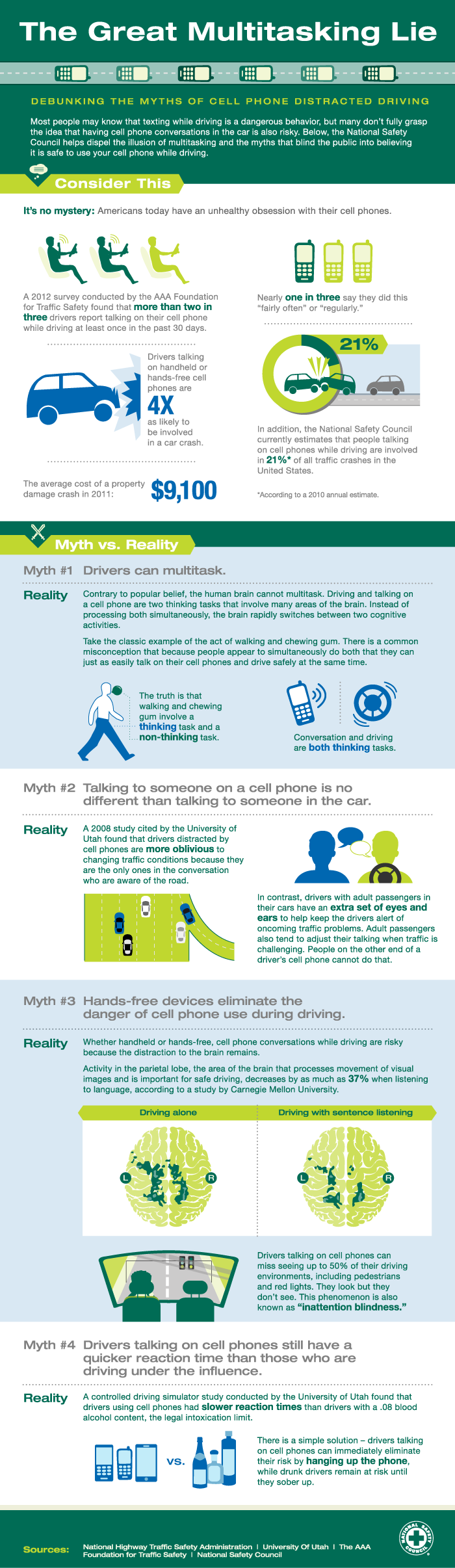
Transportation Safety: Doing other activities while driving, such as texting or eating, distracts drivers and increases the chances of crashing. Almost one in five auto accidents (17%) that injured someone involved distracted driving.
Safety Tips:
- Stay focused on your surroundings by avoiding eating, using your cell phone, or putting on makeup while driving.
- Ask a passenger for help with navigation.
- Get plenty of rest and avoid driving while fatigued or under the influence of substances.
- ALL passengers and the driver should ALWAYS properly (low around the hips) wear a seatbelt.
Slips, Trips, and Falls: One in three older adults falls each year. Many falls lead to broken bones and other health problems.
Safety Tips: The following infographic outlines simple ways to keep you and your loved ones safe at home and work.
The Poe Center offers a number of programs designed to address general safety issues for kids, teens and adults. Improve the safety of yourself and others by learning more about general safety issues and consider attending one of the Poe Center’s General Health programs.

Sources:
Office of Disease Prevention and Health Promotion
The Highway Safety Research Center
The Ultimate Mother's Day Gift: No More Smoking
The Ultimate Mother's Day Gift:
No More Smoking
Mother’s Day is the perfect time to remind expectant moms and other women, especially those in their child-bearing years, that QuitlineNC offers free help for those who desire to quit.
Quitting would be the ultimate gift as one plans for that new arrival or to just create a healthy environment for babies and children. According to the Centers for Disease Control and Prevention, smoking during pregnancy increases the chance of complications, having a baby born too early or too small to be healthy. Babies with mothers who smoke during or after pregnancy are also at risk for Sudden Infant Death Syndrome (SIDS) or crib-death.
QuitlineNC offers free telephone support to help anyone quit tobacco and has a special 10-call program for pregnant women. Women who stay with the program are more likely to quit and stay quit after the baby is born. Pregnancy can be a wonderful and busy time, yet stressful! It is also an important time to make lifestyle changes that are good for a healthy baby – and for a healthy family, far into the future. QuitlineNC also offers practical, non-judgmental support for expectant moms and is available 24 hours a day, seven days a week.
For free help from QuitlineNC call 1-800-QUIT-NOW (1-800-784-8669); for Spanish speaking, 1-800-Dejelo-Ya (1-800-335-3569). For more information, visit www.QuitlineNC.com.

In Honor of Melanoma/Skin Cancer Detection and Prevention Month: How to Detect and Protect
In Honor of Melanoma/Skin Cancer Detection and Prevention Month:
How to Detect and Protect
Stephanie Sobol, M.A.Ed., Health Educator
 Skin cancer is the most common form of cancer in the United States. In fact, 1 in 5 Americans will develop skin cancer in their lifetime. Annually, more than 3.5 million skin cancers in over two million people are diagnosed. Did you know there are more new cases of skin cancer than the combined incidence of cancers of the breast, prostate, lung and colon. Wow! Ninety percent of all skin cancers are associated with exposure to the sun’s ultraviolet (UV) radiation. To protect your skin, minimize your exposure to harmful ultraviolet rays from the sun and/or indoor tanning beds.
Detection Detectives
Early detection is key! If identified early most skin cancers are curable. Perform a monthly head-to-toe exam to look for new moles and/or changes in lesions using the ABCDE Rules for early skin cancer detection.
Asymmetry. One half doesn't match the appearance of the other half.
Border. The edges are ragged, notched, or blurred.
Color. The color (pigmentation) is not uniform. Shades of tan, brown, and black are present. Dashes of red, white, and blue add to a mottled appearance.
Diameter. The size of the mole is greater than 1/4 inch (6 mm), about the size of a pencil eraser. Any growth of a mole should be evaluated.
Evolution. There is a change in the size, shape, symptoms (such as itching or tenderness), surface (especially bleeding), or color of a mole.
If you spot any changes make an appointment to have the lesion looked at by a medical professional. And, always have an annual skin check to monitor changes in the skin by a medical professional.
Healthy Sun Habits
Adopt these healthy sun habits to reduce your risk for skin cancer:
1. Apply 2 tablespoons of broad spectrum sunscreen daily with SPF 15 or higher to exposed skin, including lips 30 minutes prior to going in the sun. For extended outdoor activity use SPF 30 or higher. Reapply every two hours and after exercising or swimming.
2. Wear dark or bright colored, tightly woven fabrics (look for UPF, ultraviolet protection factor, of 30+).
3. Wear a 3" wide brimmed hat to protect scalp, neck and face.
4. Wear sunglasses with UVB/UVA protection that wrap around the side.
5. Stay in the shade from 10 a.m. - 4 p.m.
6. Keep infants out of direct sunlight. Apply sunscreen to babies over 6 months of age.
7. Avoid tanning or tanning beds.
8. Do not burn.
Prevention and early detection are the keys to reducing your risk for dangerous skin cancer lesions that can lead to long-term health effects. Protect and detect for healthy skin!
Source: American Academy of Dermatology