
In Honor of National Nutrition Month: Let’s Bite into a Healthy Lifestyle
In Honor of National Nutrition Month:
Let’s Bite into a Healthy Lifestyle
By Stephanie Sobol, Nutrition Health Educator
Fuel Your Body Well to Meet Your Energy Needs
Many things in life can impact nutrition habits as well as being physically active. We can quickly lose sight of the benefits of living healthfully. While we work tirelessly to balance work, family and busy social calendars it may seem there is not much room for taking care of our bodies. By developing good dietary and fitness habits, one not only increases their state of physical health but can make significant improvements to their mental clarity and energy levels. It’s important for us to think about how we are fueling our bodies and work towards getting the recommended 60 minutes of physical activity daily.
To start, it is best to work towards building a balanced plate by planning ahead for meals and making sure healthy snacks are on hand. Doing so keeps the metabolism going, gives us energy and prevents overeating.
What Does a Balanced Plate Look Like?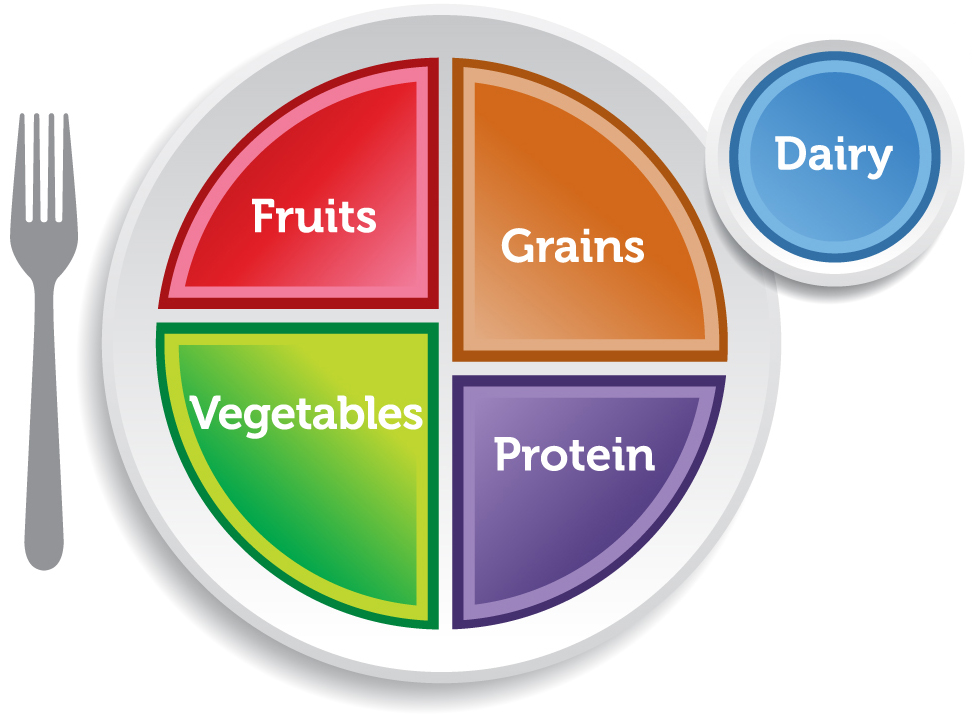
- It’s Colorful:Half of your plate should be full of fruits and vegetables to provide you the necessary nutrients to improve your physical and mental health.
- It’s Lean:One quarter of your plate should be a lean protein like fish, beans, egg whites, nuts, or chicken to help you feel fuller throughout the day.
- It’s Complex:One quarter of your plate should be complex carbohydrates (whole grains) such as 100% whole wheat pasta or bread, bran cereal, or brown rice to keep energy levels steady throughout the day.
Keep Your Pantry and Refrigerator Stocked With Healthy Snacks
- Apple slices with peanut butter
- Fiber nutrition bars
- Carrot sticks or other vegetables
- Low-fat yogurt – add fruit for some extra nutrients
- String cheese
- Almonds
- Sunflower seeds
To achieve 60 minutes of physical activity daily mark a dedicated time on the calendar to walk (even during lunch is a good opportunity), play sports, garden, work in the yard, or go biking with the family. Good news is that the 60 minutes can be accumulated throughout the day so you can do multiple shorter sessions of throughout the day.
Why Be Active? Because it…
- Boosts metabolism.
- Improves sleeps.
- Lowers stress.
- Reduces risk of some diseases.
- Minimizes depression.
- Helps maintain a healthy body weight.
Start building your healthy lifestyle today with a few simple changes to your plate and moving more!
http://www.eatrightpro.org/resources/media/press-releases/national-nutrition-month
Three Toothy Tips: In honor of National Children’s Dental Health Month
Three Toothy Tips:
In honor of National Children’s Dental Health Month
By: Maggie Perkins, Senior Nutrition Health Educator
1. Be protected:
Teeth are tough thanks to their enamel covering. Enamel is stronger than the material in our bones. But that doesn’t mean they are invincible! 31% of high school basketball players reported mouth and face injuries in a Florida study1. Mouth guards prevent teeth getting knocked out or biting your tongue2- OUCH! Mouth guards are a must for protection during sports.
2. Appreciate your pearly whites:
Teeth are amazing! They let us bite and chew up yummy foods, help us form words, and keep our smiles beautiful! Think about the foods you ate today and how you had to use your teeth to eat them. I guess you could put all your food in a blender. Yummy…not!
3. Get into the habit:
Brush and floss every day and be a role model for your kids and family. In North Carolina 17% of kindergarteners are entering school with tooth decay3. Let’s educate our youth and remind ourselves of the benefits of appropriately caring for our teeth. And make sure you check out the Poe Center’s dental health programming for fun and engaging lessons: https://www.poehealth.org/educational-topics/dental-health/
1. http://www.dentalcare.com/media/en-US/education/ce127/ce127.pdf
2. http://health.state.tn.us/oralhealth/mouthguards.html
Teen Dating Violence Awareness Month - February 2015
Teen Dating Violence Awareness Month:
February 2015
By Dana Orr, Senior Health Educator

According to the Centers for Disease Control and Prevention, teen dating violence is defined as the physical, sexual, psychological, or emotional violence within a dating relationship, including stalking. It can occur between a present or former dating partner and can be face-to-face, by text, email, various electronic and social media methods.
Unhealthy relationships can start early in a young person’s life and last throughout their lifetime. Some behaviors like teasing and name calling are often overlooked as “normal” relationship behaviors. Even if these types of behaviors start out innocently they can quickly become abusive and violent.
In our information-driven world, we hear many words to describe teen dating violence and include: relationship abuse, intimate partner violence, relationship violence, dating abuse, domestic abuse, and domestic violence. Often the victim is left with lasting effects and tolerate the abuse for fear to tell anyone. A 2011 CDC nationwide survey found that 23% of females and 14% of males who ever experienced rape, physical violence, or stalking by an intimate partner, first experienced some form of partner violence between 11 and 17 years of age. A 2013 survey found approximately 10% of high school students reported physical victimization and 10% reported sexual victimization from a dating partner in the 12 months before they were surveyed.
If you are not sure if behavior you or a friend is experiencing may be considered unhealthy and abusive, please check out www.loveisrespect.org. For more information on dating violence consequences or why it happens visit: http://www.cdc.gov/violenceprevention/intimatepartnerviolence/teen_dating_violence.html
American Diabetes Month - November 2014
American Diabetes Month
By Maggie Perkins, Senior Nutrition Health Educator
At the Poe Center, health educators teach children, youth, and families about lifestyle diseases and prevention. For younger groups, we identify some lifestyle diseases (some types of cancer, heart disease, and stroke) and for older groups, we dive into the mechanics and prevention of these disease states. Students in lower elementary classes usually have heard the word “diabetes” and associate it will an illness. But many people find the topic of diabetes confusing because there are multiple types, and the prevention and treatment for each is different.
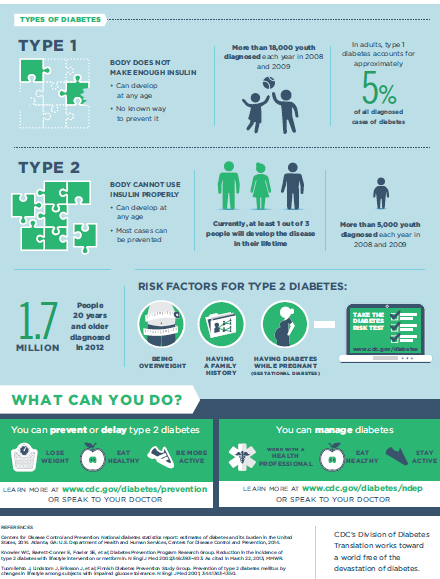
Before we talk about the types of diabetes, let’s explore some of the words used to talk about the differences. When we eat a meal, the food is broken down into very small pieces. The body absorbs the nutrients from our food and uses carbohydrates, fat, and protein for energy. Glucose is a carbohydrate that fuels our body and our brain. Once the glucose is absorbed from the food we eat, it is dumped into the bloodstream and sent to all of the cells of the body to be used as energy. When the glucose is released in our blood, the pancreas releases insulin. Think of insulin like a key that “unlocks” the cells and allows the blood glucose to enter the cell. Both type I and type II diabetes cause this system to be disrupted. One of two things can happen: the insulin doesn’t work properly or the insulin does not exist. If the glucose can’t get into the cell, then blood sugar is going to remain high. Having high blood sugar makes the blood thick (think of syrup) and damages the vessels and tissues of the body.
Type I diabetes is genetic. A type I diabetic doesn’t produce insulin. A person with type I diabetes is insulin-dependent and will use insulin injections or an insulin pump to regulate blood sugar.
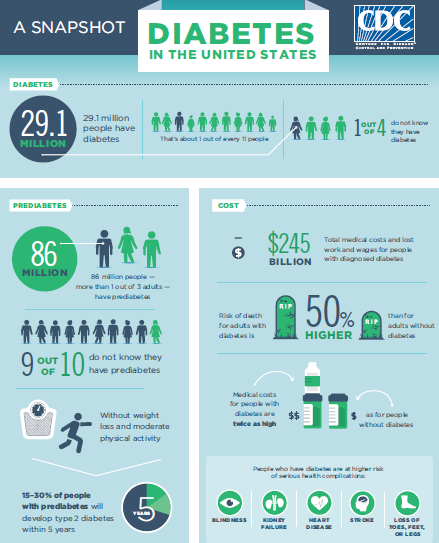
Type II diabetes is considered a lifestyle disease. Living a sedentary lifestyle, smoking, consistently eating junk foods, and being overweight put you at a much greater risk of getting type II diabetes. With type II diabetes, the body is producing insulin but the insulin doesn’t work well or the body is not producing enough. Treatment may include insulin injections, oral medications, and adopting a healthier lifestyle. Type II diabetes is the most common type of diabetes and accounts for 95% of all diagnoses.
Gestational diabetes occurs when a woman experiences consistent, high blood sugar during pregnancy because of hormonal changes. For the majority of women who get gestational diabetes, blood sugar normalizes after the baby is born, but it does put the mom at greater risk of getting type II diabetes later in life.
It is becoming more common for children to get diagnosed with type II diabetes. This correlates with our country’s unhealthy habits and the obesity epidemic. But don’t fret, type II diabetes may be prevented by maintaining a healthy weight, eating nutrient-rich foods, and being physically active. For healthy eating, follow these USDA MyPlate messages for each food group:
- Go lean with protein: choose low fat varieties, e.g. at least 90% lean ground beef, skinless poultry, round steaks and roasts, and beans
- Vary your veggies: choose different types and colors of vegetables
- Focus on Fruits: make sure fruit is on your plate at every meal
- Make half your grains whole: choose 100% whole grain products, e.g. 100% whole wheat bread, brown rice, and oatmeal
- Choose calcium rich foods: choose low-fat dairy foods like reduced-fat cheese and skim or 1% milk
And remember: no one is perfect, and less healthy foods are going to sneak their way into our lives either by being presented to us as gifts, at holiday parties, treats at school or work, etc. Don’t beat yourself up if you have a less healthy food every now and then. We call these less healthy foods (containing high amounts of sugar, fat, and/or salt) “sometimes foods” at the Poe Center. The key is moderation with these types of foods. We will and should enjoy a “sometimes food” once in a while. But don’t forget to ENJOY it! Slow down and pay attention to the taste and texture of the food.
If you are interesting in learning more about living a healthier lifestyle check out the Poe Center for Health Education’s nutrition programming at
https://www.poehealth.org/educational-topics/nutrition-physical-activity/.
http://www.diabetes.org/diabetes-basics/genetics-of-diabetes.html
http://www.mayoclinic.org/diseases-conditions/diabetes/expert-blog/types-of-diabetes/bgp-20056516
Great American Smokeout Month
Great American Smokeout Month
By Deborah Hendren, Substance Abuse Prevention Manager
Started in the 1970’s, the Great American Smokeout takes place every year on the third Thursday of November as a way to empower smokers to quit, at least for the day, if not for a lifetime.
Tobacco is the leading cause of preventable and premature death and accounts for an estimated 443,000 deaths (includes those who smoke and those exposed to secondhand smoke) in the United States each year.[i] In 2012, the US adult population smoking rate was 18.1% and the North Carolina adult smoking rate was 20.9%.[ii],[iii] Fourteen percent (14%) of Wake County adult residents report smoking ≥100 cigarettes and currently smoke. [iv]
Smoking is not an individualized health risk activity. In other words, it affects more than just the smoker. It affects those around you. There is no safe level of exposure to secondhand smoke, so choosing to quit benefits not only yourself, but those around you!
Quitting smoking is not an easy task. Here are some tips to overcome the challenge and cravings[v]:
- Take care of yourself – eat right, sleep well, and exercise
- Remove yourself from situations where cigarettes/smoking may be present. Spend time in places where smoking is not permitted or present
- Prevent yourself from doing activities you associated with smoking (for example: stay away from drinking alcohol or coffee; instead, drink water or juice)
- To satisfy your hand-to-mouth habit hold a pencil/pen, toothpick, straw, sugarless gum, sugar-free lollipops, etc.
- Take deep breaths to relax
- Remember your goal to stop smoking and your urges for a cigarette should lessen over time
- Call a friend, family member, or the Quitline when you need extra help or support
To see how your body recovers within minutes of quitting view the graphic below and share with others.
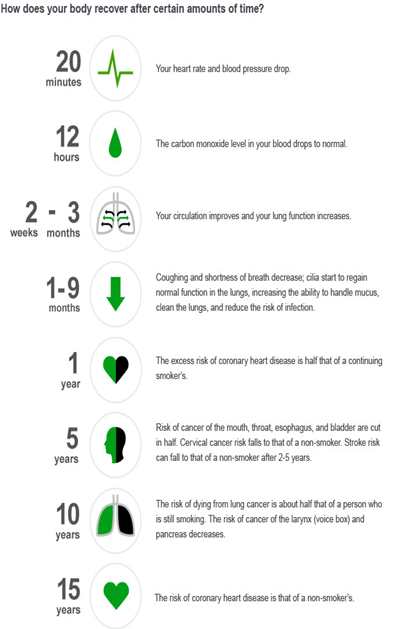
If you want to quit-choose the Great American Smokeout as your quit date! It is November 20, 2014 and you will join thousands of other smokers on the journey to a healthier life!
To learn more about Poe Center programs about tobacco and other drugs, visit:
For more information on tobacco use among youth, visit:
For more information on the Great American Smokeout, visit:
For more information on how to successfully quit, visit:
- http://www.quitlinenc.com/ or call 1-800-Quit-Now
*anyone who registers with the Quitline on November 20th is eligible to receive 8 weeks of
FREE Nicotine Replacement Therapy Patches*
.
[i] Centers for Disease Control and Prevention. (2011). Tobacco Use: Targeting the nation’s Leading Killer. Retrieved August 6, 2014 from http://www.cdc.gov/chronicdisease/resource/publications/aag/osh.htm
[ii] Centers for Disease Control and Prevention. (2012). Current cigarette smoking among adults – United States, 2005-2012. Retrieved August 6, 2014 from http://www.cdc.gov/mmwr/pdf/wk/mm6302.pdf.
[iii] Campaign for Tobacco-Free Kids. (2014). Key state-specific tobacco-related data & rankings. Retrieved August 5, 2014 from http://www.tobaccofreekids.org/research/factsheets/pdf/0176.pdf
[iv] County health rankings indicators and measurements-Wake County, NC-2013. Retrieved July 31, 2014 from http://www.countyhealthrankings.org/app/northcarolina/2014/rankings/wake/county/outcomes/overall/snashotcarolina/2014/rankings/wake/county/outcomes/overall/snapshot
[v] American Cancer Society. (2014). Helping a smoker quit: do’s and don’ts general hints for friends and family. Retrieved August 26, 2014 from http://www.cancer.org/healthy/stayawayfromtobacco/helping-a-smoker-quit
[v]i Mulvihill, Catherine. “Re: GASO Write Up.” Message to Deborah Hendren. 13 November 2014. E-mail.
National Health Education Week
National Health Education Week
By: Caroline Dickson, Health Educator
 As the weather cools down and the leaves begin to change color, the fall season provides a wonderful opportunity to reflect on the things that matter most in life. Autumn is the perfect time to give thanks to family, friends and good health! Like the autumn leaves that come in various shapes, sizes and colors, we are all unique in our own way. We do, however, share one thing in common; the opportunity for health and happiness.
October 20th marked the beginning of National Health Education week. This week serves to honor health education specialists all around the nation who dedicate their time to empowering others to make healthy choices. Health educators work on disease prevention and management as well as overall wellness. They provide programs that assist individuals, families and their communities in maintaining healthy lifestyles. In addition to assisting communities, educators collect and analyze data to identify community needs. Once these needs are assessed, they plan, implement, monitor, and evaluate programs for success. These programs are designed to encourage healthy lifestyles and environments. Health educators work in a variety of settings including elementary and middle schools, college universities, hospitals, clinics, health departments, health centers and non-profit organizations to name a few.
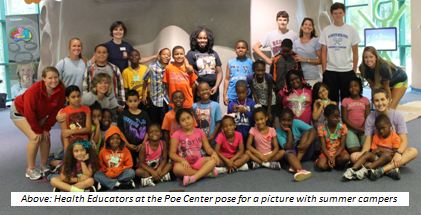 At the Poe Center, we provide health education to all ages in an exciting and unique environment. We recognize the holistic side of health, and cover a variety of topics including family life, drug education, dental health, general health, bullying prevention and nutrition and physical activity. Health is not just about eating right and exercising; it is about having balance in all areas of life. The Poe Center’s mission is to educate and empower North Carolina children, youth and their families to make choices that increase positive health behaviors. We are working towards a healthier state, and ultimately, a healthier world.
A big THANK YOU goes out to health educators and health education centers everywhere! Your passion and commitment has inspired many people to take control of their health. To honor these educators everywhere, pledge to make conscious, healthy choices every day.
This fall season, give yourself the gift of health. Take action! It is NEVER too late or too early to start. Make healthy choices when it comes to choosing foods and portion sizes. Go the extra mile (literally) and move more each day. Hydrate your body with water and fresh fruits and vegetables. Give your mind and body sufficient rest, and enjoy a full eight hours of sleep every night. Take those steps towards being smoke-free and limiting your intake of alcohol. Making small changes can really add up over time. Start with a goal and gradually build upon that. The Poe Center is along with you on this journey to health and happiness. Our vision is that that all North Carolina children and youth become healthy adults. If you need any guidance along the way, we are here.
Kids will be kids? Enough is enough!
Kids will be kids? Enough is enough!
by Thomas Ray, Senior Director of Educational Programming
We've all heard it, and maybe even said it: “Kids will be kids” along with a shrug as if there is nothing to be done about inappropriate behavior. Unfortunately, inappropriate behavior that goes without correction has a tendency to continue. If we were talking about stealing or drug abuse, responsible adults would intervene, seek help, and work toward correcting the behavior. For some reason, many adults still do not intervene when it comes to bullying. I’m not sure how we've gotten to the place where we excuse poor behavior with the response “Kids will be kids” or “boys will be boys”. That may be a partial explanation for why the poor behavior occurred – once. However, it’s no excuse for the lack of appropriate response and discipline on the part of the adults.
I won’t hypothesize in this blog as to why some behaviors get addressed and others do not, but I've actually had a teacher say to me (referring to a child who had been bullying another child), “He’s such a good kid. Everybody likes him.” I believe this response may reveal one of the underlying problems in dealing with bullying in our society – many children who bully others are otherwise good (speaking in relative terms) or well-liked kids. The call to adult to take action is not to call into question whether or not a child is good, but rather to address and correct inappropriate behavior when we observe it towards an end of stopping the behavior. In other words, the role of the adult is to instruct, correct, and guide the child.
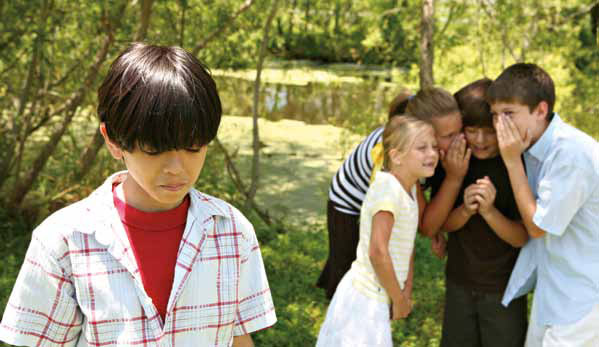 But won’t they just grow out of it? No. The research is in, and it’s clear. For the target of the bullying, those accumulated adverse experiences when left unaddressed will have an impact on their mental, social, emotional, and even financial future. That’s not an individual cost, it’s a societal cost. Recent research conducted by William Copeland, others from Duke University, and Dieter Wolke from the University of Warwick indicates that “involvement with bullying in any role was predictive of negative health, financial, behavioral, and social outcomes in adulthood. Once we adjusted for family hardship and childhood psychiatric disorders, risk of impaired health, wealth, and social relationships in adulthood continued to be elevated in victims and bully-victims. The greatest impairment across multiple areas of adult functioning was found for bully-victims” (2013, p. 1967). Furthermore, although the negative effects for those in the bully-only role were accounted by adjusting for family hardship and child psychiatric factors, “perpetration of bullying in childhood may be a marker of present and later psychopathology” (Wolke et. al, 2013, p. 1967). In other words, by ignoring bullying behavior in our children, we may be ignoring significant warning signs that our children need mental health care; while again, left untreated, will have long-term negative consequences including poverty and imprisonment.
Continuing to excuse unacceptable behavior that has negative and long-term consequences for individuals and high cost to our society (in terms of increased mental health care, social and economic services into adulthood, etc.) needs to stop. Recognizing, acknowledging, and addressing bullying is the right thing to do – no longer ignoring, or even worse, encouraging or perpetrating the bullying behavior (yes, it happens). Many adults are going to have to change the way they think about bullying behavior. We will have to recognize that the bullying behavior may be a warning sign of underlying mental health issues that can be addressed earlier rather than later. We will have to recognize that bullying, its underlying causes and both short-term and long-term consequences can no longer be passed off with a simple shrug and “kids will be kids”. Enough is enough.
In order to help adults recognize bullying behavior and appropriate methods for addressing that behavior the Poe Center has developed Bullying Uncovered: What Parents, Teachers, and Other Adults Need to Know. To book this program for your parents or staff, contact Kate at k.mascho@poehealth.org or call her at 919-231-4006 ext. 399.
References:
Wolke, D., Copeland, W. E., Angold, A., & Costello, E. J. (2013). Impact of bullying in childhood on adult health, wealth, crime, and social outcomes. Psychological science, 24(10), 1958-1970.
“Fall” into Autumn Gardening!
“Fall” into Autumn Gardening!
by Kate Jablonski, Health Educator
Are you worried that the beautiful and luscious garden you worked so hard to cultivate over the summer will become barren and brown during the colder fall and winter months? Have no fear! Fall’s cool and crisp temperatures are perfect for delicious cool-season crops like beets and spinach.
To get started, be sure to rid your garden of any summer plants that are no longer producing or have already been harvested. It is always a good idea to start your gardening season with a clean slate. This allows you to express creativity through the arrangement and varieties of vegetables you choose to plant. You might also want to add some compost to your garden’s soil to give your fall crops a great head-start.
 Fall vegetables come in a variety of colors, textures, and tastes! Some of these nutritious cool-weather treasures include broccoli, cabbage, carrots, cauliflower, kohlrabi, radishes, kale, rutabagas, green onions, and a variety of fast-growing greens like arugula, mustard, and turnips! These vegetables can come together to create so many amazing fall flavor combinations.
When planting your vegetables by seed, try to put them a little deeper into the soil than you would during the warmer weather. The deeper soil tends to be cooler and moister. Be sure not to over-water your garden! Vegetables in the fall do best with about one inch of water per week. With extra-special care, some of the fall veggies can flourish even past the first frost!
Whether you decide to try autumn gardening or not, take a trip to any of your local farmers markets that remain open past the end of summer (like the State Farmers Market in Raleigh). You will be surprised by the variety of fall vegetables, and you might even see a vegetable you have never tried. If you do, don’t be afraid to purchase some and look for interesting and fun recipes online. As you can see, fall weather is perfect for a unique set of vegetables that offer nutritious and delicious additions to any meal!
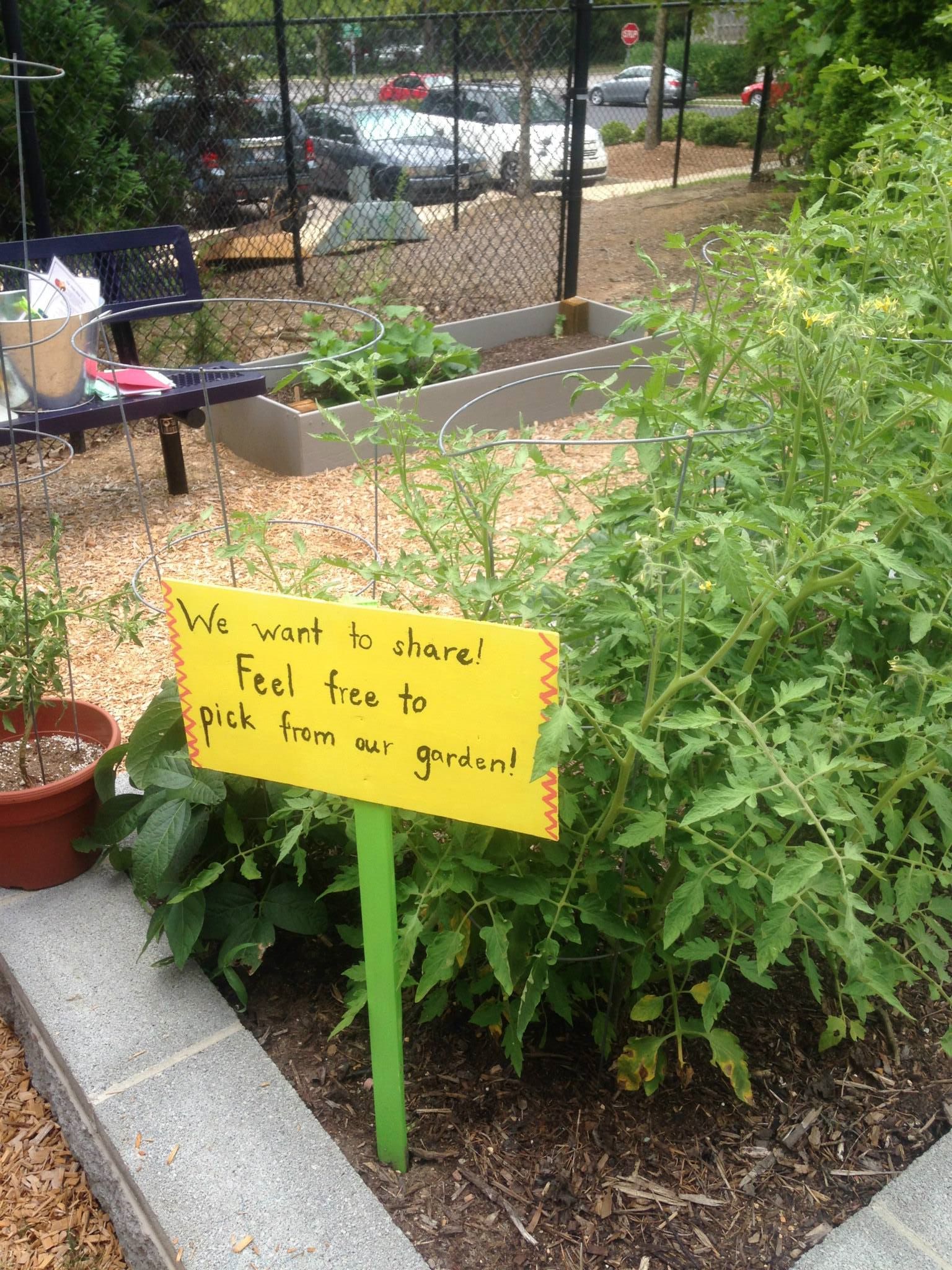 The Poe Center’s PlayWell Park is home to our very own Poe and Grow Garden. This fall, we are growing squash, kohlrabi, radishes, basil, mint, spinach, kale and green onions. At other places throughout the park, we are growing various perennials including blueberry bushes, raspberry bushes, rosemary, a grape vine, and fig trees. The garden is a huge hit with the children and adults who visit our facility. We find that the garden really brings out the inquisitive nature of the kids (and adults!) who visit. Because of the important and relevant connections between gardening and nutrition, the Poe Center offers the Growing Healthy Kids program for 1st-3rd graders which teaches students about gardening, health, and plant biology. Please contact Kate Mascho, the Poe Center’s Scheduling Coordinator, at (919) 231-4006 ext. 399 or k.mascho@poehealth.org to schedule this program for your group today!
Source: http://www.bhg.com/gardening/vegetable/vegetables/fall-vegetable-gardening/