

Healthy Minds, Nicotine-Free Lives: Prevention for a More Resilient Generation
Healthy Minds, Nicotine-Free Lives: Prevention for a More Resilient Generation
Jessica Fowler, CADC, CPS
MindWELL Associate Director
Poe Center for Health Education
Being a teen today isn’t easy. Between school, part-time jobs, social media, activities, friends, and figuring out plans for college, trade school, or entering the workforce, a lot is happening. On top of all that, there has been a rise in teen vaping in the past few years and more recently, a rise in the use of nicotine pouches.
At first glance, the fruity flavors and colorful packaging might seem harmless, but there’s a much bigger story underneath. How is all this nicotine affecting young people’s mental health? Let’s dive in and find out.
Did you know? Even before the COVID-19 pandemic, 70% of young people said anxiety and depression were major problems among peers, according to a study by the Pew Research Center.
In the 2021–2022 CDC Youth Risk Behavior Survey, teens ages 12–17 reported troubling mental health concerns: 21% experienced symptoms of anxiety in the past two weeks, 40% reported persistent feelings of sadness or hopelessness in the past year, and 20% seriously considered suicide. It’s clear that stress and anxiety affect many young people.

While teens are already facing growing mental health challenges, they are also navigating the public health concern that comes with the increase of nicotine products in the community.
According to the 2024 National Youth Tobacco Survey, more than 1.63 million youth (7.9% of high school and 3.5% of middle school students) currently use e-cigarettes, and of young people who currently use a tobacco product, more than 1 in 3 used more than one type of product (E-Cigarette Use Among Youth | Smoking and Tobacco Use | CDC).
You can learn more about the rise of teen vaping in North Carolina in WRAL’s Documentary: Gen V: Teen Vaping in North Carolina explores the rise of teen vaping.

The good news is that e-cigarette use has decreased among high school students. However, concerningly, there has been an increase among middle school students. It is widely known that nicotine harms the developing brain, making young people more vulnerable to addiction.
What many people don’t realize is the possible connection between nicotine use and mental health challenges. Research is ongoing and there is not yet direct evidence that nicotine causes mental illness, but numerous studies show that nicotine use can increase and worsen symptoms of anxiety, depression, and other mental health challenges.
Most young people are unaware of the connection between nicotine and mental health. It is often assumed that youth start using e-cigarettes due to peer pressure, but according to surveys conducted by the Truth Initiative, many youth start as a way to cope with feelings of stress, anxiety, and depression.

Youth continue using other nicotine products for the same reasons. Unfortunately, while they may begin using nicotine to alleviate symptoms, it has been found that nicotine use can actually increase and worsen symptoms of depression and anxiety, and has also been linked to heightened symptoms of ADHD.
In fact, surveys show that 45% of young people who vape believe it is acceptable to vape for stress relief, though that misunderstanding is likely due to the cycle of nicotine withdrawal and addiction. When someone stops using nicotine, withdrawal symptoms such as irritability, anxiety, and depression can occur.
Using nicotine products temporarily relieves these symptoms of withdrawal, but only for a short time. Because symptoms ease up, using nicotine again is falsely seen as “helping” or “relieving stress.” In actuality, the person is trapped in a cycle of use, withdrawal, increased use, and withdrawal and use again, which is the cycle of addiction. What may feel “helpful” is actually causing an increase of harm.

Adding to the problem, young people are heavily exposed to tobacco industry marketing that falsely links tobacco use, including e-cigarettes, to mental well-being, stress relief, fun, and relaxation. These ads are shown on social media, billboards, and television, normalizing the use of nicotine to cope with stress and have fun.
Because this harmful messaging is so present in youths’ lives, it is crucial that adults demonstrate healthy coping strategies for managing mental health challenges. Some proven self-help strategies include regular exercise, relaxation techniques, proper nutrition, and healthy sleep habits. Engaging in hobbies and activities can also be an effective way to manage stress without turning to tobacco products.

It is important to talk openly with young people about mental health and substance use, assure them that professional help is available, and help them access care. Youth need a trusted adult: someone who is encouraging, consistently present, and listens and supports them. This can make a huge difference in a young person’s life.
It is essential that caregivers have regular conversations about mental health and substance use. An easy way to start is using everyday opportunities to prompt conversations, for example, when watching a movie or reading a book. Using these strategies and fostering bonds with our children strengthens resilience and supports healthy brain development, allowing them to better handle stress.
Do you know a young person who wants to quit e-cigarettes? According to the National Youth Tobacco Survey, 63.9% of the youth who currently use e-cigarettes reported wanting to quit and 67.4% reported trying to quit in the last year. Here are a few resources to help youth become tobacco-free and support mental wellness.
- 988- is the National Suicide and Crisis Lifeline
- EX Program
- NC Quitline
- Live Vape Free
- N-O-T: Not on Tobacco

References/ Citations:
American Heart Association. Depression & anxiety symptoms linked to vaping nicotine and THC in teens and young adults. (2023 February 28). American Heart Association. Depression & Anxiety Symptoms Linked to Vaping Nicotine and THC in Teens and Young Adults.
CDC. “(2025 January 31). Data and Statistics on Children’s Mental Health. Children’s Mental Health, CDC. Data and Statistics on Children’s Mental Health.
Horowitz, Juliana Menasce, and Nikki Graf. (2024, April 14). Most U.S. teens see anxiety and depression as a major problem among their peers. Pew Research Center. Most U.S. teens see anxiety and depression as a major problem among their peers.
Truth Initiative. (2021 September 19). Colliding Crises: Youth Mental Health and Nicotine Use. Truth Initiative. Colliding Crises: Youth Mental Health and Nicotine Use.
Wang, N., & Donaldson, C. D. (2023). Youth mental health and nicotine vape use: The moderating role of rural-urban/suburban school environments. Addictive Behaviors, 147, 107830. Youth mental health and nicotine vape use: The moderating role of rural-urban/suburban school environment.

Upcoming Event:
💭What if… we all had a Tobacco-Free community?💭
1 in 5 high school students currently use a vape product – that’s about 6 in every classroom. Youth tobacco use continues to be a health crisis. We invite the Triangle community to ask: What if… we all had a tobacco-free community at the Tobacco-Free Community Forum, a free event.
Who: Youth, caregivers, teachers, adults who work with youth, community members
When: Thursday, May 15, 2025, 4:00 p.m. to 5:30 p.m.
Where: Wake County Commons Building, 4011 Carya Dr, Raleigh, NC 27610
Featured Resource:
Looking for a unique activity to do with your young person? Play Poe’s new Neural Fortification Game on the Fortnite platform. Explore a fun new world, build conversations, learn about wellness, and beat challenges together through healthy decision-making!
Featured Program:
Vaping 101 educates participants on the latest research about the addictive nature of nicotine and how it impacts their growing brain and body. This program will cover important resources and skills to empower healthy decision making to navigate through substance use issues. Participants will be engaged in a group game format, videos and discussion.
Program Participants: 6th – 12th Grade
Program Length: 60 minutes


Protecting Their Future: Preventing the Impact of Alcohol on Youth
Protecting Their Future: Preventing the Impact of Alcohol on Youth
Susan Bragg Foster, CPS
Substance Use Prevention Assistant Director
Poe Center for Health Education
Rhianna Flory, BS
Substance Use Prevention Specialist
Poe Center for Health Education
Observing Alcohol Awareness Month
April is Alcohol Awareness Month. Did you know that only 45% of American adults know that drinking alcohol can raise the risk of cancer? (Alcohol and Cancer Risk, 2025).
This month is a great time to talk about how we can protect our kids and communities. It’s also a reminder to have honest conversations with young people. As prom and graduation season gets closer, teens may face more chances to drink. These talks can help keep them safe now and in the future.

How is Alcohol Use Linked to Cancer?
In January 2025, the U.S. Surgeon General released a health warning about alcohol and cancer. It was based on growing research showing a strong connection between alcohol use and cancer (Alcohol and Cancer Risk, 2025). Here are some key facts from the warning:
-
- Alcohol causes around 100,000 cancer cases and 20,000 cancer deaths in the U.S. each year.
- Alcohol is the third leading preventable cause of cancer, after tobacco use and obesity.
- The Surgeon General suggests putting a cancer warning label on alcohol products.
- The warning also recommends updating the guidelines for alcohol use. Even small amounts of alcohol may increase cancer risk.
“Moderate drinking” means having one drink a day for women and two drinks a day for men. But even this level of drinking can raise cancer risk.

Surgeon General’s Recommended Action Steps
There are actions that can be taken to reduce alcohol-related cancers in the United States. Key steps include:
-
- Update the existing Surgeon General’s health warning label on alcohol-containing beverages to include a warning about the risk of cancer associated with alcohol consumption. Pursue changes to label characteristics to make the warning label more visible, prominent, and effective in increasing awareness about cancer risks associated with alcohol consumption.
- Reassess recommended limits for alcohol consumption to account for the latest evidence on alcohol consumption and cancer risk.
- Strengthen and expand education efforts to increase general awareness that alcohol consumption causes cancer.
- Inform patients in clinical settings about the link between alcohol consumption and increased cancer risk. Promote the use of alcohol screening and provide brief intervention and referral to treatment as needed.
- Highlight alcohol consumption as a leading modifiable cancer risk factor. Incorporate proven alcohol reduction strategies into population-level cancer prevention initiatives and plans.
- For individuals, be aware of the relationship between alcohol consumption and increased cancer risk when considering whether or how much to drink. Cancer risk increases as you drink more alcohol.
Starting the Conversation
-
- Having open conversations about underage drinking.
- Showing clear disapproval of alcohol use.
- Taking steps to prevent it.
Research shows that if young people wait until they are 21 — or better yet, 24 to 25 — before trying alcohol, their brains will be more fully developed. This lowers their chances of developing problems with alcohol or other substances (Alcohol and Cancer Risk, 2025).

Helpful Resources
Need help starting the conversation? Here are some helpful resources to guide your talks and support healthy choices for your kids:
Modeling Healthy Choices to Reduce Use: The Role of Communities
Many things shape how young people think about alcohol. One of the most powerful influences is adults. When adults make healthy choices around alcohol, it helps shape how kids see what is normal or expected.
Since the COVID-19 pandemic, rules about indoor gatherings changed. Now, more places allow alcohol to be used outdoors and in public spaces—even in areas where families gather. To help reach the Surgeon General’s goal of lowering alcohol use, it’s important for communities to think carefully about where alcohol is allowed. When alcohol use becomes common in family-friendly places, it may send the wrong message to kids. This could lead to more underage drinking and other problems.
The Centers for Disease Control and Prevention (CDC) gives advice to help communities support healthy choices. Their ideas include creating places where adults model healthy behaviors and kids feel supported to make safe choices.

The Center for Disease Control (CDC) has recommendations to help communities create social and physical environments that support healthy choices and positive modeling.
To learn more, check out the CDC’s resource: Preventing Excessive Alcohol Use with Proven Strategies from CDC.
Educating: The Power of Prevention
Knowledge is power. Did you know that peers play a big factor in youths’ attitudes towards alcohol? Youth who have peers who drink alcohol are more likely to use alcohol themselves. The Poe Center has multiple programs that address peer pressure and starting the conversation with youth about the risks of alcohol use. These programs are for upper elementary, middle, and high school students.
The Poe Center also offers sessions for parents and caregivers. These programs talk about:
-
- Current trends in youth alcohol use
- Health risks of alcohol and other substances
- Tips for talking to your child about alcohol and other substances
You can learn more about these programs at poehealth.org.

The Home: A Key Prevention Area
Did you know that most kids who drink alcohol—about 75%—say they got it at home or a friend’s house? That’s why it’s so important for parents and caregivers to monitor and secure alcohol at all times to prevent youth access.
The Talk It Up, Lock It Up!TM campaign offers simple steps to keep your home safe:
-
- Monitor: Keep track of how much and what kind of alcohol is in your home.
- Secure: Lock up alcohol in a cabinet, fridge or closet. You can find locks designed for those spaces at most hardware stores or online.
You can also take the Talk It Up. Lock It Up!TM pledge and start having these important conversations with your child today.
References/ Citations:
Alcohol and Cancer Risk. (2025, January 17). HHS.gov. Alcohol and Cancer Risk.
Centers for Disease Control and Prevention. (n.d.). (2025, January 29). Alcohol and Cancer. Centers for Disease Control and Prevention. Alcohol and Cancer.
Get The Facts About Underage Drinking. National Institute on Alcohol Abuse and Alcoholism (NIAAA). (n.d.). Get The Facts About Underage Drinking.
Liu, M., Zhao, W. Q., Zhao, Q. R., Wang, Y., & Li, S. G. (2023). The impact of the peer effect on adolescent drinking behavior: instrumental-variable evidence from China. Frontiers in Psychiatry, 14. The impact of the peer effect on adolescent drinking behavior: instrumental-variable evidence from China.
Lock it up! Talk It Up. Lock It UpTM. (n.d.). Talk It Up. Lock It UpTM
Preventing Excessive Alcohol Use with Proven Strategies. (2024, December 12). Alcohol Use. Preventing Excessive Alcohol Use with Proven Strategies.
Nawaz, A. (2025, January 3). U.S. Surgeon General Explains Why He’s Calling For Cancer Warnings On Alcohol. PBS News. U.S. Surgeon General Explains Why He’s Calling For Cancer Warnings On Alcohol.
Winters, K. C., & Arria, A. (2011). Adolescent Brain Development and Drugs. The Prevention Researcher, 18(2), 21–24. Adolescent Brain Development and Drugs.
Featured Program:
Participants of In The Know will receive the latest research about alcohol, tobacco, and other drugs, as well as explore how substance use could impact their lives now and in the future. This program will cover important resources and decision-making skills to empower healthy choices that impact not only their developing brains and bodies but also their families, friends, and futures. In the Know is an interactive session engaging participants with group discussion, videos and activities.
Program Participants: 9th Grade, 10th Grade, 11th Grade, 12th Grade
Program Length: 60 minutes

Featured Resource:
Whether you’re just starting to take a look at your drinking or have already decided to cut back or quit, you’ll find helpful tools from the National Institute of Health such as worksheets, drink calculators, and more.

Celebrating National Nutrition Month: How Food Connects Us and Builds Stronger Communities
Celebrating National Nutrition Month: How Food Connects Us and Builds Stronger Communities
Maria Jose Muentes Bernal
Dietetic Intern, Meredith College
Poe Center for Health Education
March is National Nutrition Month, a time to celebrate healthy eating and raise awareness about the importance of good nutrition. This year’s theme, “Food Connects Us,” highlights the powerful role food plays in bringing people together. From sharing meals with family and friends to fostering a sense of community through nutrition education, food is the common thread that unites us all.
The Power of Food
Food is more than just sustenance. It’s a way for communities to bond, celebrate, and support one another. Whether it’s cooking together, sharing meals, or teaching others how to prepare certain recipes, food strengthens relationships. According to research, “the spread of health behaviors, such as eating habits, can ripple through social networks, suggesting that individuals are influenced by those around them” (Christakis & Fowler).
Food’s power to connect extends far beyond the act of sharing a meal. It’s about creating inclusive, healthy food systems that benefit everyone.
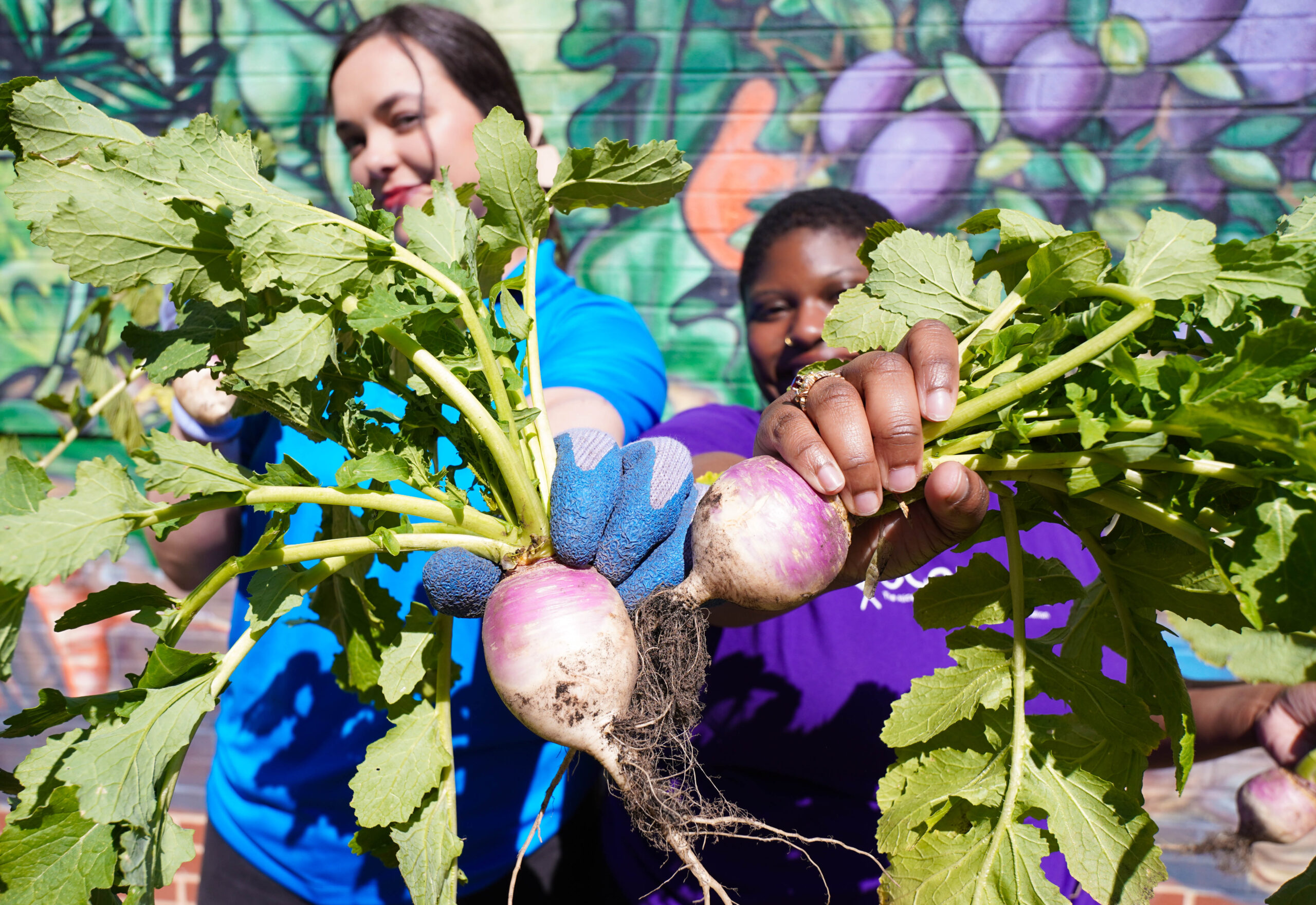
Connect with food in your community by visiting a local farmer’s market. Ask how food was grown or raised. Learn about resources that offer access to healthy food, such as SNAP, WIC, or local food banks. Consider starting a community garden. Initiatives and resources like these help build stronger communities by creating spaces where everyone has the opportunity to thrive.
The Poe Center: Connecting Through Nutrition Education
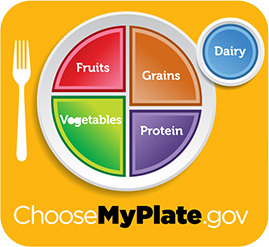
A program that embodies the spirit of connection through food is the Poe Center’s Cooking with MyPlate Challenge. This program uses a fun, interactive, competitive team approach to teach participants about the importance of good nutrition while promoting teamwork and collaboration. By incorporating the MyPlate guidelines, participants learn healthy cooking strategies, gain an understanding of reading nutrition labels, and practice food safety.

The challenge is designed for a wide range of participants, from kids ages 10 and up to adults. Each team is composed of one or both parents, a family member, and a child. It’s a great activity that can be recreated at home with family or friends, making it an accessible way for people to come together, learn, and share knowledge.
Host your own “MyPlate Challenge:” gather your friends and family, divide into teams, and pick a healthy recipe. Take a look at ChopChop Magazine for nutritious family-friendly recipes. Make that recipe in teams, using MyPlate to identify food groups as you go. Taste-test your creations after and decide on a winner. There can be more than one winner – create awards for best-tasting, most creative, best teamwork, and more. Talk through what you liked, what was difficult, and what you learned about healthy eating.
Food, Culture, and Community
Programs such as the Cooking with MyPlate Challenge show how food can encourage connection by blending education with fun, hands-on experiences. When people are given the knowledge and resources to make healthier food choices, they’re more likely to share that knowledge with others, creating a ripple effect. “People’s behaviors are contagious and can affect social networks, including dietary habits” (Christakis & Fowler).
Take this concept community-wide by encouraging your family or friends to adapt traditional cultural meals with a healthy twist. This way, you can preserve cultural heritage while making healthier choices.

It’s a great opportunity to foster a sense of pride and connection to your cultural background, while promoting well-being for future generations. Families who bond through meals in this way are empowered to make better choices at home, children carry healthy habits to school, and communities as a whole begin to see the positive impact of a collective focus on nutrition.
Get Involved This National Nutrition Month
This National Nutrition Month, take the opportunity to explore how food can connect with others in your community. Here are a few simple ways to make an impact:
- Host a Community Meal: Gather friends, neighbors, or coworkers for a healthy meal. This simple act not only promotes better nutrition but also strengthens community solidarity.
- Share Knowledge: Whether you’re cooking a healthy meal for your family or teaching a child about balanced nutrition, use experience to inspire others to make healthier food choices.
- Share Information about Healthy Eating: Share the Poe Center’s posts and videos about eating healthy on a budget. Learn more at poefit.org.
- Support Local Farmers: Purchase fresh, locally-grown produce and other nutritious foods. Support your own health and strengthen local food systems.

At its core, National Nutrition Month encourages us to reflect on the deeper connections between food, health, and community. The theme “Food Connects Us” serves as a reminder that when we prioritize good nutrition and come together to share knowledge and resources, we’re building a healthier, stronger future for everyone.
References/ Citations:
Snuggs, S., & Harvey, K. (2023). Family mealtimes: A systematic umbrella review of characteristics, correlates, outcomes, and interventions. Nutrients, 15(13), 2841. Family mealtimes: A systematic umbrella review of characteristics, correlates, outcomes, and interventions.
Christakis, N. A., & Fowler, J. H. (2007). The spread of obesity in a large social network over 32 years. The New England Journal of Medicine, 357(4), 370-379. The spread of obesity in a large social network over 32 years.
Featured Program:
During the Snack Smart for Parent and Child program, families follow a recipe to create a healthy snack while learning about MyPlate, healthy snacking, and proper kitchen safety.
Program Participants: Ages 8 years and up, paired with an adult caregiver
Program Length: 2 hours
Featured Resource:
If you’re looking for a fun and educational way to engage your family in the kitchen, especially with your little ones, check out Chop Chop Magazine! This online publication offers a selection of pantry-based recipes that help children develop cooking skills and learn about nutrition. It’s a great resource for parents looking to connect with their kids while promoting healthy eating habits.