

Volunteerism: Where Business Meets Community
Volunteerism: Where Business Meets Community
Callie Hammer
Development Associate Director
Poe Center for Health Education
Have you heard of the term corporate social responsibility (CSR)? The term may sound daunting, but at its core, corporate social responsibility is the way that businesses work toward and achieve goals related to ethics, sustainability, and social impact1. A brand or company’s easily-recognizable values, connections to social causes, and ties to the community can enhance public perception and interactions.
1. Philanthropic Responsibility: Actively seeking to make society a better place.
2. Ethical Responsibility: Operating in a fair manner towards employees, suppliers, and customers. This includes fair pay and safe working conditions.
3. Environmental Responsibility: Behaving in an environmentally friendly way by reducing harmful practices, regulating energy consumption, and offsetting negative environmental impact.
4. Economic Responsibility: Using money not just for profit, but for good.
Historically, businesses have participated in philanthropic responsibility by putting company earnings towards a cause or establishing a corporate foundation or trust. However, the landscape of philanthropic responsibility is changing, and it is shifting to include employees.
Employees are now centered in companies’ efforts to meet philanthropic goals. New strategies include employee donation match programs, fundraising campaigns, and volunteerism.

Types of Volunteerism:
- Volunteer Time Off: Paid time that employees can use to complete volunteer work. This supports individual volunteer efforts.
- Designated Day of Service: A planned day where a group of employees from a company volunteer with an organization during normal work hours. This supports team-based volunteer efforts.
- Volunteer Grant Program: Corporate initiative where an employer donates money to a nonprofit organization on behalf of an employee who volunteers for a certain number of hours. Grant programs may vary from business to business.
Why is volunteerism an important part of CSR?
Volunteerism can be one of the most visible forms of corporate social responsibility and can positively influence public perception of a business. Here’s how:
- Direct Community Impact: Volunteerism signals that the business is invested in supporting and solving real-world problems and that the commitment is more than writing checks.
- Brand & Reputation2: Volunteering builds goodwill within the community. A business that is active in the community earns more trust, influence, and loyalty.
- Strategic Partnerships3: By volunteering and supporting organizations that have a similar focus, a business’s efforts can increase awareness and amplify social change through shared networks, resources, and time spent.
Why should volunteerism be a part of your business’s CSR goals?
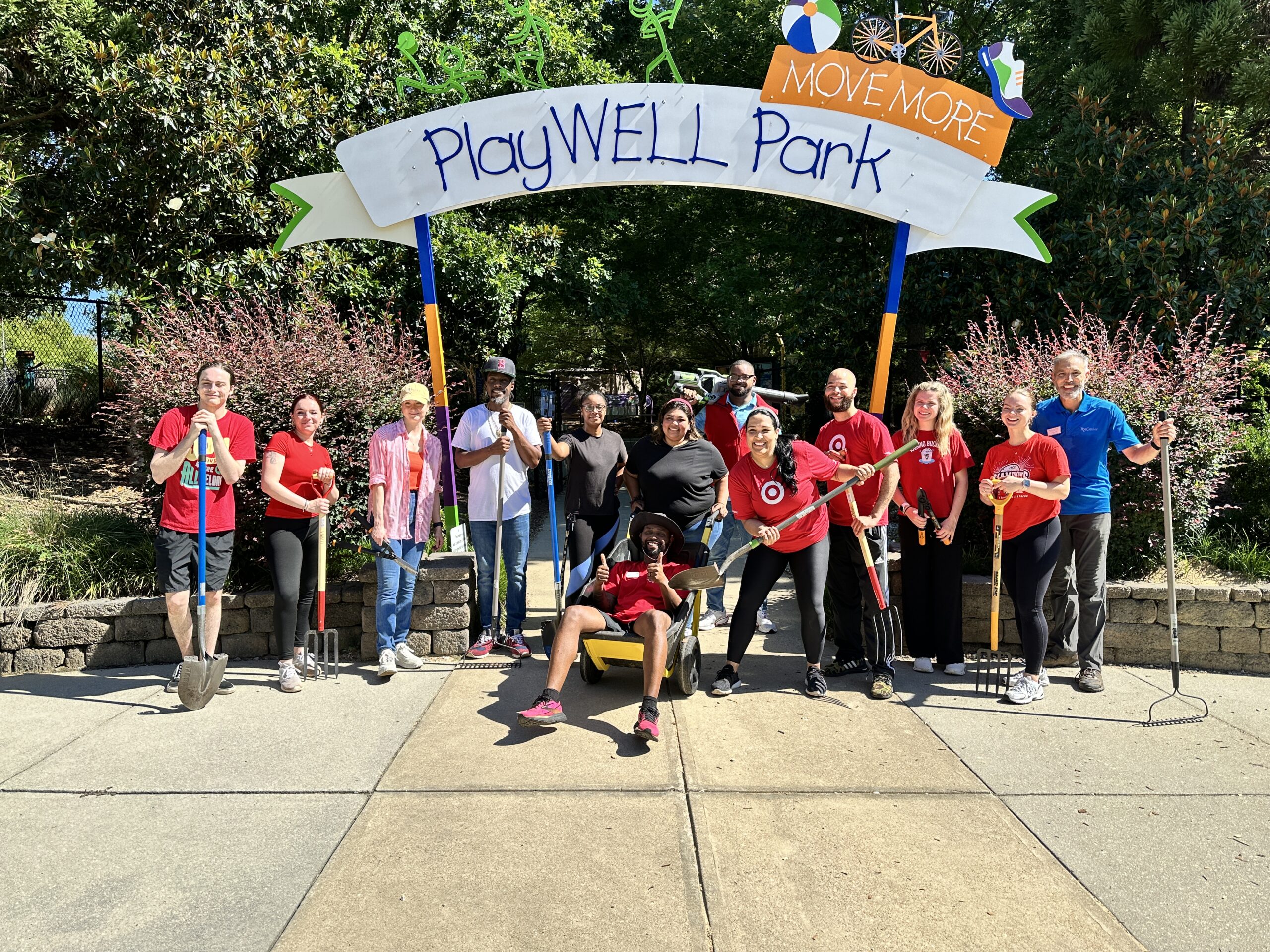
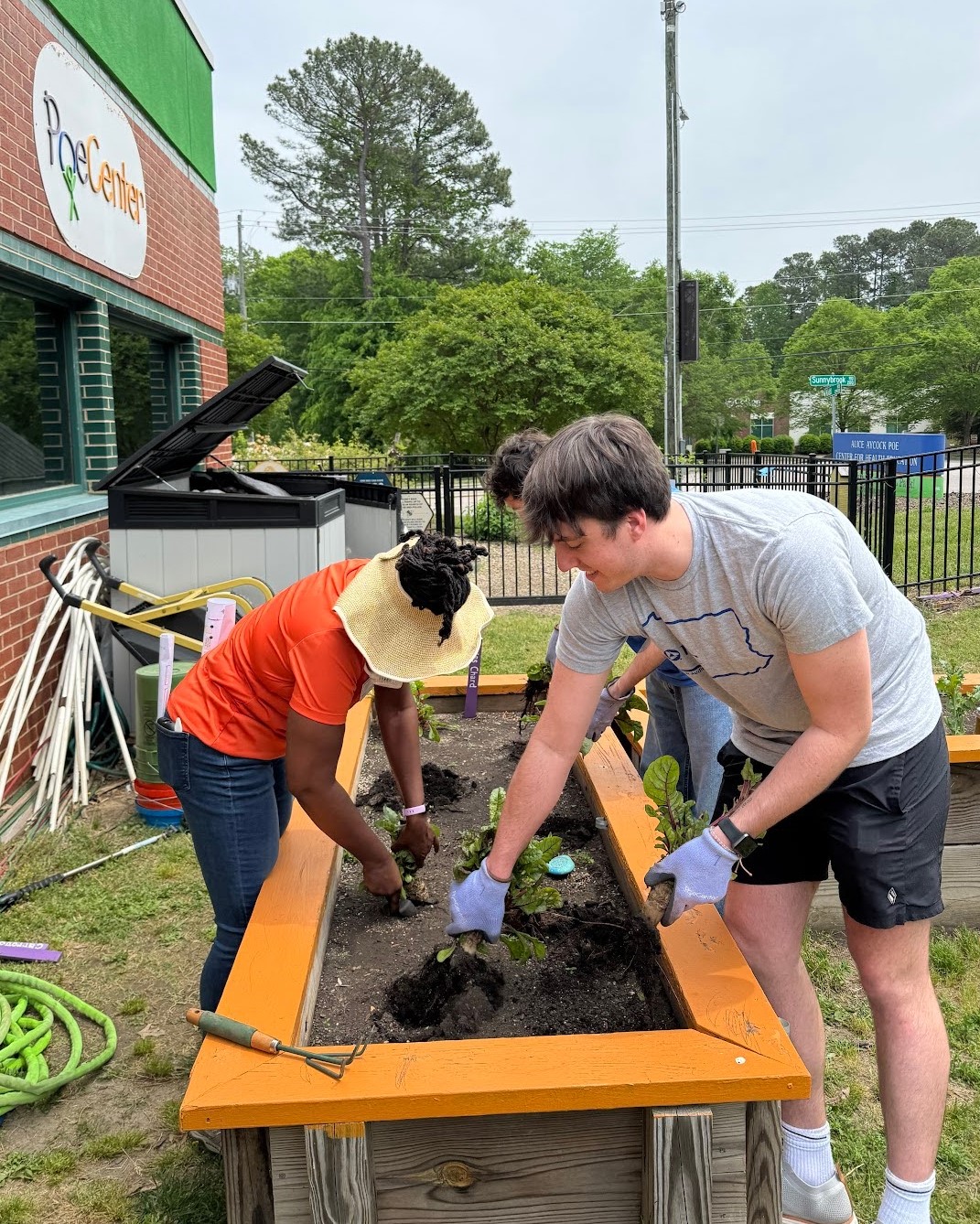
Volunteerism provides a long list of benefits to companies and supports the everyday needs of nonprofit organizations. Many nonprofit organizations have large projects that can be done in a day with the support of helping hands. There are many volunteer opportunities at the Poe Center, such as mulching PlayWell Park, completing a mailing project, planting garden beds in our GrowWell Garden, or volunteering at Poe Center events.
Additionally, nonprofits can benefit from skill-based volunteering, where employees lend their time and professional skills to provide support. Many employees have professional skills and backgrounds that benefit nonprofit organizations. This includes, but is not limited to, legal expertise, accounting knowledge, financial advising, subject area expertise, and assistance from local elected officials. Professional skillsets are vital to nonprofit Boards of Directors, committees, and specific projects or initiatives.
- Higher Employee Engagement & Satisfaction: Volunteering provides employees with a sense of purpose, fosters community connections, and makes a difference. Employees involved in volunteer activities report higher career satisfaction and a greater sense of pride4 .
- Reduced Employee Turnover: Employees who feel engaged and connected have 20% longer expected tenures and are 50% more likely to be in leadership positions5 .
- Increased Team Morale: Team volunteerism gives coworkers the chance to connect and engage with each other outside of the workplace. This creates authentic connections outside of projects, goals, and expectations. Doing meaningful work together can strengthen team bonds and in turn enhance productivity, morale, and team culture5.
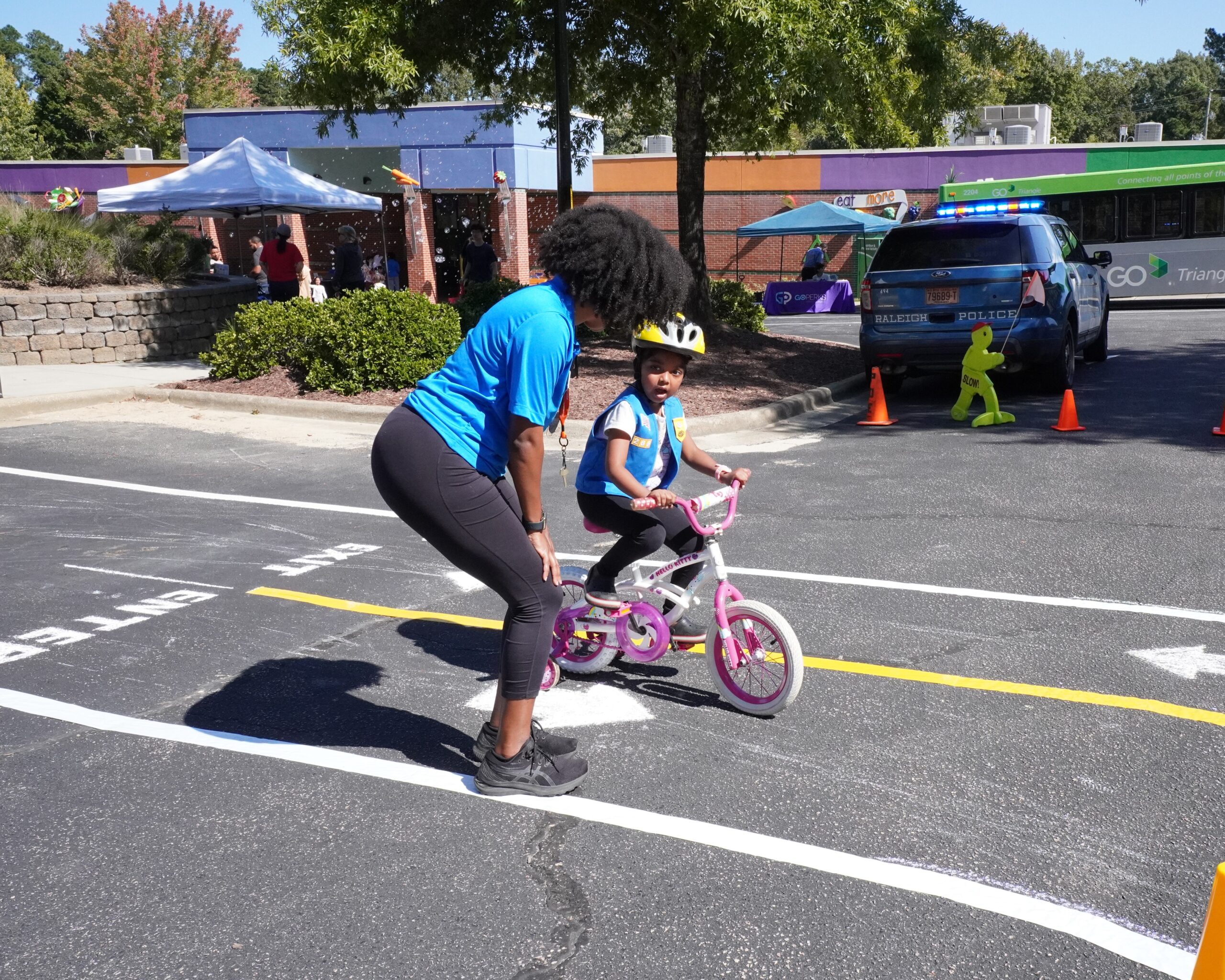
Volunteerism is a mutually beneficial component of corporate social responsibility. Organizations like the Poe Center are able to further their mission every day by connecting and collaborating with local companies and businesses.
The Poe Center is committed to creating a healthier future for all North Carolinians and we welcome volunteers from companies or businesses that want to be a part of our mission.
Sources
Corporate Social Responsibility: Types and key insights. (n.d.). Corporate Social Responsibility: Types and key insights.
How Volunteerism is the future of CSR | Percent Pledge. (n.d.). How Volunteerism is the future of CSR | Percent Pledge.
3Strand, B. (2024, April 3). Corporate Social Responsibility: Empowering nonprofits. POINT – Easiest Volunteer App, Everrr. Corporate Social Responsibility: Empowering nonprofits.
Basil, D. &. R. M. &. B. M. &. U. J. (2011). Company support for employee volunteerism: Does size matter? ideas.repec.org. Company support for employee volunteerism: Does size matter?
Chromy, M. (2025, September 10). Corporate Volunteerism: A complete guide to getting started. Bloomerang. Corporate Volunteerism: A complete guide to getting started.
Featured Program:
Unsure of your company’s corporate social responsibility goals and commitment to philanthropy? Ask! Looking to grow your company’s philanthropic responsibility efforts? Reach out to us. We would love to work with you and your group!
SNAP Changes: Keeping Families Fed
Big Changes to Food Support Programs: What North Carolina Families Need to Know
Celeste Goodwin, MPH, RD, LDN
Kitchen Specialist
Poe Center for Health Education
Dana Orr, MBA
Community Coalition Coordinator
Poe Center for Health Education
On July 4th of this year, a new law called the “Big Beautiful Bill” was signed.1 This law makes big budget cuts to programs that help families meet their basic needs. It ends funding for the Supplemental Nutrition Assistance Program Education (SNAP Ed), a federally-funded program that teaches about healthy eating.
SNAP-Ed is evidence-based and helps people make their SNAP dollars stretch, teaches them how to cook healthy meals, and lead physically active lifestyles. SNAP-Ed partners with state and local organizations to meet people where they are.
The Bill also reduces benefits received through Supplemental Nutrition Assistance Program (SNAP), which is commonly referred to as “EBT” or “Food Stamps.” These changes under the Bill will make it more difficult for some people to qualify for nutrition assistance.
This abrupt end to SNAP-Ed eliminates over 50% of the Poe Center’s annual budget.
If you want to help the Poe Center directly, share a SNAP-Ed story using #SNAPEdWorks or donate to the Poe Center if you can, so we can continue to deliver education and resources to our community.
To learn more about when these changes will happen, check out this timeline from the Center for American Progress. Keep reading to learn how these changes will affect families in North Carolina, and how you can still get the food you need.
SNAP in North Carolina
Who benefits from SNAP?
In North Carolina, 80% of families that qualify for SNAP benefits have a child, an older adult, or someone with a disability in the home. One in 6 North Carolinians living in rural areas or small towns benefited from SNAP. More than a million North Carolinians are food insecure, meaning they have limited or uncertain access to adequate food.2

What do SNAP benefits do?
SNAP benefits help individuals and families purchase food and educational resources for stretching budgets and staying healthy. Every $1 of benefits given through SNAP creates $1.50 to $1.80 in local spending.2 That means families use these benefits to buy food from nearby stores and farmers.
What is an example of SNAP-Ed programming?
The Poe Center’s Nutrition and Physical Activity, Gardening, and Cooking Education programs are funded through SNAP-Ed. The elimination of SNAP-Ed cuts over 50% of the Poe Center’s annual budget, defunding our effective nutrition education programming for North Carolina youth and families.
What will happen now?
Not only will North Carolinians lose food benefits and resources, but experts say these cuts could lead to the loss of 4,700 jobs in North Carolina over the next year.3 According to the National Grocers Association, SNAP was responsible for 7,772 jobs across grocery and supporting industries, including agriculture, manufacturing, transportation and municipal services.2

Can Food Banks Help Instead?
Many people think food banks and pantries can help fill the gap. However, over 1,800 groups across the country say that’s not realistic. For every meal a food pantry gives out, SNAP provides nine.4 Though food banks are vital community resources, they can’t fully replace the scale of benefits given through SNAP.
Local Groups are Stepping Up
Even though the federal government is cutting benefits, local groups are doing their best to support families.
Dana Orr, who works at the Poe Center for Health Education, helps lead a group called the Southern Wake County Food Security Coalition. Their program, Farm to Pantry, buys fresh food from local farmers and gives it to places that serve families in need. This helps both the people who need food and the farmers who grow it.

Last year, the Fuquay-Varina Grower’s Market gave 3,750 pounds of fresh fruits and vegetables to local food pantries and community centers through this program. This summer, the produce is going to:
-
- Operation Nahyelle, Fuquay-Varina
- Pine Acres Community Center, Fuquay-Varina
- Fuquay-Varina Emergency Food Pantry
- Fuquay-Varina Homes for the Elderly
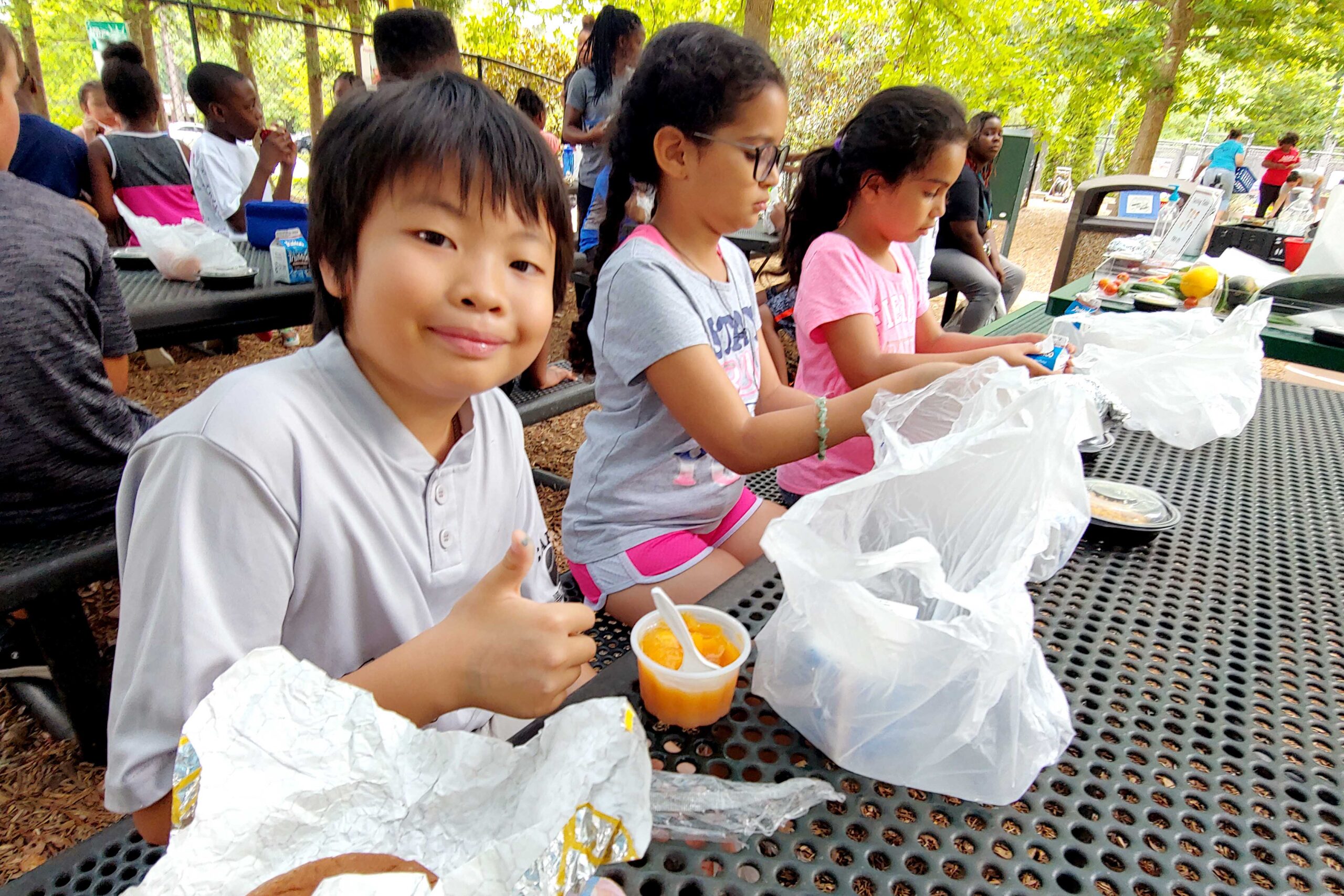
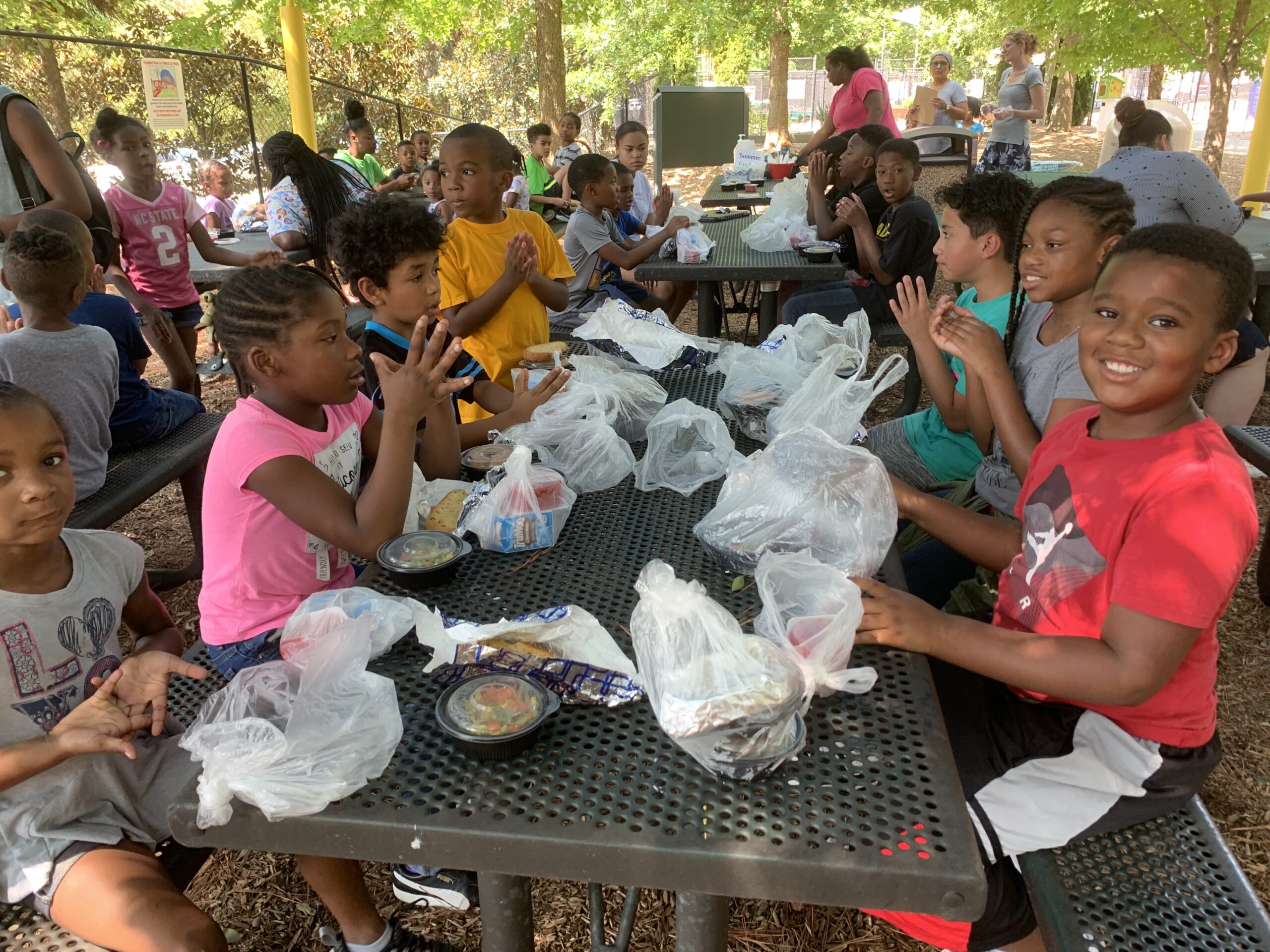
The Poe Center is working to continue the Summer Food Service Program. This program serves free meals to kids ages 0-18 during summer break.5 In the summer of 2025, the Poe Center gave out 283 free, healthy meals.
The Poe Center has hosted this program for 10 years, along with many other meal sites available across Wake County. You can find them on the Wake County Meal Site Map.
What's Next?
Local groups are working hard to make sure families still have access to food. The Southern Wake County Food Security Coalition includes leaders from Wake County and local food pantries. Together, they’re trying to find new ways to help people during this time of change.
You can learn more about programs for kids on the North Carolina Department of Public Instruction website. If you need to contact someone for help with food programs, there are NC-specific contacts available here.
This abrupt end to SNAP-Ed eliminates over 50% of the Poe Center’s annual budget – about 2 million dollars – eliminating nutrition education for over 9,000 children each year and ending support for local schools, organizations, and communities.
If you want to help the Poe Center directly, share a SNAP-Ed story using #SNAPEdWorks or donate to the Poe Center if you can, so we can continue to deliver education and resources to our community.
Featured Video
Looking Ahead
Even though there are big changes happening due to funding cuts and program eliminations, North Carolina communities are coming together to help one another. Local groups, farmers, and neighbors are working side-by-side to make sure families stay fed.
Sources
- Rep. Arrington JC [R T 19. Text – H.R.1 – 119th Congress (2025-2026): One Big Beautiful Bill Act. July 4, 2025. Accessed August 4, 2025. One Big Beautiful Bill Act.
- Statement from Governor Josh Stein on Proposed Cuts to SNAP | NC Governor. Accessed August 4, 2025. Statement from Governor Josh Stein on Proposed Cuts to SNAP | NC Governor.
- Leighton Ku et al., How Potential Federal Cuts to Medicaid and SNAP Could Trigger the Loss of a Million-Plus Jobs, Reduced Economic Activity, and Less State Revenue (Commonwealth Fund, Mar. 2025). How Potential Federal Cuts to Medicaid and SNAP Could Trigger the Loss of a Million-Plus Jobs, Reduced Economic Activity, and Less State Revenue.
- SNAP-Sign-On-March-2025. Accessed August 4, 2025. SNAP-Sign-On-March-2025.
- Summer Food. Wake County Government. Accessed August 5, 2025. Summer Food.
Featured Program:
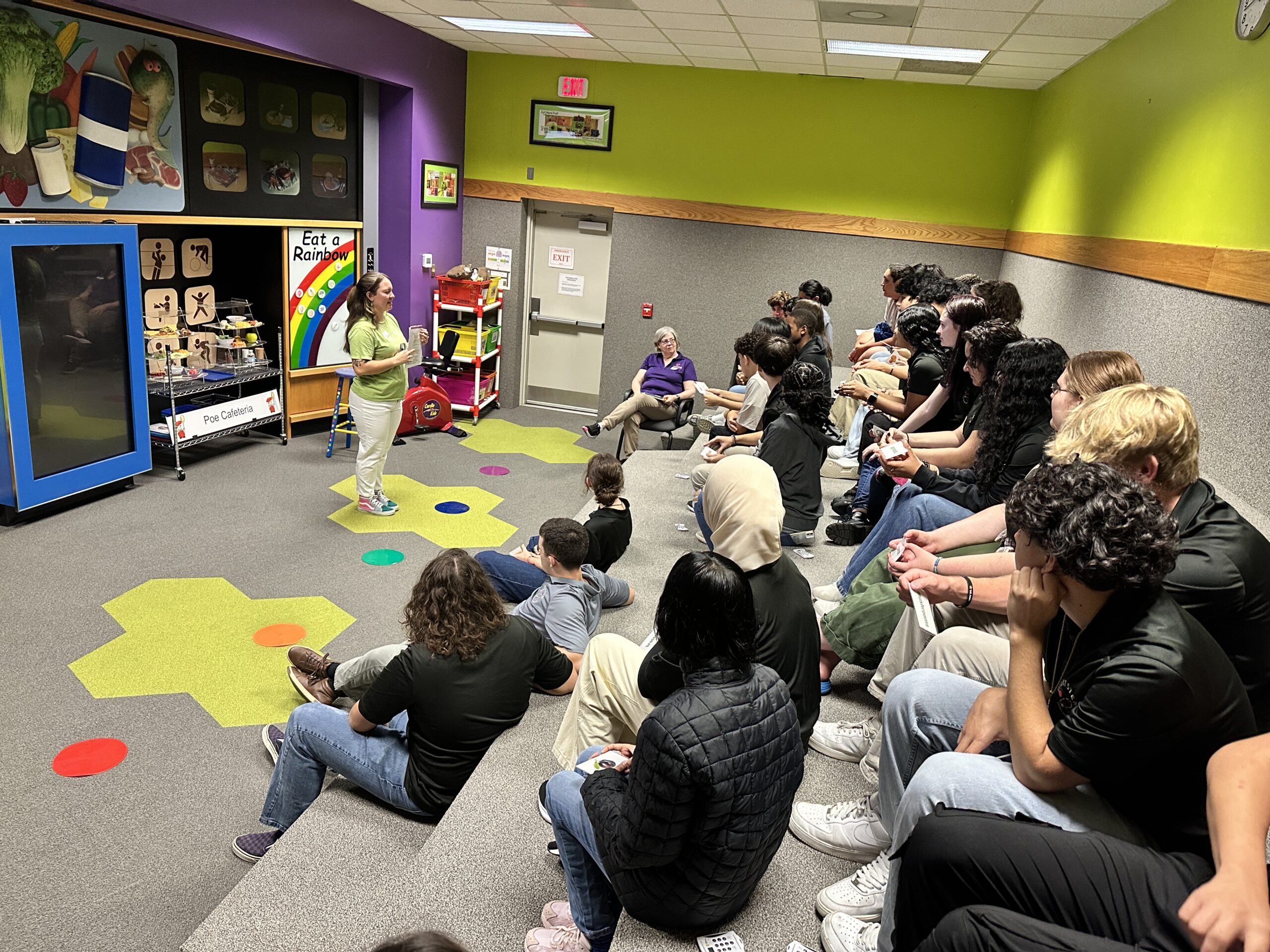
Have you ever wondered about the connection between your physical health and mental wellness? Nourish & Thrive uncovers the mystery of nutrition, physical activity, the gut biome, and mental wellness. This program promotes brain development with activities focused on healthy habits, self-care tips, neurotransmitter function, and nutrition.
This 60-90 minute program Meets NC DPI Healthful Living Essential Standards, covering:
-
- Understanding and managing mental health challenges, stress, and emotional regulation.
- Evaluating influences on personal health behaviors.
- The role of nutrition, hydration, physical activity, and disease prevention in maintaining and improving overall health and quality of life.
Program Participants: 9th – 12th grade and Adults
Program Length: 60-90 minutes